

10 Warning Signs Your Dog Might Get Aggressive and Attack You
Dogs rarely attack without warning. Here are 10 warning signs your dog might get aggressive — and what each one means so you can respond before the situation escalates.
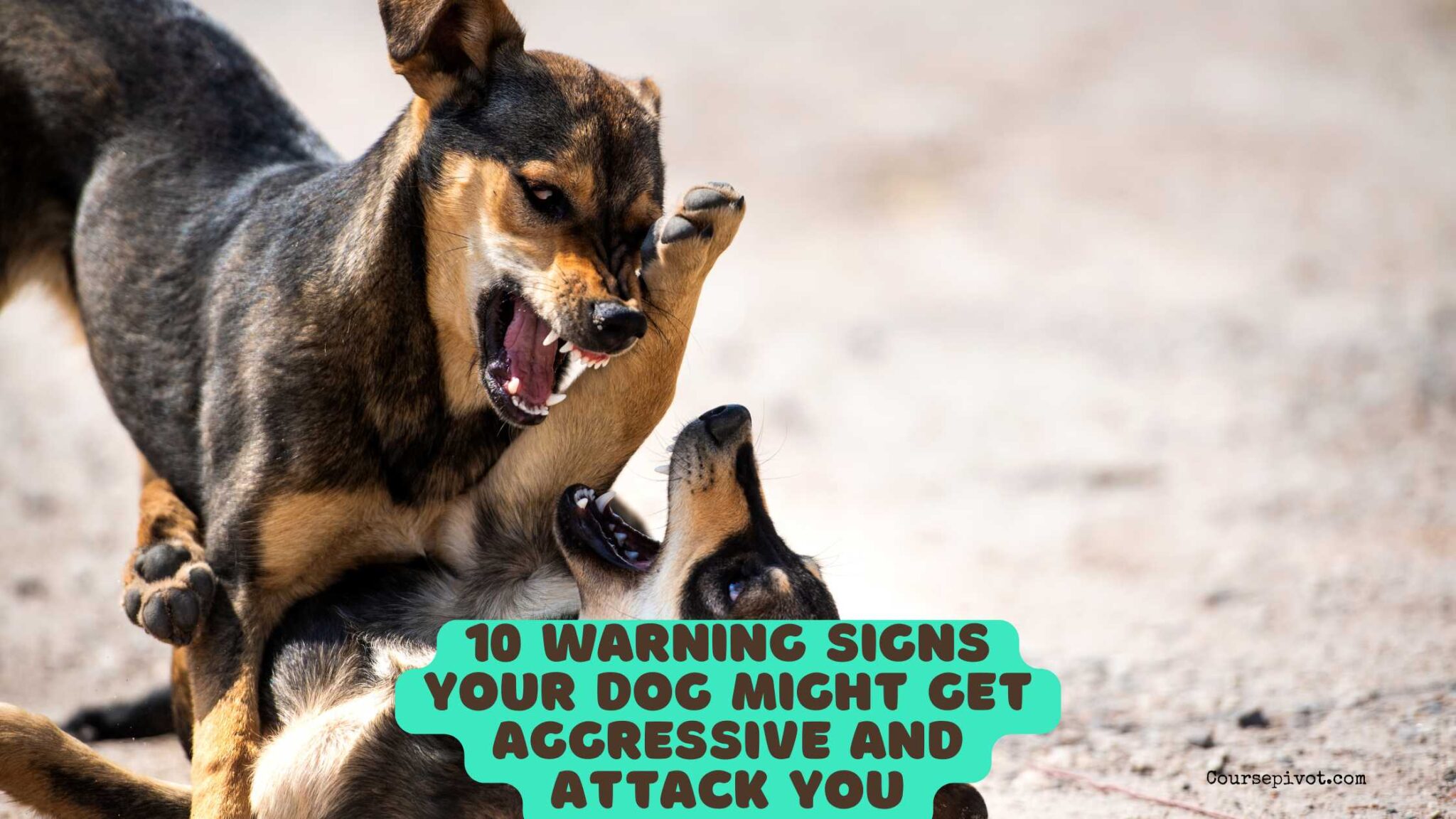
Most dog attacks do not come out of nowhere. In the vast majority of cases, a dog communicates its discomfort, fear, or aggression through a series of clear warning signals before any physical contact occurs. The problem is that most people — including many dog owners — do not recognize those signals in time, or misread them entirely.
Understanding what a dog is communicating through its body language is one of the most practical safety skills anyone who spends time around dogs can develop. It is relevant for dog owners, parents of young children, people who work with animals, and anyone who encounters unfamiliar dogs regularly.
A dog that is about to attack is almost always a dog that has been communicating distress for some time. The attack is not the beginning of the problem — it is the end of a sequence that started much earlier.
Quick question: does an aggressive warning sign mean a dog is dangerous or bad?
Not necessarily. Aggression is a behavior, not a character trait. Dogs become aggressive for many reasons — fear, pain, resource guarding, poor socialization, past trauma, or a perceived threat. Recognizing the warning signs is about understanding the dog’s communication, not condemning the animal.
The same principle of reading warning signals applies broadly to human situations too — early signs of conflict follow similar patterns of escalating signals that are easy to miss when you are not looking for them. Here are 10 warning signs your dog might get aggressive and attack you.
1. Stiff Body Posture
A relaxed dog moves fluidly. A dog that is shifting into an aggressive state freezes or stiffens — the muscles become visibly tense, movement becomes deliberate, and the dog’s entire posture changes from loose to rigid. This stiffness can appear in the neck, shoulders, back, and tail simultaneously.
The stillness itself is a signal. Dogs that stop moving and hold a fixed, tense position are often assessing a threat and preparing to respond. If you notice this sudden shift from relaxed movement to rigid stillness, take it seriously. It is one of the earliest and most consistent precursors to escalating aggression.
2. Raised Hackles
Hackles are the hairs along a dog’s back and neck that stand up involuntarily when the dog is in a heightened state of arousal — fear, excitement, or aggression. Raised hackles indicate that the dog’s nervous system has been triggered. The dog is not necessarily about to attack, but it is in a state where aggression is possible.
Raised hackles that appear alongside other warning signs — stiff body, hard stare, low growl — are a much stronger indicator of imminent aggression than raised hackles alone. In isolation, hackles can appear during intense play or excitement. In combination with other signals, they form part of a clear threat display.
3. Hard, Fixed Eye Contact
Dogs communicate a great deal through their eyes. A soft gaze with relaxed eyes — sometimes called “soft eyes” — signals comfort and ease. A hard, unblinking, fixed stare directed at a person or another animal is a dominance signal and a warning. It means the dog is focused intently on a perceived threat and may be preparing to act.
Many bite incidents involve a moment where the dog and the person make direct eye contact just before the attack. If a dog locks eyes with you in this way — particularly if accompanied by a stiff body and closed mouth — avoid prolonged direct eye contact in return. Looking away slightly while remaining calm reduces the perceived challenge without triggering pursuit.
4. Growling
Growling is communication. It is a dog’s way of saying: I am uncomfortable, I am warning you, do not come closer. Many owners make the serious mistake of punishing dogs for growling, which removes the warning signal without removing the underlying discomfort — producing a dog that skips the warning and goes directly to biting.
Never punish a growl. Instead, treat it as useful information. Identify what triggered the growl — proximity, a specific person, an object, a particular situation — and address the underlying issue. A dog that growls reliably before escalating is actually giving you time to respond. A dog that has been trained out of growling is significantly more dangerous.
5. Showing Teeth — Lip Curling or a Full Snarl
Lip curling or a full snarl — where the dog pulls back the lips to expose the teeth — is an escalation beyond the growl. The dog is now making a visible physical threat display. In canine communication, showing teeth is a serious warning that the dog’s tolerance has reached a low point.
This signal means the window between warning and action is narrow. If a dog shows teeth directed at you, do not reach toward it, do not make sudden movements, and give the dog as much space as possible. Back away slowly and calmly. The dog is not being dramatic — it is telling you precisely how close it is to escalating.
6. Tail Position and Movement
Tail position is one of the most misread signals in dog body language. A wagging tail does not always mean a happy dog — the position, speed, and stiffness of the wag all carry information. A tail held high and stiff, wagging in tight, rapid movements, signals arousal and potential aggression rather than friendliness.
A tail tucked low or between the legs signals fear — and a fearful dog can be just as dangerous as a confident aggressive one, because fear-based aggression is unpredictable. A tail held out horizontally and rigid, with slow deliberate movement, often signals that the dog is assessing a situation carefully before deciding how to respond.
7. Whale Eye — Showing the Whites of the Eyes
“Whale eye” is the term used when a dog shows the whites of its eyes — typically because it is turning its head away while keeping its gaze fixed on a threat, or because it is in a tense posture that widens the eyes. The visible white crescent around the iris is a clear stress indicator.
Whale eye appears frequently in photographs where people are hugging or leaning over dogs that are clearly uncomfortable. Many bites that are described as unprovoked happen to people who were close to a dog showing whale eye — which is very visible in retrospect but easy to miss in the moment. If you see white around a dog’s eyes while its body is stiff, give the dog space immediately.
8. Snapping or Air Biting Without Making Contact
A snap that does not make contact is a final warning before a bite that does. When a dog snaps at the air near a person — or snaps and deliberately misses — it is communicating at the highest level of pre-attack warning available to it short of actual contact. The dog is choosing, in that moment, to stop short. That restraint may not hold in the next interaction.
Any snap, regardless of whether it connects, should be treated as a serious incident that warrants immediate intervention — removal of whatever triggered it, professional behavioral assessment, and a serious review of the dog’s environment, history, and triggers. A snap that is ignored or dismissed commonly precedes a bite.
9. Resource Guarding Behavior
Resource guarding — growling, stiffening, or snapping when approached near food, toys, sleeping spots, or even specific people — is a form of aggression that many owners tolerate longer than they should. A dog that guards its food bowl by growling when someone approaches may escalate to biting if the behavior is not addressed.
Resource guarding is one of the most common contexts for dog bites involving children, because children are less predictable in their movements and less likely to read the warning signals correctly. If a dog shows any resource guarding behavior, keep children away from the dog in those contexts and consult a certified professional trainer or behaviorist before the behavior escalates.
10. Prolonged Staring Combined With Low Growling and Slow Approach
The convergence of multiple warning signs at once — a fixed stare, a low continuous growl, a slow deliberate approach with a stiff body — is the most serious combination on this list. This behavior sequence indicates that a dog has identified a threat, issued repeated warnings, and is now moving toward engagement rather than away from it.
When a dog combines multiple warning signals simultaneously — hard eye contact, raised hackles, visible teeth, stiff posture, and a low growl — the situation requires immediate, calm de-escalation. Do not run, do not scream, do not make sudden movements. Stand still or back away slowly, avoid direct eye contact, and give the dog every opportunity to de-escalate on its own terms.
If you are a dog owner and your dog displays this cluster of behaviors regularly, a professional behaviorist assessment is not optional — it is urgent. The warning signs of serious problems in any environment follow a similar logic: individual signals can be ambiguous, but multiple signals appearing together remove the ambiguity. The same applies here.
Dogs that bite are not always dangerous dogs. They are often dogs in pain, fear, or distress who ran out of other options. Understanding their warning signals is both a safety measure and an act of care — it means you are paying attention to what the dog is actually communicating, rather than waiting for the situation to reach a point where communication is no longer possible.
If you notice several of these warning signs in your own dog, consult a certified applied animal behaviorist or a veterinary behaviorist. Early intervention is almost always more effective — and less dangerous — than waiting.