

100 Reasons Why School Is Bad
School has real, documented problems — from outdated curriculum and chronic stress to social pressure, poor scheduling, and a failure to teach the skills students actually need.
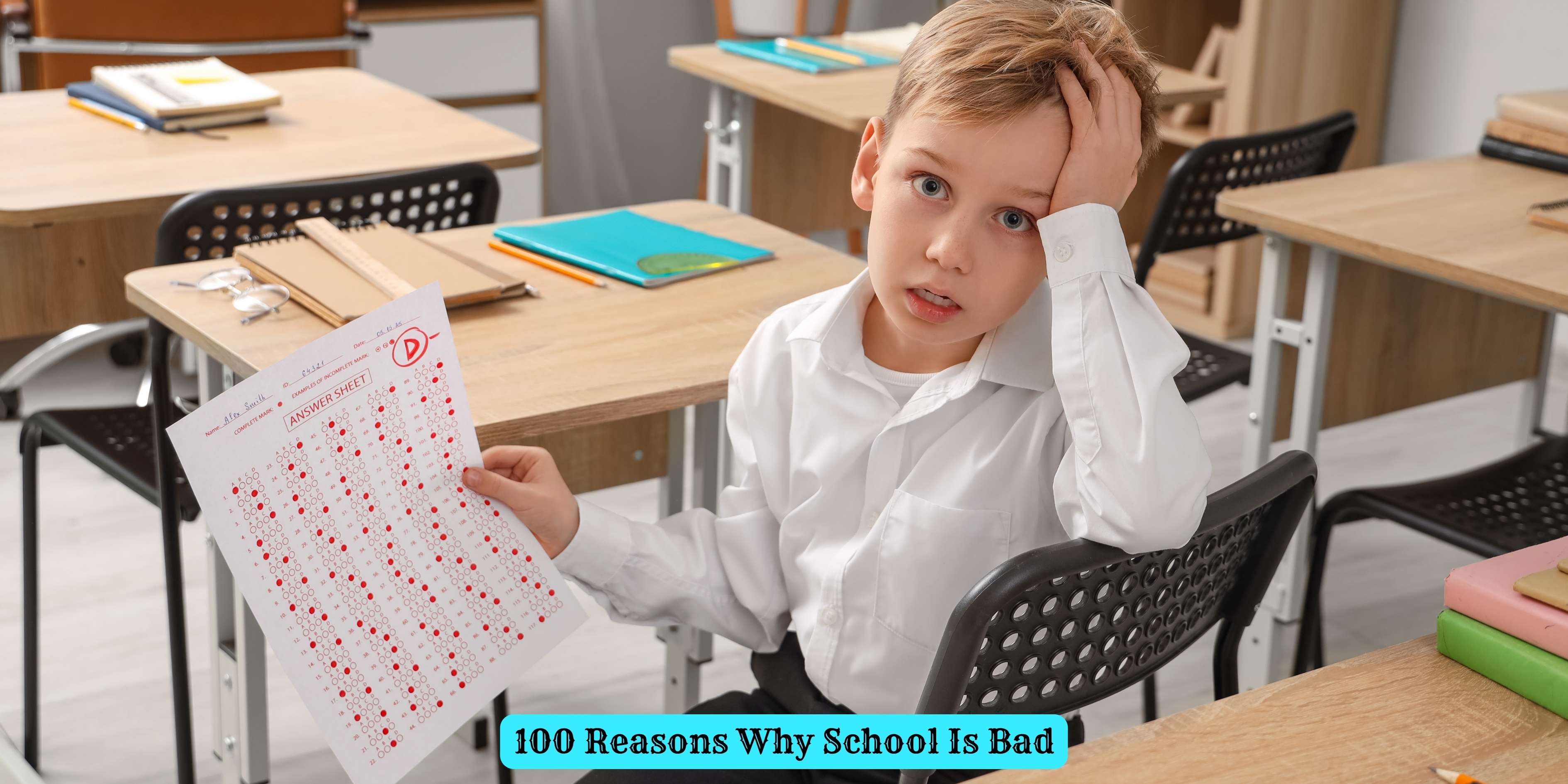
Most people go to school because they have to. That does not mean the system is working. Students, teachers, researchers, and parents have raised serious concerns about how schools are designed, what they teach, how they treat students, and what they consistently fail to prepare people for.
Criticism of school is not the same as rejecting education — it is a demand that education actually work.
Here are 100 reasons why school is bad, organized by category. Some apply to every school. Others depend on the district, the funding, or the individual experience. All are worth understanding.
Curriculum and Content Problems
1. The curriculum prioritizes memorization over genuine understanding.
2. Most subjects are disconnected from real adult life.
3. Students are rarely taught how taxes, debt, or leases work.
4. The curriculum changes slowly, lagging years behind what employers and life actually require.
5. Students must study subjects with no connection to their goals or interests.
6. Financial literacy is almost never a required course.
7. Sex education is frequently incomplete, inaccurate, or not offered at all.
8. History classes focus on dates and wars while skipping social and economic context.
9. Math is taught as a set of procedures without explaining when or why any of it matters.
10. Science is often presented as fixed facts rather than an evolving process of inquiry.
11. Literature selections are frequently outdated and disconnected from students’ lives.
12. Art, music, and creative subjects are treated as less important than test preparation.
13. Many electives disappear when budgets are cut, leaving students with narrower choices each year.
Mental Health and Stress
14. Academic pressure is a well-documented contributor to student anxiety and depression.
15. Chronic test anxiety develops from years of high-stakes assessment starting too young.
16. Students are rarely taught how to manage stress, setback, or failure.
17. Burnout is common before students even reach high school.
18. The grading system punishes failure instead of treating it as part of learning.
19. Students are compared to peers constantly through grades, class rank, and honor rolls.
20. Mental health services at most schools are underfunded and understaffed.
21. Students are given almost no say in how they learn, which increases helplessness and disengagement.
22. The pressure to perform for college admissions starts earlier and earlier.
23. Recovery time between demanding periods is rarely built into the academic calendar.
24. Emotional education — recognizing feelings, setting limits, handling conflict — is almost never taught.
25. Many students spend years feeling invisible, known to no adult in the building by name or situation.
Scheduling and Time Issues
Many students and researchers have pointed to poor scheduling as one of the clearest structural problems. Advocates for shorter school days and later start times argue that the current schedule was never designed around how students actually learn.
26. School starts too early for most teenagers, whose natural sleep cycles shift later during adolescence.
27. Students are expected to sit and concentrate for six to eight hours with minimal movement breaks.
28. Homework extends the school day into the evening, cutting into rest, family time, and recovery.
29. Lunch periods are often too short to eat a proper meal.
30. Summer assignments prevent genuine mental recovery during the only extended break students get.
31. Testing seasons disrupt regular instruction for weeks at a time.
32. Passing periods are frequently too short to travel between distant classrooms without stress.
33. Students have almost no control over how they allocate their own time during the day.
34. The rigid daily schedule ignores differences in when individual students are most focused and alert.
35. Students with jobs or caregiving responsibilities at home have no meaningful accommodation.
36. Extracurricular activities add hours to an already full day, making adequate sleep nearly impossible.
Social and Peer Problems
37. Bullying remains widespread and schools frequently underrespond to it.
38. Social hierarchies and cliques cause real psychological harm that lasts beyond graduation.
39. Students who are different — in ability, appearance, or interest — are often excluded or mocked.
40. Peer pressure at school pushes many students toward choices they would not otherwise make.
41. Dress codes frequently target and stigmatize specific groups of students.
42. The constant visibility of social comparison through grades and rankings harms self-image.
43. Students with social anxiety have no meaningful way to opt out of forced group environments.
44. Classroom dynamics often reward conformity and silence over independent thinking.
45. Many students experience years of loneliness in a building full of people.
46. Romantic conflict, breakups, and interpersonal drama are unavoidable in schools but never addressed as part of student development.
47. Some discipline practices publicly shame students, which harms rather than corrects behavior.
48. Cliques and friend group dynamics are often reinforced rather than disrupted by seating assignments and class groupings.
Teaching and Classroom Issues
49. Large class sizes make it impossible for most teachers to give students meaningful individual attention.
50. Many teachers are underpaid and overworked, which directly affects instruction.
51. Lecture-based teaching remains the default even when it is ineffective for many learners.
52. Students who learn differently — visually, kinesthetically, or at a different pace — are frequently underserved.
53. Grading systems are inconsistent and poorly designed as real measures of learning.
54. Students who fall behind early rarely receive the support needed to catch up.
55. Some teachers rely too heavily on outdated textbooks.
56. Gifted students are often bored and underchallenged, wasting time they could use to go deeper.
57. Substitute teachers often have no subject knowledge, turning missed days into near-total losses.
58. Students’ questions are not always welcomed, creating environments where curiosity feels risky.
59. Professional development for teachers is often minimal and disconnected from what actually improves learning outcomes.
60. Classroom discipline often prioritizes control and compliance over understanding the source of behavior.
Missing Life Skills
One of the most consistent complaints about school is that it fails to prepare students for the practical demands of adulthood. Those who look back on school as a waste of time often name this gap as the primary reason.
61. Most students graduate not knowing how to cook a basic meal.
62. Car maintenance, home repair, and emergency preparedness are never covered.
63. Reading a pay stub, understanding a W-2, or setting up a savings account is rarely taught.
64. Job applications, resumes, professional email, and interview skills are rarely practiced before students need them.
65. Negotiation, persuasion, and self-advocacy are never formally addressed.
66. Digital literacy beyond social media — evaluating sources, identifying misinformation — gets little formal attention.
67. Students learn nothing about tenant rights, consumer protections, or legal basics that will affect their lives.
68. Time management and productivity systems are never explicitly taught despite being critical in adulthood.
69. Starting a business, understanding a loan, or managing a budget are left entirely to chance.
70. Conflict resolution skills are not taught systematically, leaving graduates without tools for adult disagreements.
71. Basic health knowledge — reading a medical bill, understanding insurance — is absent from most curricula.
72. Students graduate without knowing how to register to vote, serve on a jury, or navigate basic civic processes.
Physical Environment and Logistics
73. Many school buildings are old, poorly maintained, and not designed for productive learning.
74. Cafeteria food is frequently low quality, contributing to poor nutrition and afternoon energy crashes.
75. Access to clean and private bathrooms is not always guaranteed.
76. Excessive noise in hallways and shared spaces makes sustained concentration difficult.
77. Many schools lack adequate heating or air conditioning.
78. Locker assignments and physical security procedures often feel dehumanizing.
79. Students who need glasses, hearing aids, or other support are not always helped in accessing them.
80. Transportation barriers mean some students arrive exhausted before the school day has started.
81. School libraries are frequently underfunded, outdated, or repurposed as testing rooms.
82. Access to technology is deeply unequal across schools and often within the same building.
83. Safety drills and security measures, however necessary, create a persistent background anxiety for many students.
Systemic and Policy Problems
84. Standardized testing drives instruction in ways that narrow rather than deepen learning.
85. School funding tied to local property taxes creates dramatic inequality between neighboring districts.
86. Students in underfunded schools have fewer resources, less experienced staff, and worse outcomes.
87. Zero tolerance discipline policies disproportionately punish students from certain racial and economic backgrounds.
88. The system treats college as the only valid post-secondary path, ignoring trades, entrepreneurship, and other routes.
89. Students are tracked into lower academic levels early and rarely escape regardless of later ability.
90. The school system is designed to sort and rank students rather than develop each one.
91. Curriculum standards are often set by political processes rather than educational research.
92. The current school calendar was designed around agricultural life and has not meaningfully changed since.
93. Special education services are frequently underfunded and inaccessible for students who qualify.
94. Many school policies penalize poverty — through fines, fees for activities, and expensive dress code requirements.
95. Students have almost no formal voice in decisions that directly affect their daily experience.
96. Discipline records follow students into adulthood and limit future opportunities.
97. The metrics used to evaluate schools measure test scores and compliance rather than real learning or student wellbeing.
98. Pressure on schools to perform on metrics makes it harder for teachers to experiment or teach creatively.
99. Many graduates leave school feeling underprepared and resentful of years that did not serve them well.
100. The overall design of school has changed very little in over a century, despite massive changes in what the world actually requires of people.
Not every school fails on every point. Some students have genuinely good experiences. But the problems on this list are not rare — they are structural, common, and repeatedly documented. Acknowledging them is the starting point for anything better.