

10 Reasons why it is Important to Vote in the Next Election
Voting is the most direct means most people will ever have to influence the decisions that govern every part of their lives — and not using it has real consequences.
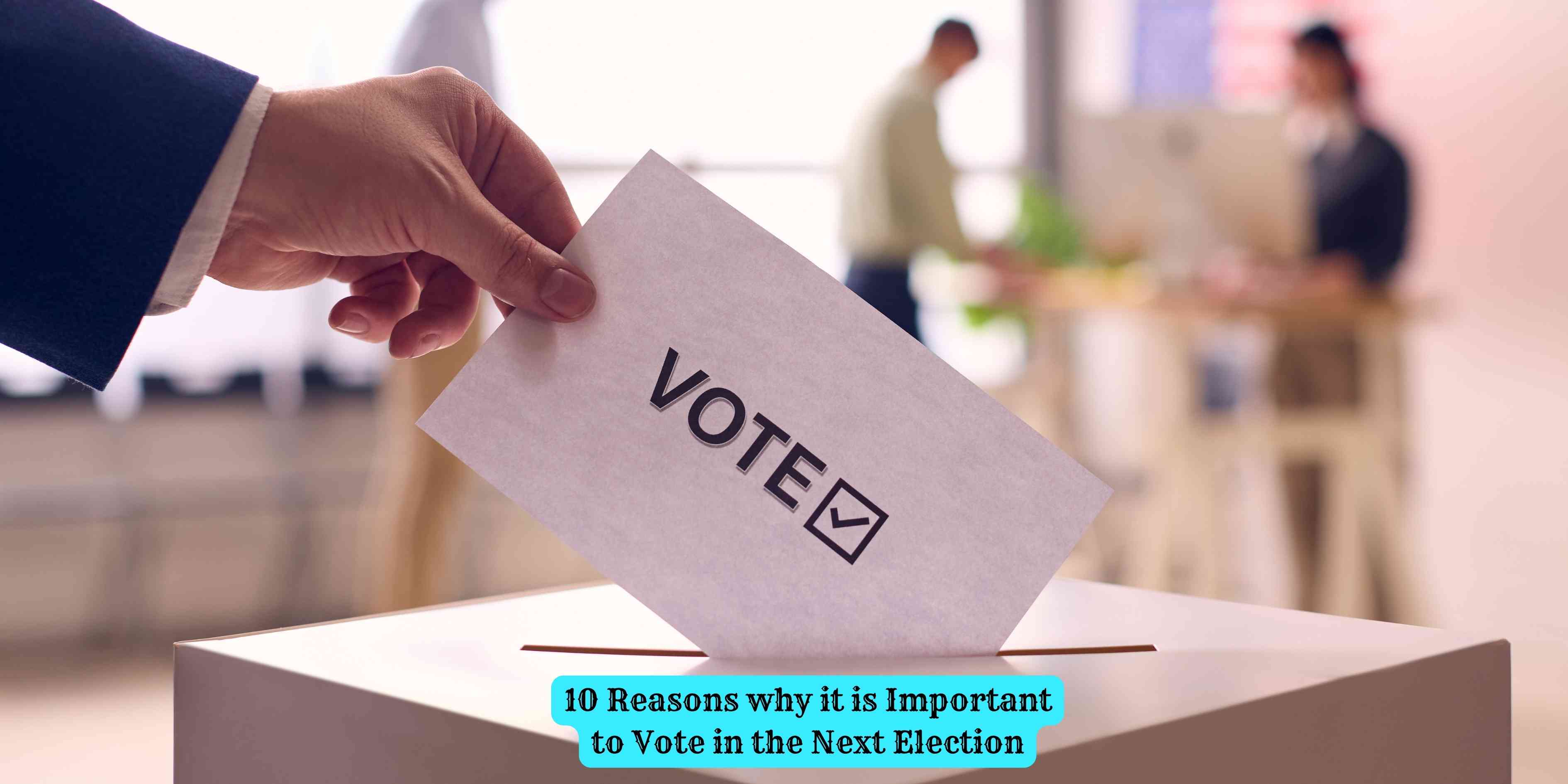
Voting matters because elections determine who makes decisions about healthcare, education, taxation, environmental policy, public safety, and countless other areas of daily life. The argument that “one vote doesn’t matter” misunderstands how elections work — they are won and lost by the aggregate of individual votes, and many significant elections in recent history have been decided by narrow margins. Not voting is itself a choice with real consequences.
People who do not vote still live under the policies that voters chose. The only question is whether those policies reflect your priorities or someone else’s.
Here are ten reasons why voting in the next election matters.
1. Elected Officials Make Decisions That Directly Affect Your Life
The people elected to local, state, and federal office make decisions about minimum wage levels, healthcare coverage requirements, public school funding, housing policy, infrastructure investment, tax structures, and public safety priorities. These decisions affect your daily life whether you voted in them or not.
Choosing not to participate in those elections does not exempt you from the outcomes — it simply removes your influence over them. Voting is the primary mechanism through which citizens in a democracy shape the decisions that govern them.
2. Elections Are Often Decided by Narrow Margins
The perception that individual votes do not matter is contradicted by the historical record. Presidential elections, Senate races, gubernatorial contests, and local elections have all been decided by margins of hundreds or even dozens of votes out of millions cast. At the local level — where school board members, mayors, city council representatives, and judges are chosen — elections are regularly decided by margins in the single digits.
If every eligible voter who concluded their vote would not matter had voted anyway, many election outcomes in recent history would have been different. The margin of each election is built from individual votes.
3. Your Vote Influences Policy Priorities
Politicians pay attention to voter turnout patterns. Demographic groups that consistently vote at high rates receive disproportionate policy attention — because elected officials understand that those voters will hold them accountable in the next election. Demographic groups with consistently low turnout are easier for politicians to deprioritize, because the electoral consequences of doing so are smaller.
Increased voter participation among any group signals to candidates and parties that that group’s concerns cannot be safely ignored. Declining to vote removes your group from this political calculation.
4. Local Elections Have Immediate, Concrete Impact
State and federal elections receive the most attention, but local elections — for city council, county commission, school board, sheriff, district attorney, and local judges — often have more direct, immediate impact on everyday life in your community.
Local officials determine property tax rates, zoning decisions, school curriculum and budget priorities, local law enforcement policy, and how public services are delivered. These are not abstract policy matters — they shape the schools your children attend, the roads you drive on, and how law enforcement operates in your neighborhood. Turnout in local elections is often extremely low, meaning individual votes carry more weight per person than in larger contests.
5. Voting Protects Rights That Can Be Diminished by Policy
Rights that feel permanent and settled can be affected by legislative action, judicial appointments, and executive decisions — all of which are shaped by elections. Voting rights, reproductive rights, labor rights, civil rights protections, and environmental regulations have all changed based on who holds office.
The elected officials who make these decisions are chosen by voters. Electing people who are committed to protecting rights you rely on requires participating in the elections that place them in power.
6. It Signals What Voters Care About
Even when a candidate you voted for does not win, the vote total for their platform sends a message. Politicians and parties track what ideas are gaining support, what issues motivate turnout, and where voter sentiment is shifting. A strong showing for a particular policy position — even in a losing race — influences the next election cycle’s platform choices.
Voting for candidates who represent your values contributes to a longer arc of political change, even when individual elections do not go your way.
7. Non-Voters Are Choosing Outcomes by Default
“I don’t vote because nothing will change” is itself a choice. When people who share a perspective opt out of an election, they effectively hand more influence to those with opposing views who do vote. Elections are zero-sum contests — every non-vote in a group is a relative advantage for that group’s political opponents.
The decision not to vote is not politically neutral. It is a decision to accept the outcome determined by others.
8. Voting Has Historical and Moral Weight
The right to vote was not automatically available to all citizens. Significant portions of the American electorate gained the right to vote through legal battles, constitutional amendments, organized political movements, and personal sacrifice. Declining to use a right that others fought for and that is denied to people living under authoritarian systems around the world is worth sitting with.
Voting is an exercise of a right with both historical significance and present-day global rarity. In many parts of the world, meaningful free elections do not exist. Where they do, they are worth taking seriously.
9. Candidates Are Chosen in Primaries With Very Low Turnout
The general election is not the only election that matters. Primary elections — where parties choose their candidates — are typically held months earlier and draw extremely low turnout. This means that a small number of committed voters determine which candidates appear on the general election ballot.
Participating in primaries gives voters the ability to shape which options are available in the general election. Candidates who would not survive a broader electorate can win primaries because primary turnout is so low that a motivated minority can determine the outcome.
10. Democracy Requires Participation to Function
Democratic institutions are sustained by civic participation, not just by their existence on paper. When large portions of the electorate disengage, the quality of representation degrades — elected officials increasingly represent the views of those who actually vote, which is a progressively smaller and less representative group.
Consistent broad participation maintains accountability. Politicians who face real electoral consequences for poor performance or broken promises govern differently than those who face minimal consequences.
Voting is the most widely available form of direct political participation. For more ways to engage beyond the ballot box, 5 ways to participate in democracy covers additional avenues of civic involvement. And for students who want to think more rigorously about political decisions and their evaluation, why critical thinking should be a required course makes the case for the reasoning skills that underpin informed citizenship.