

9 Shocking Reasons Why God Compares Us to Sheep
The sheep metaphor in Scripture is not flattering by accident. Understanding why God chose it reveals something uncomfortable and important about the human condition.
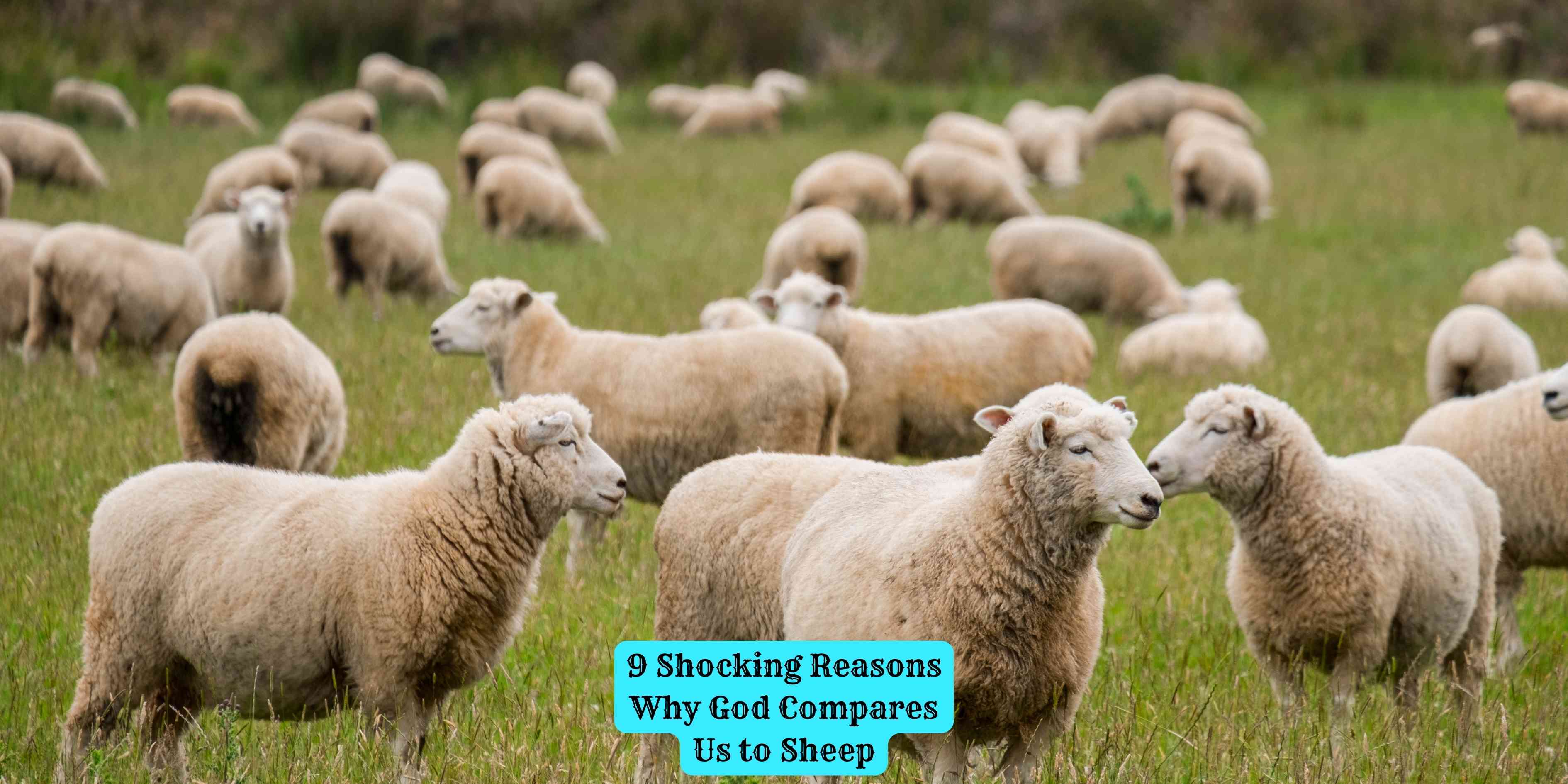
The sheep metaphor appears throughout Scripture — Isaiah 53:6, Psalm 23, John 10, Matthew 18, Luke 15, and more. God did not choose this comparison because sheep are noble or impressive. He chose it because sheep are accurate. Understanding what sheep are actually like is the first step to understanding why the comparison is one of the most theologically honest things Scripture says about human beings.
Sheep are not stupid — this is a common misconception. But they are deeply, structurally dependent on care they cannot provide for themselves. That is precisely the point of the metaphor.
1. Sheep Wander Without Realizing They Are Lost
Sheep do not decide to get lost. They graze their way into lostness — moving from one patch of grass to another, following appetite without reference to direction, until they look up and the shepherd is gone. Isaiah 53:6 captures this exactly: “All we like sheep have gone astray; we have turned — every one — to his own way.”
The shocking element is not that humans deliberately abandon God — it is that they drift without noticing. The comparison to sheep is humbling precisely because it is about ordinary distraction and self-direction, not dramatic rebellion. Most spiritual lostness is not apostasy; it is wandering.
2. Sheep Cannot Find Their Way Back on Their Own
Once lost, a sheep does not have the internal navigation to find its way back. This is not a failure of effort — it is a structural limitation. Jesus’s parable in Luke 15 does not show the lost sheep finding its way home and presenting itself to the shepherd. It shows the shepherd going out and carrying the sheep back.
The theological implication is direct: humans need to be found, not just given directions. The comparison to sheep eliminates the possibility of the bootstrap spiritual narrative — the one in which a person gets lost but eventually figures out the path back through sufficient self-effort.
3. Sheep Are Defenseless Against Predators
Sheep have almost no natural defensive capabilities. No significant speed, no claws, no venom, no camouflage. Their only real defense is the shepherd and the flock. In John 10, Jesus describes himself as the Good Shepherd specifically in contrast to the wolf who scatters and destroys the sheep. The comparison implies that humans are similarly vulnerable to spiritual and moral dangers that they are not equipped to handle alone.
4. Sheep Follow Without Discernment
Sheep follow — each other, familiar voices, any movement that resembles the flock. This makes them easy to lead in the right direction and also easy to lead off a cliff. The comparison reflects the human tendency to follow culturally, relationally, and ideologically without critical evaluation of where the movement is headed.
The shocking honesty of this aspect of the sheep comparison is that it is not about the absence of intelligence. Educated, sophisticated people follow crowds, ideologies, and leaders without discernment at rates that are well documented historically. The sheep metaphor names this pattern without softening it.
5. Sheep Cannot Care for Themselves
Sheep require regular shearing — wool that is not managed becomes so heavy and matted it causes health problems. They need their hooves trimmed. They require regular feeding in environments that do not provide adequate nutrition on their own. The comparison implies a level of dependence that is, for most humans, uncomfortable to acknowledge.
The theological point is about the nature of human need — not just emergency need, but ongoing, structural dependence on provision and care that does not come from within.
6. Sheep Are Prone to Panic
When threatened or confused, sheep panic in ways that compound the danger — scattering in directions that take them further from safety, following each other in panicked movement without direction. The comparison to human behavior in crisis is not flattering but is recognizable. Group panic, social contagion of fear, and crisis-driven decision-making that makes situations worse are well-documented in human systems.
Psalm 23 — “He leads me beside still waters; He restores my soul” — describes the specific work of a shepherd with panicked, depleted sheep. The comparison implies that God’s care addresses a genuine capacity for destabilization that exists in people.
7. Sheep Know Their Shepherd’s Voice
John 10:3-4 states that “the sheep hear his voice, and he calls his own sheep by name and leads them out… the sheep follow him, for they know his voice.” This is actually a documented feature of sheep behavior — they respond specifically to the voice of their own shepherd and are not led by strangers.
The comparison here is not humbling but affirming: it implies a genuine, learned recognition of God’s voice in Scripture, prayer, and spiritual experience that is developed through relationship. The familiarity is the result of ongoing exposure and responsive relationship.
8. Sheep Need a Flock
Isolated sheep are stressed sheep. The flock is not optional for a sheep’s wellbeing — it is how they function. The comparison to community in Christian theology is consistent across the New Testament: the sheep metaphor does not describe solitary individuals following a shepherd independently. It describes a flock under shared care.
The surprising implication is that the sheep comparison is an argument against isolated Christianity. The metaphor is inherently communal — the sheep are cared for together, the lost sheep is restored to the flock, the shepherd tends the whole group. The image does not support a purely individualistic understanding of faith.
9. A Lost Sheep Is Worth Going After
The most striking aspect of the sheep comparison in Jesus’s teaching is not what it reveals about human weakness but what it implies about God’s response to it. Luke 15:4-6 describes a shepherd leaving ninety-nine sheep to find one lost one — a level of individual attention that is disproportionate by any economic logic. And when the sheep is found, there is rejoicing.
The comparison is shocking not because of what it says about sheep but because of what it says about the shepherd. The God of the sheep metaphor is not waiting for wanderers to find their way back — he is out looking for them and carries them home when he finds them.
For more on the character of God this metaphor reveals, 10 reasons to rejoice in the Lord and 100 reasons to believe explore related dimensions of faith.