

Why Decomposers Are Vital to Food Chains
Decomposers are vital because they break down dead material and return nutrients to the ecosystem for producers to use.
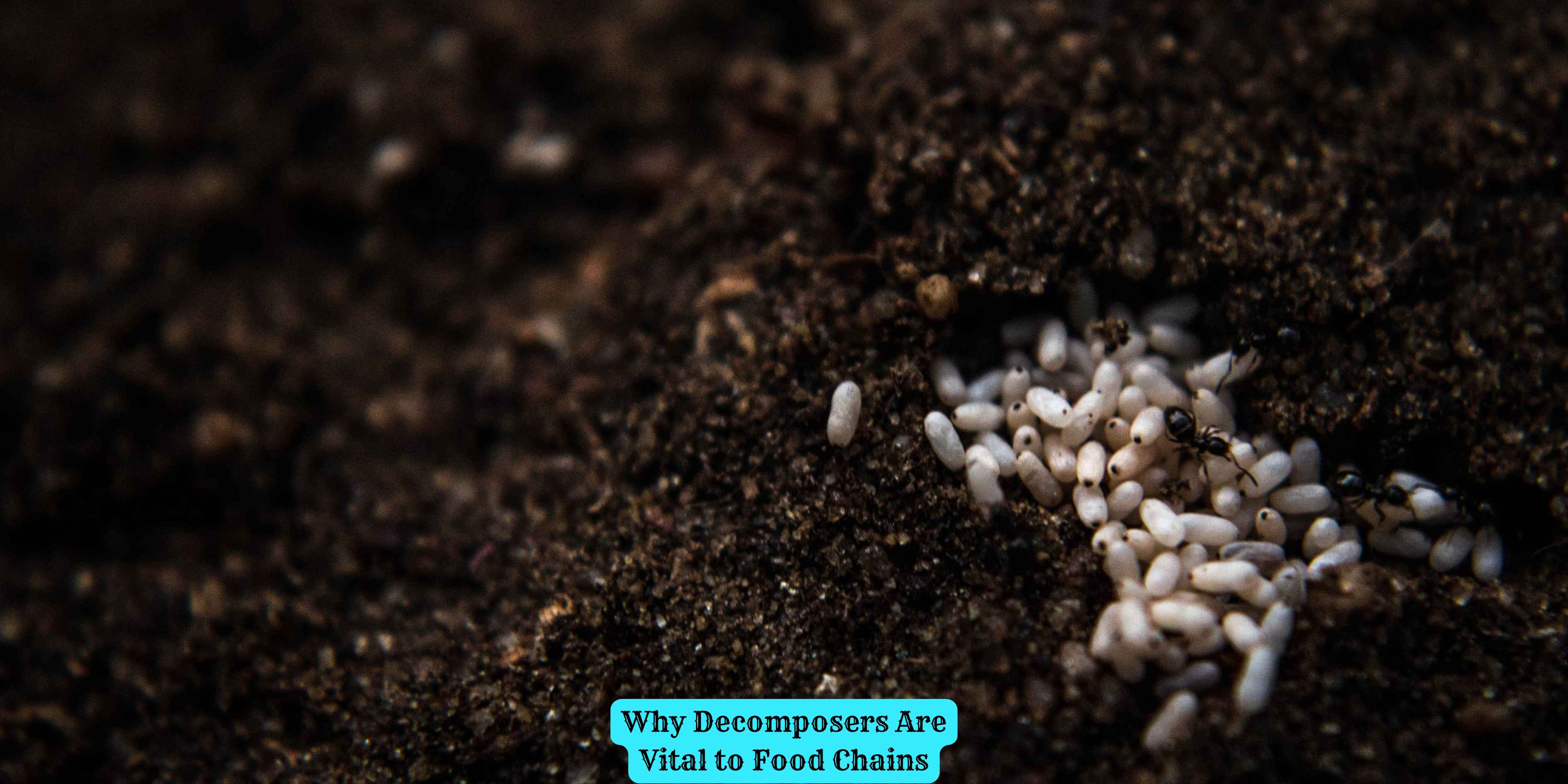
The Short Answer
Decomposers are vital to food chains because they break down dead plants, dead animals, and waste, returning nutrients to the soil and water. Those nutrients can then be used by producers such as plants, algae, and phytoplankton.
Without decomposers, nutrients would remain locked in dead matter. Decomposers keep food chains going by recycling the materials that producers need to start the chain again.
What Decomposers Are
Decomposers are organisms that break down dead organic matter. Major decomposers include bacteria and fungi. Detritivores such as earthworms, woodlice, termites, and some insects also help by breaking material into smaller pieces.
In many ecosystems, decomposers work quietly in soil, leaf litter, rotting wood, compost, sediments, and water.
They may not be as visible as lions, fish, birds, or trees, but they are essential to the flow of matter through ecosystems.
They Recycle Nutrients
Food chains need nutrients such as nitrogen, phosphorus, carbon, potassium, and minerals. Producers use these nutrients to grow. Herbivores eat producers. Carnivores eat other consumers. Eventually, all organisms die or produce waste.
Decomposers break that dead matter and waste into simpler substances. These nutrients return to soil or water and become available again.
This recycling process prevents ecosystems from running out of usable nutrients.
They Support Producers
Producers are organisms that make their own food, usually through photosynthesis. Plants, algae, and some bacteria form the base of many food chains.
Producers need sunlight, water, carbon dioxide, and nutrients. Decomposers help supply the nutrients. If decomposers disappeared, plants would eventually struggle because nutrients would be trapped in dead bodies and waste.
Healthy producers support the rest of the food chain.
They Prevent Dead Matter from Piling Up
Imagine a forest with no decomposers. Dead leaves, fallen branches, animal waste, and dead organisms would accumulate. Nutrients would not return efficiently to the soil, and new growth would slow.
Decomposers clean up ecosystems by breaking down organic matter. This does not mean they exist only as nature’s trash collectors. Their work is a central part of ecosystem function.
They transform waste into usable resources.
They Help Build Soil
Decomposition contributes to soil formation and soil fertility. As organic matter breaks down, it becomes part of humus, a dark material that helps soil hold water and nutrients.
Good soil supports plant roots, microorganisms, fungi, and many small animals. In forests, grasslands, farms, and gardens, decomposition helps maintain productive soil.
Without decomposers, soil quality would decline over time.
This is also why composting works. Food scraps, leaves, and yard waste become useful soil material only because decomposers break them down into forms plants can use again.
They Connect Food Chains to Nutrient Cycles
Food chains show who eats whom. Nutrient cycles show how matter moves through living and nonliving parts of the environment. Decomposers connect the two.
| Role | What it does |
|---|---|
| Producers | Make food using sunlight or chemical energy |
| Consumers | Eat producers or other consumers |
| Decomposers | Break down dead matter and waste |
| Nutrients | Return to soil or water for reuse |
This cycle means matter is reused rather than simply lost.
Decomposers Work in Water Too
Decomposers are not only found on land. Aquatic ecosystems also rely on bacteria, fungi, and other decomposing organisms. They break down dead algae, fish, aquatic plants, and waste.
In water, decomposition can affect oxygen levels. If too much organic matter decomposes at once, bacteria may use large amounts of oxygen, creating stress for fish and other aquatic organisms.
This shows that decomposition must stay balanced within the ecosystem.
What Would Happen Without Decomposers
Without decomposers:
- Dead matter would build up
- Nutrients would remain trapped
- Soil fertility would decline
- Producers would struggle
- Food chains would weaken
- Ecosystems would become less productive
Every consumer ultimately depends on producers, and producers depend partly on nutrients released by decomposers.
The Main Lesson
Decomposers are vital to food chains because they recycle nutrients and make continued life possible. They break down what is dead and return useful materials to the living system.
They may be small and easy to overlook, but without decomposers, food chains would eventually lose the nutrients they need to continue.