

Hitler's Strategy in Europe and How it Affected Great Britain
Hitler's strategy of rapid conquest across Europe eventually turned toward Great Britain, shaping one of the most defining periods of World War II.
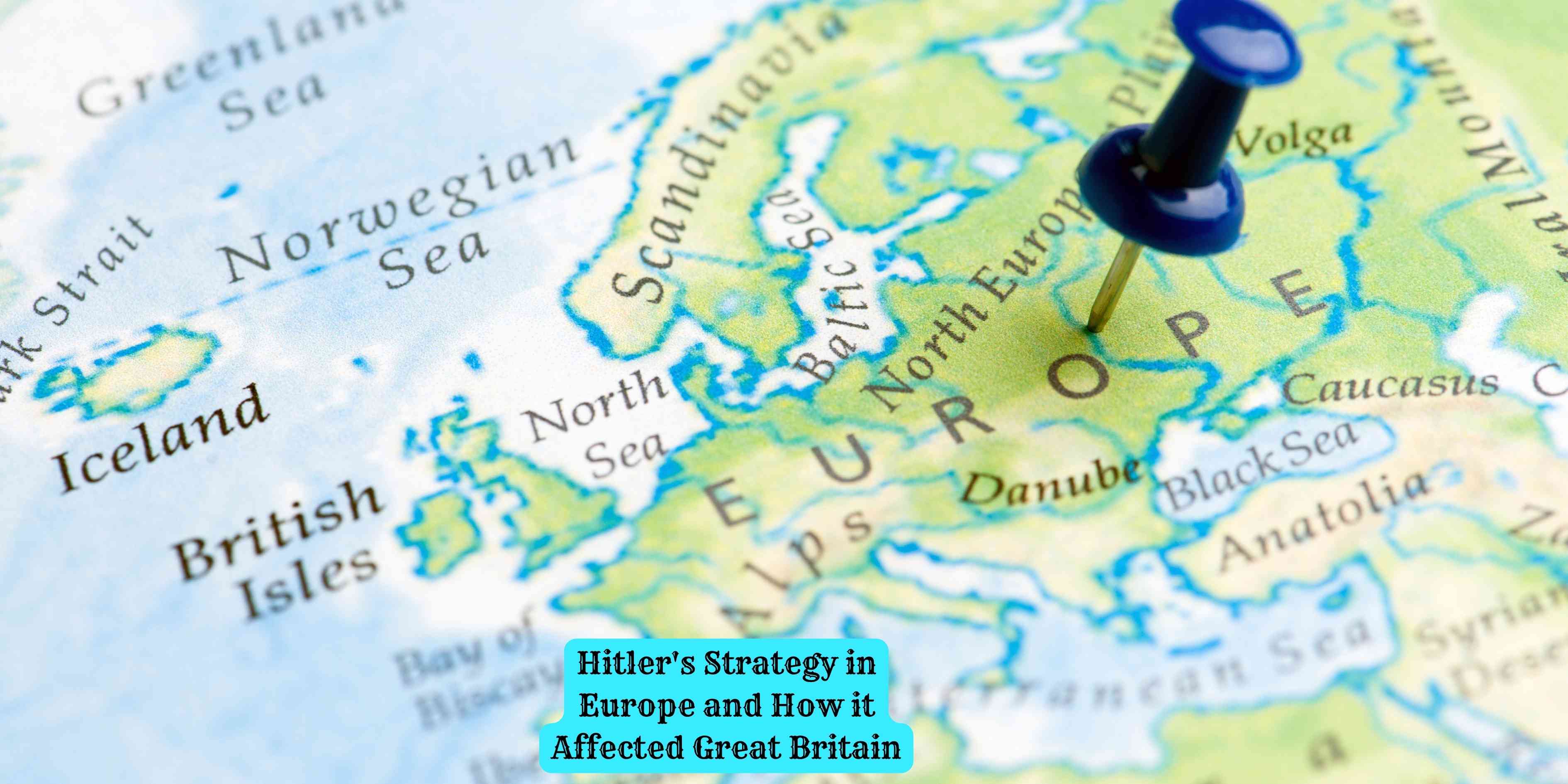
Hitler’s strategy in Europe relied on rapid, coordinated military advances known as blitzkrieg, combined with diplomatic pressure and broken agreements that allowed Germany to expand quickly through Central and Western Europe. When France fell in 1940, Hitler turned his strategy toward Great Britain, attempting to force surrender through air attacks before any planned invasion. Britain’s resistance during the Battle of Britain prevented that strategy from succeeding.
Hitler’s plan depended on speed and momentum, and Britain became the first major opponent that strategy failed to overcome.
Hitler’s Early Strategy: Expansion Through Pressure and Speed
Before large-scale war began, Hitler’s strategy combined political pressure with rapid military buildup. Germany annexed Austria and pressured Czechoslovakia through diplomacy backed by the threat of force, often exploiting hesitation from other European powers to avoid early confrontation.
Once war began in 1939, this approach shifted into full military strategy. Germany used blitzkrieg, a method combining fast-moving tanks, coordinated air support, and quick infantry advances, to overwhelm opponents before they could organize a strong defense.
Why Blitzkrieg Strategy Worked So Quickly
Blitzkrieg worked because it avoided the slow, static warfare that had defined World War I. Instead of fighting long battles over fixed positions, German forces aimed to break through weak points, encircle opponents, and disrupt communication and supply lines.
- Poland fell within weeks in 1939.
- Denmark and Norway were taken in 1940.
- The Netherlands and Belgium fell quickly that same year.
- France, considered a major military power, fell within about six weeks.
This speed shocked European leaders and left Britain as one of the few remaining opponents in Western Europe still actively resisting Germany.
The Strategic Shift Toward Great Britain
After France’s surrender in June 1940, Hitler’s strategy turned toward Britain. Germany hoped Britain would seek peace, given the speed of earlier German victories and Britain’s isolated position without major continental allies.
Quick question: did Hitler originally plan to invade Britain?
Germany did prepare invasion plans, known as Operation Sea Lion, but the plan depended on first gaining control of the skies over the English Channel.
This dependency on air superiority shaped the next phase of the strategy and became central to how the conflict with Britain unfolded.
The Battle of Britain
To prepare for a possible invasion, Germany launched a sustained air campaign against British airfields, infrastructure, and eventually cities, aiming to destroy the Royal Air Force and break civilian morale.
| German Goal | British Response |
|---|---|
| Destroy RAF fighter strength | Radar-guided defense and pilot resilience |
| Disrupt British infrastructure | Continued industrial production |
| Break civilian morale through bombing | Public resistance during the Blitz |
Despite heavy bombing, Britain’s air defenses, supported by radar technology and a smaller but effective fighter force, prevented Germany from achieving air superiority. Without that control of the skies, the planned invasion never moved forward.
How This Strategy Affected Great Britain
The shift in Hitler’s strategy affected Britain in several lasting ways. Cities endured sustained bombing during what became known as the Blitz, causing significant civilian casualties and widespread destruction. At the same time, the threat forced Britain into full wartime mobilization, reorganizing industry, defense, and daily life around the ongoing conflict.
Britain’s resistance also affected the broader war. By remaining undefeated, Britain provided a base for future Allied operations in Western Europe and denied Germany a quick, decisive victory that might have shifted the war’s direction entirely.
This outcome also shaped how the war progressed elsewhere, including decisions made later in the war regarding the use of the atomic bomb against Japan, as Allied strategy continued to weigh the cost of prolonged conflict against decisive action.
Why Hitler’s Strategy Ultimately Failed Against Britain
Hitler’s broader strategy relied on speed, momentum, and the assumption that opponents would either be quickly defeated or willing to negotiate. Britain’s refusal to surrender, combined with effective air defense, broke that assumption for the first time in the war.
This failure did not end the broader conflict, but it prevented Germany from securing total control over Western Europe and gave the Allies critical time to regroup and plan future operations.
The Main Takeaway
Hitler’s strategy in Europe depended on rapid conquest through blitzkrieg tactics and diplomatic pressure, a strategy that succeeded quickly across much of the continent. When that strategy turned toward Great Britain, sustained air defense and public resistance during the Battle of Britain prevented German air superiority, stopping the planned invasion and marking one of the first major strategic failures of Hitler’s wartime campaign.