

How Much Does a Gallon of Water Weigh?
A U.S. gallon of water weighs about 8.34 pounds under ordinary conditions.
The Short Answer
A U.S. gallon of water weighs about 8.34 pounds, or about 3.78 kilograms, at ordinary room-temperature conditions. The exact weight can change slightly with temperature because water expands and contracts.
For most everyday uses, 8.34 pounds per U.S. gallon is the best practical estimate.
U.S. Gallon vs. Imperial Gallon
One important detail is that a U.S. gallon and an imperial gallon are not the same size. A U.S. gallon is about 3.785 liters. An imperial gallon is about 4.546 liters.
Because the imperial gallon contains more water, it weighs more. An imperial gallon of water weighs about 10 pounds.
If a question does not specify, people in the United States usually mean a U.S. gallon.
This distinction matters when reading recipes, science problems, travel guides, or product labels from different countries. The word “gallon” can look familiar while referring to a different volume.
Why Temperature Changes the Exact Weight
Water density changes with temperature. Cold water is generally denser than warm water until it reaches certain physical limits. Warmer water expands slightly, so the same gallon volume contains a little less mass.
For school, cooking, fitness, and household estimates, the difference is usually small enough to ignore. For laboratory or engineering work, exact temperature and density may matter.
This is also why scientific references often mention conditions when giving density values. A classroom answer can be rounded, but precise measurement depends on how the water was measured, the temperature, and whether the container volume is exact.
Quick Conversion Table
Here are practical estimates for common amounts of water:
| Water Amount | Approximate Weight |
|---|---|
| 1 cup | 0.52 pounds |
| 1 quart | 2.09 pounds |
| 1 U.S. gallon | 8.34 pounds |
| 5 U.S. gallons | 41.7 pounds |
| 10 U.S. gallons | 83.4 pounds |
These numbers are rounded for everyday use.
Why This Measurement Matters
Knowing the weight of water helps with cooking, camping, emergency storage, aquarium care, construction, exercise, and transportation.
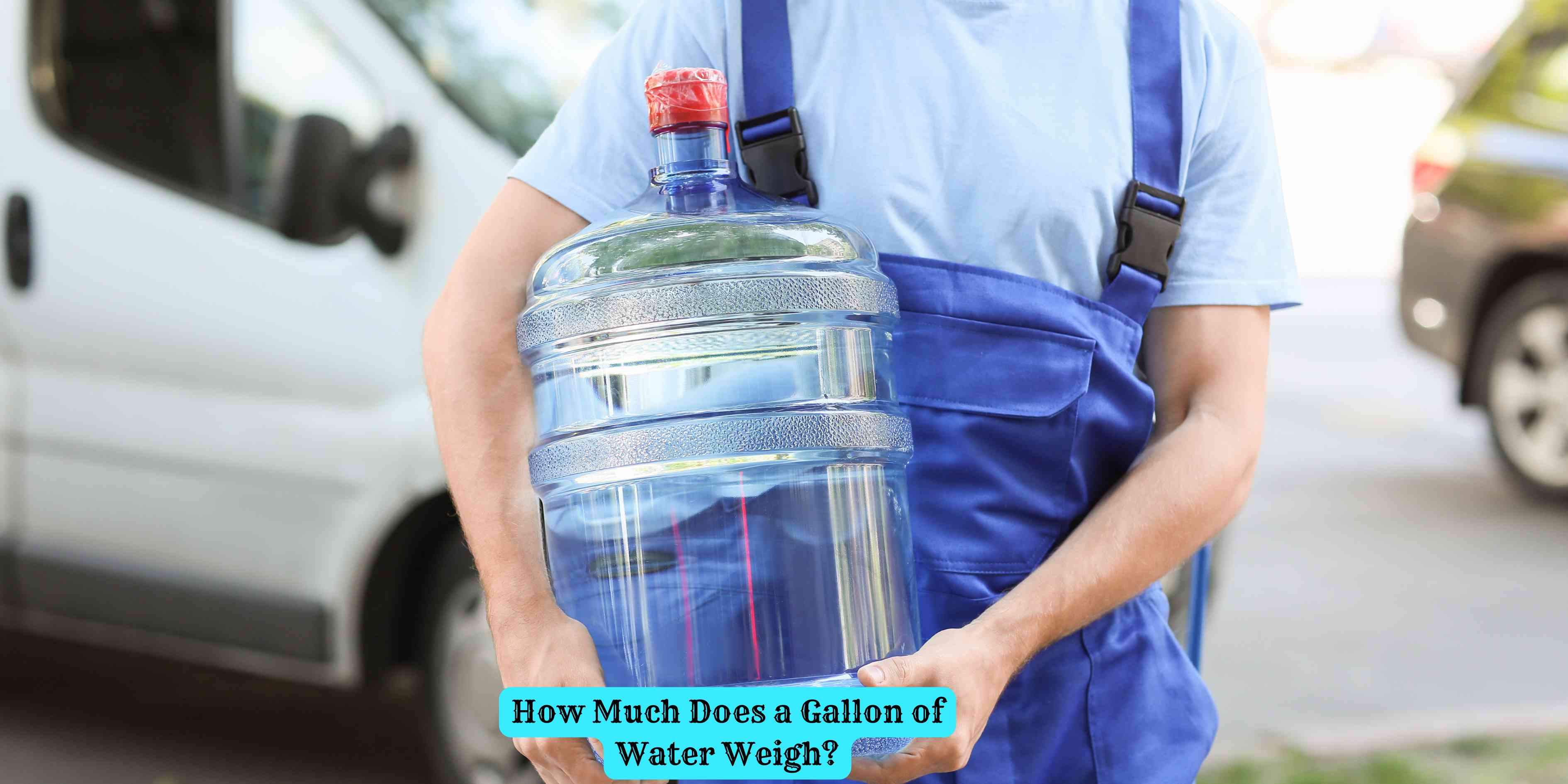
For example, a five-gallon water container may weigh more than 40 pounds before including the weight of the container itself. That matters when lifting, storing, or transporting it.
It also matters for vehicles and boats. Carrying many gallons of water adds weight quickly, which can affect fuel use, handling, storage limits, and safety.
Water Weight and Safety
Water can become surprisingly heavy in large amounts. A small container is easy to move, but large jugs, tanks, and barrels can strain the back or damage weak shelves.
If you are storing emergency water, make sure the shelf or floor can support the total weight. The same applies to aquariums and water tanks.
This connects with injury prevention because lifting water containers can involve more than just strength. Body position and balance matter too.
For safer lifting, keep containers close to the body, avoid twisting while carrying, and use smaller containers when possible. Splitting water into multiple lighter containers may be safer than moving one very heavy container.
A Simple Formula
To estimate water weight in pounds, multiply the number of U.S. gallons by 8.34.
For example:
- 2 gallons: about 16.68 pounds
- 3 gallons: about 25.02 pounds
- 20 gallons: about 166.8 pounds
This formula is usually accurate enough for everyday planning.
If you also need the container’s total weight, add the empty container weight to the water weight. A five-gallon jug that weighs 2 pounds empty will weigh about 43.7 pounds when full.
The Main Takeaway
A U.S. gallon of water weighs about 8.34 pounds. An imperial gallon weighs more because it is a larger unit.
If you need a quick estimate, multiply U.S. gallons by 8.34. If you need scientific precision, account for temperature, density, and the exact definition of the gallon being used.