

What Are 5 Things Martin Luther King Accomplished?
Martin Luther King Jr. helped transform the American civil rights movement through nonviolent leadership, moral courage, and national organizing.
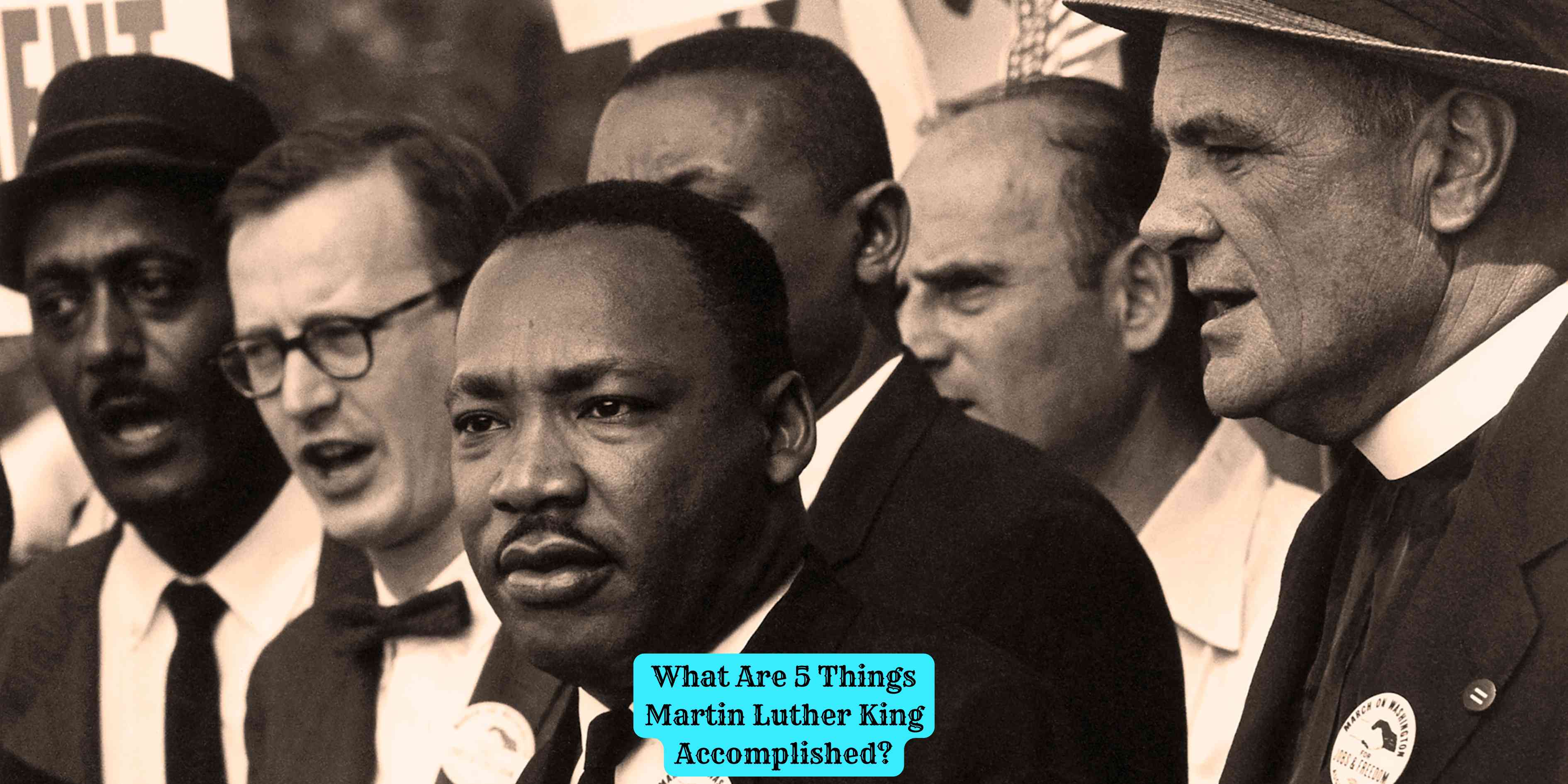
Martin Luther King Jr. was one of the most influential leaders of the American civil rights movement. He is remembered for his commitment to nonviolent protest, his ability to organize people across the country, and his powerful speeches about justice, equality, and human dignity.
King did not work alone. The civil rights movement included thousands of ordinary people, organizers, students, pastors, lawyers, workers, and local leaders. Still, King played a central public role in several major achievements that changed American history. Here are five important things Martin Luther King accomplished.
1. He Helped Lead the Montgomery Bus Boycott
One of King’s earliest national accomplishments was his leadership during the Montgomery Bus Boycott. The boycott began in 1955 after Rosa Parks was arrested for refusing to give up her bus seat to a white passenger in Montgomery, Alabama.
King was chosen to help lead the Montgomery Improvement Association, the organization that coordinated the boycott. For more than a year, Black residents of Montgomery refused to ride segregated city buses. Many walked, carpooled, or found other ways to travel despite threats, arrests, and economic pressure.
The boycott ended after the U.S. Supreme Court affirmed that bus segregation was unconstitutional. This victory showed that organized, nonviolent protest could challenge segregation successfully.
The Montgomery Bus Boycott helped introduce King as a national civil rights leader and showed the power of disciplined collective action.
2. He Helped Found the Southern Christian Leadership Conference
In 1957, King helped establish the Southern Christian Leadership Conference, often called the SCLC. This organization brought together ministers and civil rights leaders who wanted to use nonviolent protest to challenge racial injustice across the South.
The SCLC became important because it helped coordinate campaigns beyond one city. It supported voter registration, school desegregation, economic justice efforts, and protests against segregation. King served as the organization’s first president.
Through the SCLC, King helped turn local struggles into a broader regional and national movement. The organization gave structure to civil rights activism and helped connect churches, community leaders, and ordinary citizens.
3. He Led and Inspired Major Nonviolent Campaigns
King helped lead several major nonviolent campaigns that exposed injustice and pressured political leaders to act. These campaigns included protests in Birmingham, Alabama, and Selma, Alabama, as well as other civil rights efforts across the country.
The Birmingham Campaign in 1963 challenged segregation in one of the South’s most deeply divided cities. Images of peaceful protesters facing police dogs, fire hoses, and arrests shocked many Americans and drew national attention to the cruelty of segregation.
The Selma voting rights campaign in 1965 highlighted the barriers Black citizens faced when trying to register to vote. The violence against marchers helped build support for federal voting rights protections.
King’s approach was based on nonviolent direct action. The goal was not only to protest injustice but to reveal it clearly enough that the nation could no longer ignore it.
4. He Helped Make the March on Washington a Historic Moment
King is closely associated with the March on Washington for Jobs and Freedom, held on August 28, 1963. The march brought hundreds of thousands of people to the nation’s capital to demand civil rights, voting rights, jobs, and economic justice.
At the march, King delivered his famous “I Have a Dream” speech. The speech described a vision of a country where people would be judged by character rather than skin color. It became one of the most widely remembered speeches in American history.
The March on Washington helped increase national pressure for civil rights legislation. It also showed that the movement was not only about ending segregation, but also about expanding democracy and opportunity.
5. He Helped Advance Major Civil Rights Laws
King’s activism helped create political pressure that contributed to major civil rights laws. Two of the most important were the Civil Rights Act of 1964 and the Voting Rights Act of 1965.
The Civil Rights Act of 1964 outlawed many forms of segregation and discrimination in public places, employment, and federally funded programs. The Voting Rights Act of 1965 targeted discriminatory voting practices that had kept many Black citizens from the ballot.
King did not write these laws alone, and many activists risked their lives to make them possible. But his leadership, speeches, organizing, and national influence helped push civil rights onto the country’s political agenda.
What Other Honors Did King Receive?
King also received the Nobel Peace Prize in 1964. He was recognized for his commitment to nonviolent struggle against racial injustice. The award increased international attention on the American civil rights movement and linked King to a global tradition of peace and human rights activism.
King also wrote books, sermons, and essays that continue to be studied today. His “Letter from Birmingham Jail” remains one of the most important texts explaining why people must challenge unjust laws and why waiting for justice can become another form of injustice.
Why King’s Accomplishments Still Matter
King’s accomplishments matter because they changed laws, inspired social movements, and expanded the meaning of democracy in the United States. His work helped challenge legal segregation and brought moral urgency to the fight for equality.
At the same time, King warned that civil rights were connected to poverty, labor rights, war, housing, and economic justice. His later work showed that equality is not only about legal rights, but also about whether people have the conditions needed to live with dignity.
Final Thoughts
Five major things Martin Luther King accomplished were helping lead the Montgomery Bus Boycott, founding the SCLC, guiding nonviolent campaigns, inspiring the March on Washington, and helping advance landmark civil rights laws.
King’s legacy is not only a list of achievements. It is also a reminder that social change often requires courage, organization, sacrifice, and moral clarity. His work continues to challenge students and citizens to ask what justice requires in their own time.