

When Does Your Frontal Lobe Fully Develop?
The frontal lobe, especially the prefrontal cortex, continues maturing into early adulthood, but there is no single birthday when it suddenly becomes fully developed.
Quick Answer
The frontal lobe does not finish developing on one exact birthday. A better answer is that the frontal lobe, especially the prefrontal cortex, continues maturing through adolescence and often into the mid-to-late 20s.
That is why people often say the brain “fully develops at 25.” The idea is pointing toward something real: the front part of the brain is one of the last areas to mature. But it can also be misleading if it sounds like a person wakes up on their 25th birthday with a suddenly completed brain.
Frontal lobe development is gradual, individual, and shaped by biology, learning, health, sleep, stress, and experience. Some executive skills may look adult-like earlier, while other brain networks keep changing well beyond the mid-20s.
What Does the Frontal Lobe Do?
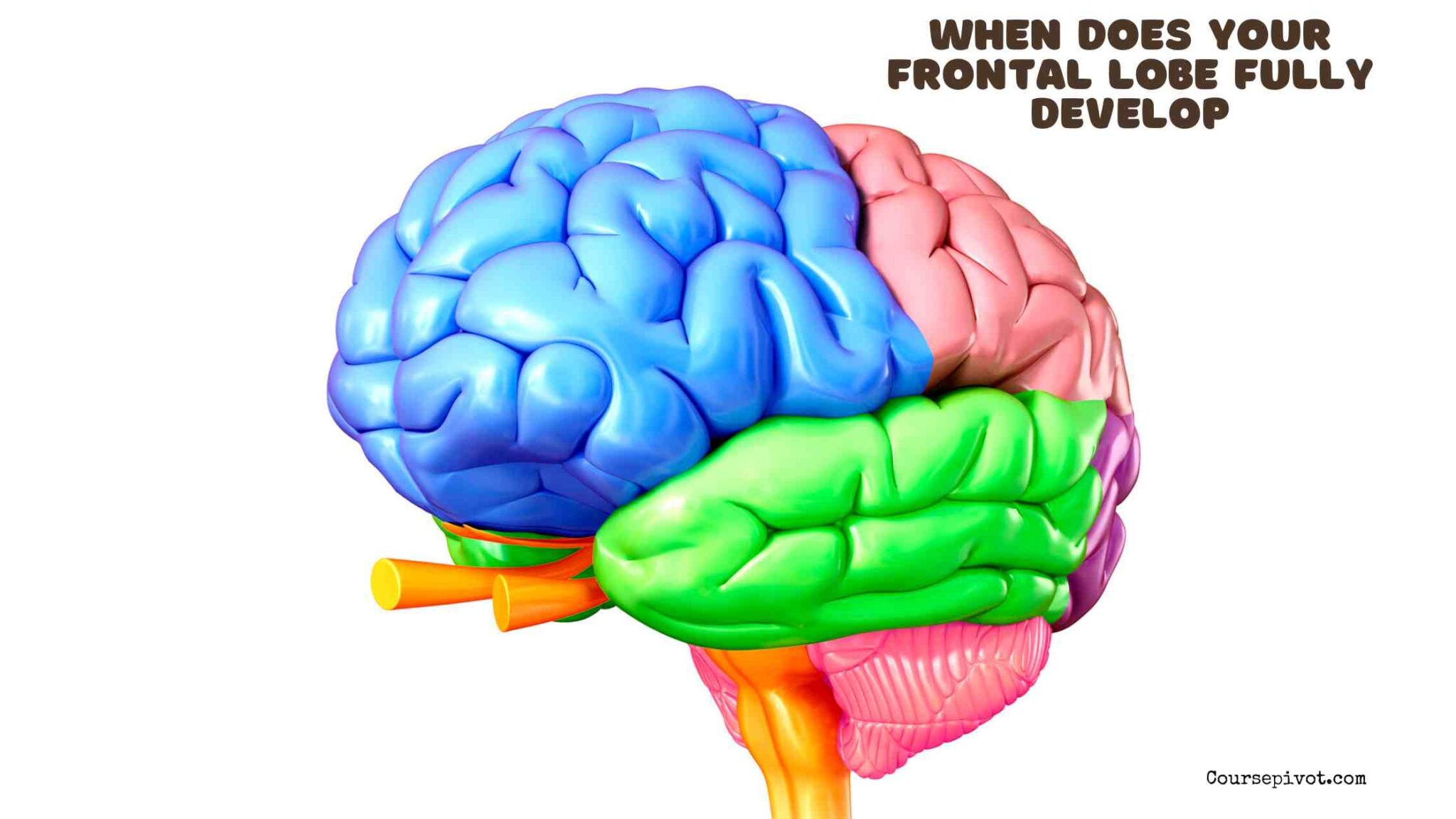
The frontal lobe is the large front section of the brain, located behind the forehead. It is involved in many of the abilities people connect with maturity, self-control, and purposeful behavior.
Important frontal lobe functions include:
- Planning and organizing tasks
- Setting goals and following steps
- Controlling impulses
- Weighing risks and consequences
- Solving problems
- Regulating emotions
- Paying attention
- Using working memory
- Understanding social behavior
- Coordinating voluntary movement
The prefrontal cortex is a major part of the frontal lobe. It helps with executive function, which is the mental skill set that allows a person to pause, compare options, choose a response, and adjust behavior when circumstances change.
This does not mean the frontal lobe works alone. Decision-making, emotion, memory, motivation, and attention all depend on networks across the brain. The frontal lobe is important because it helps coordinate those systems into intentional action.
Why People Say the Brain Develops Around Age 25
The age-25 idea comes from research showing that brain maturation continues after the teenage years. The prefrontal cortex is among the last brain areas to mature, and major developmental processes continue into early adulthood.
Two key processes are especially important:
| Process | What it means | Why it matters |
|---|---|---|
| Synaptic pruning | The brain strengthens frequently used connections and trims less-used ones | This can make thinking and behavior more efficient |
| Myelination | Nerve fibers become more insulated with a fatty coating called myelin | This helps signals travel faster and more reliably |
During adolescence, many people become better at planning, delaying gratification, judging risk, and managing emotions. These improvements are connected to changes in the prefrontal cortex and its communication with other brain regions.
So if someone asks, “When does your frontal lobe fully develop?” the simple classroom answer is often “around the mid-20s.” The more accurate answer is that frontal brain systems mature over a long period, with many people still showing important development into the mid-to-late 20s.
Why Age 25 Is Not a Magic Switch
Age 25 is a helpful estimate, not a finish line. Human development is too complex to be reduced to one universal number.
There are several reasons the answer needs nuance:
- People develop at different rates.
- Different parts of the frontal lobe mature on different timelines.
- Brain structure, brain function, and real-life behavior do not all mature at the same pace.
- Experience, education, sleep, stress, trauma, health, and substance use can influence development.
- The brain remains capable of learning and change throughout life.
It is also important not to use frontal lobe development to insult or dismiss younger people. Teenagers and young adults can reason, learn, make responsible choices, care for others, and understand consequences. The difference is that self-control and long-term planning are still strengthening, especially in emotionally intense or socially pressured situations.
A better way to think about it is this: before the mid-to-late 20s, the brain is not broken or unfinished in a simple way; it is still tuning the systems that support mature judgment.
What Changes During Frontal Lobe Development?
Frontal lobe development is not only about size. By adolescence, the brain is already close to adult size. What continues changing is the organization and efficiency of brain networks.
Several changes matter:
- Connections between brain regions become more coordinated.
- White matter pathways continue to strengthen.
- The brain becomes more efficient at filtering distractions.
- Emotional and reward systems become better balanced with control systems.
- Decision-making becomes less dependent on immediate emotion or peer approval.
This helps explain why a person may understand a rule but still struggle to follow it under pressure. Knowing the best choice and consistently making that choice are related, but they are not identical skills.
For example, a teenager may know that staying up all night before an exam is a bad idea. In the moment, however, stress, social media, friends, or short-term rewards may feel more powerful than tomorrow’s consequences. As the frontal systems mature, many people improve at pausing long enough to choose the long-term benefit.
How Frontal Lobe Development Affects Teens and Young Adults
Frontal lobe development can influence everyday behavior in practical ways. It may affect how a person handles school, friendships, money, driving, work, conflict, and long-term goals.
Common areas affected include:
- Impulse control: stopping before acting or speaking
- Time management: estimating how long tasks will take
- Emotional regulation: calming down before responding
- Risk evaluation: comparing short-term excitement with long-term cost
- Social judgment: reading context and choosing appropriate behavior
- Persistence: staying with a task when it becomes boring or difficult
This does not mean every teen is reckless or every adult is wise. Personality, environment, support, culture, habits, and mental health all matter. Developmental science describes patterns, not destiny.
It also explains why supportive structures help. Clear routines, good mentoring, realistic deadlines, and healthy sleep habits can make it easier for young people to use the executive skills they are still building.
Stress can also make self-control harder. If you are learning about stress and behavior, Coursepivot’s guide to common signs of stress is a useful next read.
How to Support Healthy Frontal Lobe Development
No routine can guarantee perfect brain development, but daily habits can support the systems involved in attention, learning, emotional control, and decision-making.
Helpful habits include:
- Getting enough sleep on a consistent schedule
- Exercising regularly
- Eating balanced meals
- Avoiding alcohol, nicotine, and drug misuse, especially during adolescence
- Practicing planning with calendars, checklists, and reminders
- Breaking large goals into smaller steps
- Learning how to name and regulate emotions
- Spending time with supportive people
- Reducing chronic stress where possible
- Asking for help when behavior, mood, or focus feels hard to manage
Practice matters because executive function grows through use. A person gets better at planning by planning, better at self-control by practicing pauses, and better at judgment by reflecting on real choices.
For anxiety-related habits, Coursepivot also has a practical guide on ways to stop anxiety before it starts. Anxiety and stress are not the same thing, but both can make decision-making feel more difficult.
If major mood changes, impulsive behavior, attention problems, substance use, or unsafe choices are affecting daily life, it is wise to talk with a qualified health professional. Brain development is educationally useful, but it should not replace personal medical or mental health support.
Common Myths About Frontal Lobe Development
The topic is often oversimplified online, so it helps to separate the useful science from the myths.
| Myth | Better explanation |
|---|---|
| ”Your brain is useless before 25.” | Young people can think deeply and make responsible decisions, but some control systems are still maturing. |
| ”Everyone’s frontal lobe finishes at exactly 25.” | Development varies, and the mid-20s is an estimate, not an exact deadline. |
| ”Adults always make rational choices.” | Adults can also act impulsively, especially under stress, fatigue, fear, or social pressure. |
| ”Brain development stops after the frontal lobe matures.” | The brain remains plastic and can keep learning throughout life. |
| ”Maturity is only biological.” | Maturity also depends on practice, responsibility, relationships, culture, and experience. |
The best interpretation is balanced: biology matters, but it is not the whole story. A maturing frontal lobe gives people stronger tools for judgment, but those tools still need practice and supportive environments.
The Bottom Line
Your frontal lobe, especially the prefrontal cortex, generally continues developing into the mid-to-late 20s. That is why age 25 is often mentioned in discussions about maturity, judgment, and impulse control.
However, there is no exact moment when the frontal lobe becomes “fully developed” for everyone. Development is gradual, and different mental skills mature at different times. The brain also continues adapting throughout adulthood.
So the clearest answer is this: the frontal lobe reaches important levels of maturity during early adulthood, often around the mid-to-late 20s, but maturity is not a switch. It is a process shaped by brain development, habits, relationships, choices, and experience.