

How Snow Days Affect Students in Different Communities
A snow day is the same calendar event for every student in a district, but what it actually means depends heavily on where and how you live.
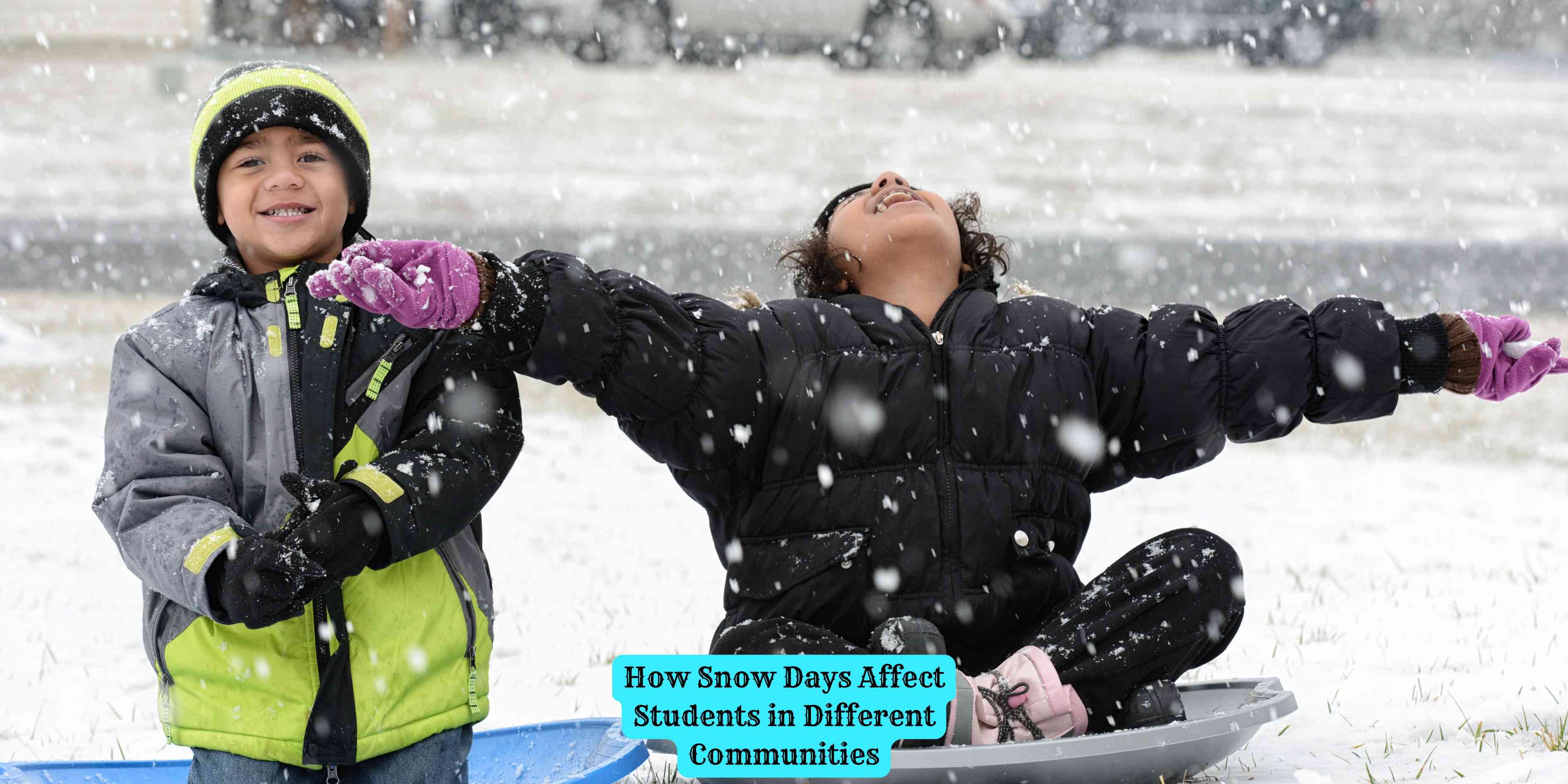
When schools close because of snow, the decision looks the same on paper for everyone: no school today. But the experience of that day — and the cost of it — varies enormously depending on where a student lives, how much their family earns, and what resources their school district has.
Snow days are rarely just a free day. For many students, they are a disruption to food access, supervision, learning continuity, and family logistics. Understanding these gaps matters more now that remote learning has changed the options schools have when weather strikes.
Snow Days Are Not One-Size-Fits-All
The phrase “snow day” carries a cultural image of sledding and hot cocoa. For many students, that image is accurate. For many others, it is not.
A student from a household with two working parents who cannot take the day off faces different circumstances than one whose parent works remotely or stays home. A student without internet access faces different circumstances than one with a laptop and broadband. A student who relies on school meals for most of their daily nutrition faces a different problem than one whose refrigerator is well stocked.
The decision to close school is made at the district level, often based on road conditions, building safety, and bus transit risk. What happens to each student after that decision is made is rarely part of the calculation.
Students in Low-Income Households Face the Sharpest Impact
For lower-income families, a snow day creates compounding problems.
Food access is the most immediate. Roughly 30 million students in the United States participate in school meal programs. For many of them, school-provided breakfast and lunch represent a significant share of reliable daily nutrition. A snow day removes that without notice and without a replacement system in most districts.
Some districts have attempted to distribute grab-and-go meal bags during closures, but coverage is inconsistent and requires transportation that families may not have in bad weather.
Child supervision is the second major issue. Low-wage jobs — retail, food service, healthcare support — rarely offer the flexibility to stay home with a child on short notice. Parents who cannot afford or arrange last-minute childcare may face the choice between going to work and leaving children unsupervised, or missing work and losing pay or even their jobs.
Lost learning time accumulates. Students who fall behind during school closures are less likely to recover fully when school resumes, particularly if homework catch-up is expected but resources at home are limited.
Rural Communities Face Unique Challenges
Rural students deal with snow differently than urban and suburban ones. School closures in rural districts often happen more frequently because roads are longer, less maintained, and buses travel farther with fewer redundancies.
The distances involved mean that alternative arrangements are harder. A neighbor who could watch a child is farther away. A library or community center that could provide warmth, internet, and structure is a longer drive — which may not be possible on unplowed roads.
Rural broadband access also lags significantly behind urban and suburban areas, which means remote learning days are not a realistic substitute when schools close. The threshold for canceling school matters more in rural districts, where the decision comes with fewer fallback options.
Wealthier Districts and Families Absorb Snow Days More Easily
For students in higher-income households and well-funded districts, a snow day functions much closer to the cultural image of it.
Parents with professional jobs and remote-work flexibility can stay home. Households with reliable internet and devices can shift easily to digital learning or enrichment. Well-stocked homes are not food-insecure for a day. Students with dedicated study space can continue work independently.
Wealthier districts also tend to have more technology infrastructure in place, more parent communication systems, and more options for turning a closure day into an asynchronous learning day rather than a complete instructional loss.
The gap is not about effort or parenting — it is about the material conditions that determine what a day outside of school actually looks like.
Remote Learning Changed What Snow Days Mean
The COVID-19 pandemic forced schools to develop remote learning infrastructure that did not previously exist at scale. After the pandemic, some districts began using that infrastructure to eliminate traditional snow days in favor of remote learning days — keeping the instructional calendar intact while keeping students and staff physically safe.
This shift helped in some ways and created new problems in others. For students with reliable devices and internet, a remote learning day is close to a normal school day. For students without those resources, a remote learning day with assignments but no live instruction can feel like homework with extra steps.
The uneven distribution of technology access means that the shift from snow days to remote learning days does not eliminate the equity gap — it relocates it.
Some advocates argue that online school works better than in-person for certain students, and snow days reveal exactly why: structure and access matter more than physical location for many learners.
The Working Parent Problem
School closures affect parents’ work lives in ways that rarely make it into policy discussions. For hourly workers without paid time off, a snow day is an unplanned financial hit. For workers in essential roles who cannot simply not show up, it is a childcare crisis.
Single-parent households are particularly vulnerable. With no second adult to share coverage, a snow day puts the entire logistical burden on one person who may have no good options.
Research on school closures — initially driven by snow days, and expanded significantly during COVID — consistently shows that unplanned closures increase economic strain for low-income households and have measurable effects on parent employment stability.
Making Up Lost Time Creates Its Own Problems
Most states require a minimum number of instructional days per year. When snow days accumulate beyond the built-in buffer, districts must make them up — by extending the school year, shortening breaks, or adding instructional minutes.
Each of those solutions has trade-offs. Extending the school year disrupts summer plans, camps, and jobs. Shortening spring break reduces recovery time for students and staff who are already worn down. Adding instructional minutes changes bus schedules and after-school arrangements in ways that can ripple into family logistics.
Districts with more snow days in their buffer, and more flexibility in how they designate remote learning days, absorb these pressures better than those that do not.
A snow day is a weather event. What it costs — in food, childcare, learning, and pay — is a social equity question. The districts that handle them best are the ones that plan not just for the logistics of the closure, but for the different realities their students are going home to.