

5 Trends in Early Childhood Education
Current trends in early childhood education include play-based learning, social-emotional support, inclusive classrooms, family partnerships, and careful use of technology.
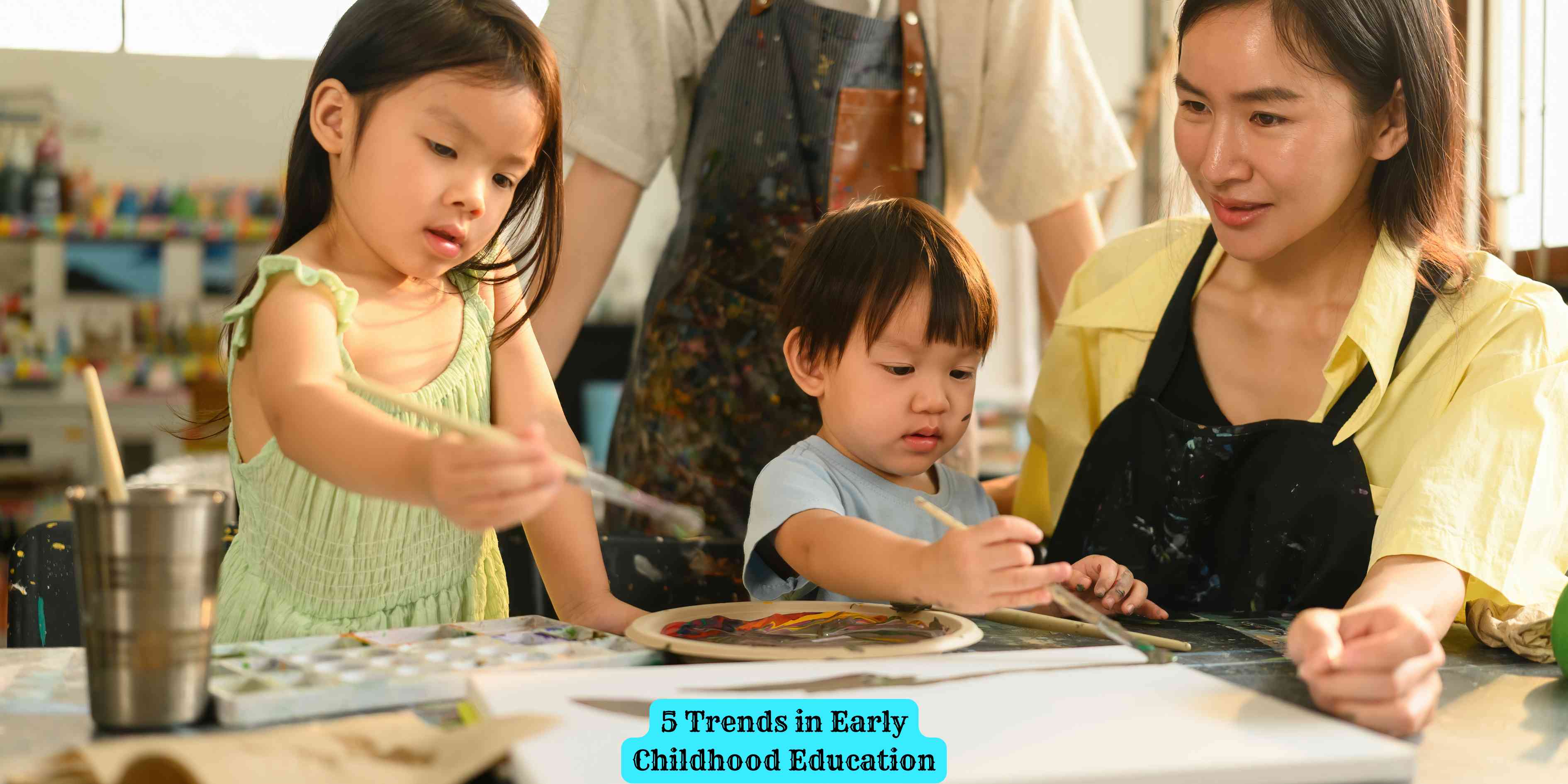
Early childhood education is changing as teachers, families, researchers, and policymakers better understand how young children learn. The strongest trends are not about replacing childhood with screens or rushing children into academic pressure. They are about creating safer, more responsive, more inclusive, and more meaningful early learning environments.
Young children need play, relationships, movement, language, emotional support, and chances to explore. Current trends reflect that reality.
The most important trend in early childhood education is a shift toward whole-child learning, where cognitive growth, social-emotional development, health, identity, family, and play are treated as connected.
Here are five major trends shaping early childhood education today.
Five trends in early childhood education are:
- Play-based and inquiry-based learning
- Social-emotional learning and mental health support
- Inclusive and culturally responsive classrooms
- Stronger family engagement
- Thoughtful technology and early digital balance
These trends are connected. A play-based classroom can also support language, social skills, inclusion, and family culture. Technology can support learning, but only when used carefully and in ways that fit children’s development.
The best early childhood trends are not temporary fads. They respond to what research and classroom experience show about how children grow.
1. Play-Based and Inquiry-Based Learning
Play-based learning is gaining attention because play is one of the main ways young children learn. Through play, children test ideas, solve problems, use language, develop motor skills, practice cooperation, and build imagination.
Inquiry-based learning adds curiosity. Instead of simply giving children answers, teachers help them ask questions, observe, compare, predict, and investigate.
For example, a class studying plants might water seeds, measure growth, draw observations, talk about sunlight, and compare leaves. Children learn science, vocabulary, patience, and responsibility through active experience.
NAEYC has emphasized the power of playful learning in early childhood settings. This trend pushes back against overly academic approaches that rely too much on worksheets or long periods of sitting.
Play-based learning is not unstructured chaos. Teachers plan environments, ask questions, guide behavior, and connect play to learning goals.
2. Social-Emotional Learning and Mental Health Support
Another major trend is stronger attention to children’s emotional development. Young children need help understanding feelings, building friendships, managing frustration, and feeling safe.
Social-emotional learning may include naming emotions, practicing calming strategies, taking turns, solving conflicts, and building empathy. These skills support learning because children who feel safe and connected are better able to pay attention and participate.
Teachers are also more aware of stress, trauma, and behavior as communication. A child who melts down, withdraws, or acts aggressively may need support, not just punishment.
This does not mean there are no rules. It means discipline is paired with teaching, relationships, routines, and emotional coaching.
For students later in life, social-emotional skills continue to matter. This article on three strategies for academic success connects habits, focus, and support to school performance.
3. Inclusive and Culturally Responsive Classrooms
Early childhood education is also moving toward more inclusive classrooms. Inclusion means children with disabilities, developmental delays, language differences, and diverse backgrounds are welcomed and supported.
This trend recognizes that children do not all learn in the same way or at the same pace. Teachers may use visual supports, flexible seating, adaptive materials, individualized goals, and collaboration with specialists.
Culturally responsive teaching is part of inclusion. Children should see their languages, families, names, stories, foods, music, and community experiences respected in the classroom.
This matters because young children build identity early. If a classroom treats a child’s culture as invisible or less valuable, that can affect belonging. If the classroom honors the child’s background, learning becomes more connected and respectful.
Inclusive education requires training and resources. It is not enough to place children in the same room. Teachers need support to meet varied needs well.
4. Stronger Family Engagement
Early childhood education works best when families and educators communicate. Young children live in both worlds: home and school. Strong partnerships help teachers understand the child more fully.
Family engagement can include regular communication, parent conferences, home-language support, family activities, resource referrals, and shared goal-setting.
This trend moves away from seeing parents as outsiders. Parents and caregivers know important things about their children’s routines, fears, strengths, culture, health, and interests.
Teachers can also support families by noticing developmental concerns early and helping connect them with services. Early support can make a major difference.
Family engagement should be flexible. Not every parent can attend daytime events or respond to long messages. Strong programs use multiple ways to communicate.
If you want the foundation behind these trends, read why early childhood education is important.
5. Thoughtful Technology and Digital Balance
Technology is entering early childhood education, but the best trend is not simply “more screens.” It is thoughtful digital balance.
Young children learn best through relationships, hands-on play, movement, language, and real-world exploration. Technology should support those experiences, not replace them.
Used carefully, technology can help teachers document learning, communicate with families, support accessibility, introduce creative tools, or connect children with images and sounds they could not otherwise experience.
Used poorly, technology can reduce conversation, movement, sleep, attention, and imaginative play. It can also widen inequities if some children have access to high-quality tools and others do not.
UNESCO’s work on technology in education emphasizes that technology should be appropriate, equitable, scalable, sustainable, and in learners’ best interests. That caution matters even more with young children.
For a broader look at education technology, read how important technology is in education.
What These Trends Have in Common
These trends all point toward whole-child education. They recognize that children are not only future test takers. They are developing people with bodies, feelings, languages, families, cultures, and ideas.
Good early childhood education balances structure and freedom. It gives children routines, safety, and guidance while also giving them room to explore.
It also respects teachers as professionals. These trends require observation, planning, reflection, communication, and skill.
The future of early childhood education should not be colder, faster, or more mechanical. It should be more human, more inclusive, and more responsive to how children actually learn.
Final Thoughts
The five major trends in early childhood education are play-based learning, social-emotional support, inclusion, family engagement, and thoughtful technology use. Together, they show a shift toward educating the whole child.
Trends are only useful when they improve children’s lives. The goal is not to chase buzzwords. The goal is to create early learning environments where children feel safe, curious, capable, and connected.