

Who Is Responsible for Providing PPE and Hazard Training to Employees?
Employers are generally responsible for assessing workplace hazards, providing required PPE, paying for most required PPE, and training employees to use it safely.
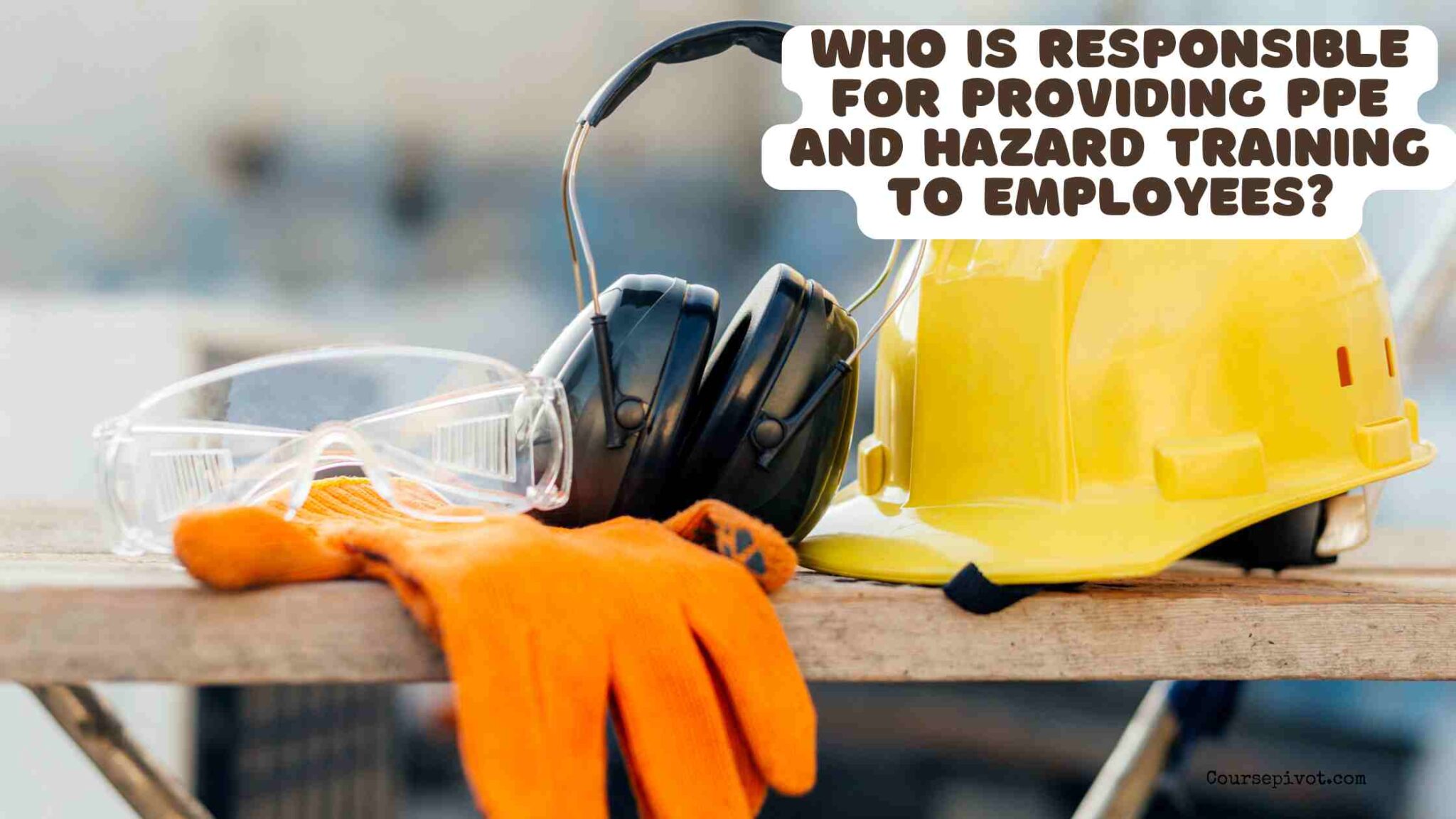
The employer is generally responsible for providing required personal protective equipment, often called PPE, and for training employees on workplace hazards that affect their jobs. Employees also have responsibilities, but the main legal duty to identify hazards, choose proper protection, and train workers belongs to the employer.
PPE can include safety glasses, gloves, respirators, face shields, hard hats, hearing protection, protective footwear, chemical-resistant clothing, fall protection, and other equipment used to reduce workplace injury or illness.
In simple terms, employers must identify workplace hazards, provide appropriate PPE when it is required, train employees on how and when to use it, and make sure the safety program actually works.
This article is for general education, not legal advice. Workplace safety rules can vary by industry, job task, state plan, union agreement, and specific hazard, so employers should review the exact OSHA standard that applies to their workplace.
The Short Answer
In most workplaces, the employer is responsible for providing PPE and hazard training to employees. Under OSHA rules, employers must assess the workplace for hazards, select PPE that fits the hazards, provide training to employees who need PPE, and usually pay for PPE required by OSHA standards.
Employees are not supposed to guess which equipment is safe, learn hazard controls by trial and error, or buy required safety gear just to do their assigned work. A safe workplace requires a planned system.
That system usually includes:
- A hazard assessment
- Selection of the correct PPE
- Employee training before exposure to hazards
- Clear instructions on PPE use, limits, care, and replacement
- A written hazard communication program when hazardous chemicals are present
- Records or documentation where required
- Ongoing supervision, retraining, and program review
The exact requirements depend on the workplace. A laboratory, warehouse, hospital, construction site, machine shop, school maintenance department, and restaurant kitchen may all have different PPE needs.
What OSHA Says About PPE Responsibility
OSHA’s general PPE standard requires employers to assess the workplace to determine whether hazards are present or likely to be present. If hazards require PPE, the employer must select and have affected employees use the types of PPE that will protect them.
This matters because PPE is not chosen randomly. The equipment must match the hazard. Safety glasses may protect against flying particles, but they may not protect against chemical splash unless the correct type is used. Disposable gloves may protect against one chemical but fail against another. A dust mask is not the same as a properly selected respirator.
OSHA also says PPE must be of safe design and construction for the work. If employees provide their own protective equipment, the employer still has responsibility to make sure it is adequate, properly maintained, and sanitary.
So even when an employee owns a pair of safety glasses, gloves, or boots, the employer cannot simply assume the equipment is good enough. The employer must make sure it is appropriate for the hazard and acceptable for the job.
Employers Usually Must Pay for Required PPE
Employers generally must pay for PPE that is required to comply with OSHA standards. This includes many types of protective equipment used because the job exposes employees to workplace hazards.
There are some exceptions. OSHA rules include limited situations where employers are not required to pay, such as certain non-specialty safety-toe footwear or non-specialty prescription safety eyewear when employees are allowed to wear those items away from the job site. Ordinary clothing, skin creams, and weather-related items may also have special rules depending on the situation.
Still, the broad rule is important: if OSHA requires PPE for the job, employers usually cannot shift the cost to employees.
Payment is only one part of the responsibility. The employer must also make sure PPE is available, appropriate, maintained, replaced when needed, and used correctly. Cheap or poorly selected PPE can create a false sense of safety.
What PPE Training Must Cover
Providing PPE is not enough. Employees must know how to use it correctly.
OSHA’s PPE training requirements generally expect employers to train each employee who must use PPE. Training should explain when PPE is necessary, what PPE is necessary, how to properly put it on, adjust it, wear it, and remove it, what the limitations of the PPE are, and how to care for, maintain, store, and dispose of it.
This training should be practical. A worker who receives gloves but does not know which chemicals they protect against is not fully protected. A worker who receives a respirator but does not know its limits may use it in a dangerous situation. A worker who wears hearing protection incorrectly may still suffer hearing damage.
Good PPE training answers questions like:
- What hazard is this PPE protecting against?
- When must I wear it?
- How do I check whether it fits?
- How do I put it on and take it off safely?
- What can this equipment not protect me from?
- How do I clean, store, or replace it?
- Who do I tell if it is damaged or missing?
Training may need to be repeated when the workplace changes, new hazards appear, new PPE is introduced, or an employee shows they do not understand how to use the equipment safely.
Who Provides Hazard Communication Training?
When employees work with or may be exposed to hazardous chemicals, the employer is responsible for hazard communication training. OSHA’s Hazard Communication Standard requires employers to provide employees with effective information and training about hazardous chemicals in their work area at the time of initial assignment and when new chemical hazards are introduced.
Hazard communication, often called HazCom, is about making sure workers understand chemical risks before they are harmed. It includes labels, safety data sheets, written programs, and training.
Employees should know:
- Which hazardous chemicals are present in their work area
- How to read labels and safety data sheets
- What health and physical hazards the chemicals may create
- How to protect themselves from exposure
- What PPE or controls are required
- What to do in a spill, leak, splash, or emergency
Hazard communication training should be understandable to the employees receiving it. Handing someone a binder of safety data sheets without explanation is not the same as effective training.
If the workplace also involves hazardous waste, employees may benefit from understanding basic classifications. This guide on characteristics of hazardous waste explains related concepts in a student-friendly way.
What Employees Are Responsible For
Although employers carry the main duty to provide PPE and training, employees have safety responsibilities too.
Workers should attend required safety training, wear PPE when required, use equipment correctly, inspect it before use, keep it clean when assigned, store it properly, and report damaged, missing, uncomfortable, or ineffective PPE.
Employees should also follow safety procedures, read labels, ask questions when instructions are unclear, and report hazards. If a worker removes required eye protection, ignores lockout procedures, or uses gloves that are visibly damaged, they may be putting themselves and others at risk.
However, employee responsibility does not erase employer responsibility. A company cannot avoid its duty by saying workers should have known better if the company failed to assess hazards, provide proper PPE, or train people clearly.
Safety works best when both sides do their part: employers build and enforce the system, and employees follow it and speak up when something is wrong.
Supervisors, Safety Officers, and Contractors
In many workplaces, supervisors, safety managers, human resources staff, trainers, or outside consultants may help deliver PPE and hazard training. They may run orientations, inspect job sites, review safety data sheets, order PPE, or document training.
But assigning tasks does not remove the employer’s overall responsibility. The employer still has to make sure the program meets legal requirements and protects employees.
Contractor situations can be more complex. A host employer, staffing agency, subcontractor, or general contractor may all have safety duties depending on who controls the work, who supervises the worker, and what hazards are present. Temporary workers must also receive appropriate safety training for the hazards they face.
For example, a staffing agency may provide general safety orientation, while the host employer must explain site-specific hazards, chemical exposures, emergency procedures, and required PPE. Both parties should coordinate so workers are not left untrained.
What a Good PPE and Hazard Training Program Includes
A strong PPE and hazard training program is more than a one-time presentation. It should be connected to the real work employees do every day.
A good program usually includes a documented hazard assessment, clear PPE selection, hands-on demonstrations, employee questions, supervisor follow-up, replacement procedures, and retraining when needed.
It should also explain why certain controls come before PPE. OSHA and safety professionals generally prefer eliminating the hazard, substituting safer materials, using engineering controls, and using administrative controls before relying only on PPE. PPE is important, but it is often the last line of defense.
For example, a company should not rely only on respirators if it can improve ventilation, substitute a less hazardous chemical, or isolate the process. PPE protects the worker, but removing or reducing the hazard is usually better.
A good program also treats safety culture seriously. Employees should not be mocked, rushed, or punished for asking safety questions. Workplace stress and fear can make safety problems worse, which is one reason this article on managing stress in the workplace may be useful for broader workplace health.
Common Mistakes Employers Should Avoid
One common mistake is assuming that buying PPE equals compliance. PPE that does not fit, is uncomfortable, is the wrong type, or is not explained clearly may not protect employees.
Another mistake is using generic training that does not match the job. A warehouse worker, custodian, laboratory assistant, dental worker, machine operator, and painter may all need different hazard training.
Employers should also avoid waiting until after an injury to update training. If a new chemical, machine, process, or task is introduced, the hazard assessment and training should be reviewed before workers are exposed.
Other mistakes include failing to replace damaged PPE, not training temporary workers, ignoring language or literacy barriers, forgetting retraining, relying on verbal instructions only, or letting supervisors model unsafe behavior.
The goal is not just to have paperwork. The goal is for employees to understand the hazards well enough to protect themselves and others.
Final Thoughts
Employers are generally responsible for providing required PPE and hazard training to employees. That includes assessing hazards, choosing suitable PPE, paying for most required PPE, explaining how to use it, and making sure workers understand the hazards they face.
Employees also have responsibilities: attend training, use PPE correctly, care for it, report problems, and follow safety procedures. But the foundation of workplace safety starts with the employer creating a clear, effective, and enforceable safety program.