

10 Reasons to Visit Rwanda this Year
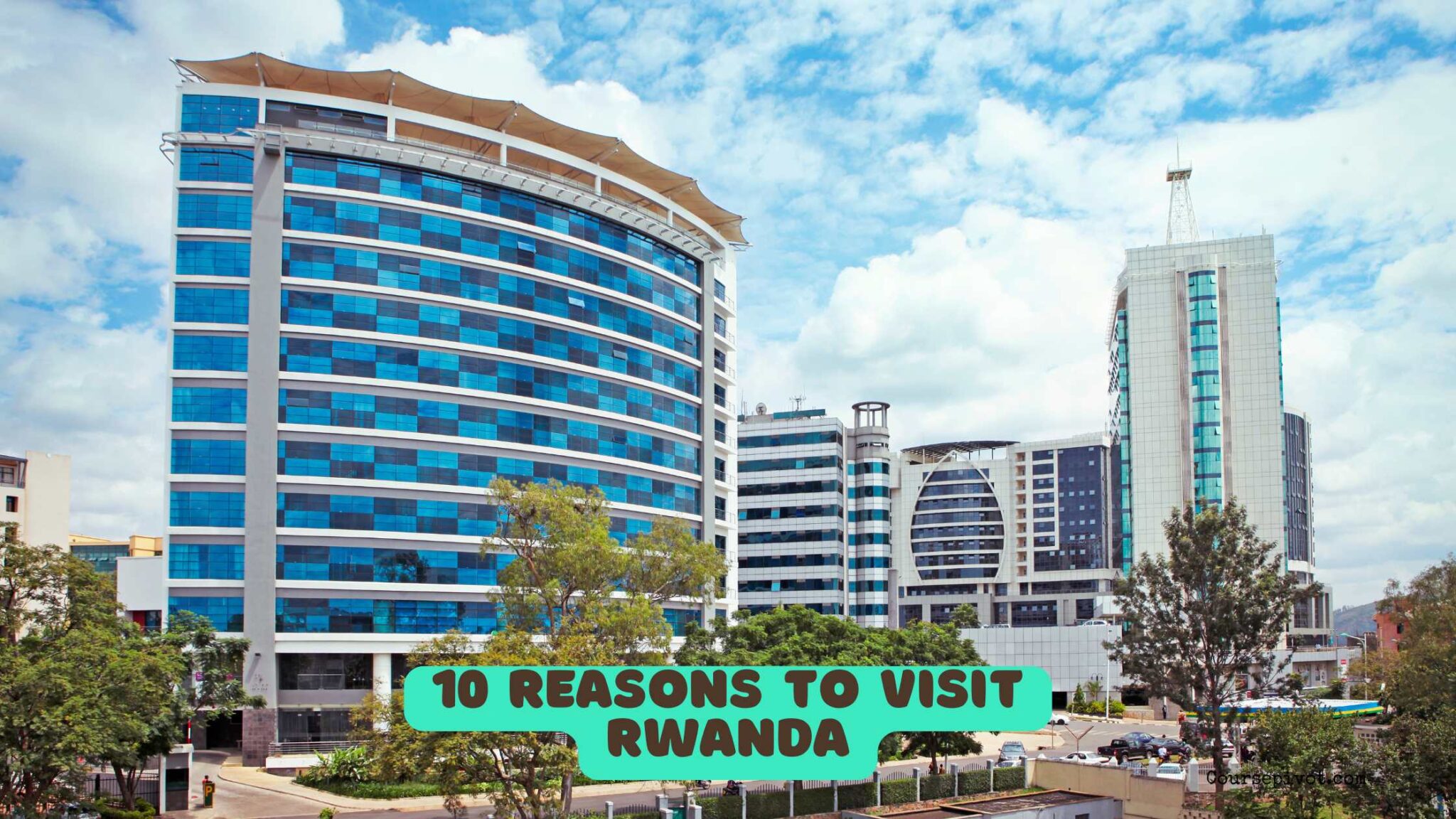
Rwanda is not the country most travellers picture when they think of Africa. There is no sprawling savannah, no coastline, and no megacity. What Rwanda has instead is something harder to manufacture: a landscape of extraordinary green hills rolling endlessly in every direction, a capital city that is genuinely clean and safe, and a national story of transformation that is — in the most literal sense — one of the most remarkable in modern history. It is also home to one of the rarest wildlife encounters on earth.
Travel to Rwanda has grown significantly over the past decade, and for good reason. The country has invested heavily in eco-tourism infrastructure, security, and conservation — and visitors consistently report that it exceeds expectations. Whether you are drawn by wildlife, culture, history, or simply the desire to go somewhere genuinely different, here are ten reasons Rwanda deserves to be on your itinerary this year.
Q: Is Rwanda safe to visit as a tourist? A: Yes — Rwanda consistently ranks as one of the safest countries in Africa and one of the safest in the world for international travellers. The capital Kigali frequently appears on lists of Africa’s safest and cleanest cities. The country has a strong rule of law, low street crime, a well-functioning tourist police presence at major sites, and a government that is deeply invested in its international reputation as a tourism destination. Solo travellers, women travelling alone, and first-time Africa visitors regularly report feeling comfortable and well-supported throughout the country.
1. Gorilla Trekking in Volcanoes National Park
Rwanda is one of only three countries in the world — alongside Uganda and the Democratic Republic of Congo — where you can trek to see wild mountain gorillas in their natural habitat. Volcanoes National Park in the Virunga Mountains is home to more than a third of the world’s remaining mountain gorilla population, and the experience of spending a permitted hour in the presence of a habituated gorilla family is, by consistent traveller consensus, one of the most profound wildlife encounters available anywhere on earth.
Gorilla trekking permits in Rwanda cost $1,500 USD per person — among the most expensive single-activity permits in the world. The cost reflects the conservation imperative: permit revenue funds anti-poaching patrols, community benefit programmes, and veterinary care for the gorilla population. Mountain gorillas were downlisted from Critically Endangered to Endangered in 2018 — one of the few large mammal species whose population has been increasing — and responsible tourism is a direct contributor to that outcome.
Treks vary in difficulty and duration depending on which gorilla family you are assigned to. Some take less than an hour from the park boundary; others involve several hours of hiking through dense bamboo forest and altitude. Physical fitness is recommended but not required — porters are available, and the park is experienced in accommodating visitors of varying ability.
2. Kigali: One of Africa’s Most Liveable Cities
Kigali is a city that consistently surprises visitors who arrive with conventional expectations of an African capital. It is extraordinarily clean — plastic bags have been banned since 2008, and the monthly community cleaning day (Umuganda) mobilises citizens across the country to maintain public spaces — and the infrastructure is modern, functional, and well-maintained.
The city has a growing restaurant and café scene that reflects both Rwandan culture and the city’s increasingly cosmopolitan character, good accommodation across all price points, well-maintained roads, and a general atmosphere of orderliness that distinguishes it from many regional capitals. The Kigali Convention Centre — a striking copper-domed building visible from much of the city — signals the level of investment that has transformed the capital over the past two decades.
Kigali also has excellent day-trip potential: the Inema Arts Centre showcases contemporary Rwandan and East African art; the Caplaki Crafts Village is the best place to buy high-quality Rwandan basketry and textiles; and the city’s hills offer panoramic views of the surrounding landscape that few capitals can match.
3. The Kigali Genocide Memorial
No visit to Rwanda is complete — or fully honest — without engaging with the history that the country has lived through and continues to process. The Kigali Genocide Memorial is one of the most important and thoughtfully curated memorial sites in the world. It documents the 1994 genocide against the Tutsi, in which an estimated 800,000 to one million people were killed in approximately 100 days, and it does so with a depth, care, and humanity that neither sensationalises nor sanitises.
The memorial is built on a site where more than 250,000 victims are buried. The permanent exhibition moves through the history of the genocide — its origins, its execution, the international failure to intervene, and the process of survival and reconstruction — in a way that demands full attention. A section on other genocides of the twentieth century places Rwanda in a broader history of mass atrocity. A children’s memorial is among the most affecting rooms in any memorial site anywhere in the world.
Visiting the Kigali Genocide Memorial is not comfortable. It is not designed to be. But it is one of the most important things a visitor to Rwanda can do — both as a form of witness and as an act of respect for a country that has rebuilt itself with extraordinary courage from an almost unimaginable starting point.
4. Golden Monkey Trekking in the Virungas
Less famous than its gorilla equivalent but equally rewarding, golden monkey trekking in Volcanoes National Park offers a wildlife encounter at a fraction of the gorilla permit cost — approximately $100 USD — and often with a more immediately playful and visually arresting experience. Golden monkeys (Cercopithecus kandti) are endemic to the Virunga Massif and found nowhere else on earth. Their vivid orange-gold back patches against charcoal and white faces make them among the most visually striking primates in the world.
Where gorilla encounters tend toward the quietly overwhelming — large, unhurried animals going about their day in ways that feel recognisably thoughtful — golden monkey treks are livelier. The monkeys move through bamboo forest with acrobatic speed and are genuinely curious about their visitors. Groups of 60–80 animals are common. The combination of gorilla and golden monkey trekking on consecutive days, based from one of the lodges near the park, is among Rwanda’s most rewarding itinerary combinations.
5. Nyungwe Forest National Park and Chimpanzee Tracking
In the southwest of the country, Nyungwe Forest is one of the oldest and most biodiverse montane rainforests in Africa. It covers more than 1,000 square kilometres, contains 13 primate species including chimpanzees and L’Hoest’s monkeys, and hosts over 300 species of birds — making it a significant draw for serious birders. The forest canopy walkway, suspended 50 metres above the forest floor, offers a perspective on the ecosystem that few other African reserves can match.
Chimpanzee trekking in Nyungwe is less certain than gorilla trekking — chimpanzees range widely and habituated groups are harder to locate consistently — but the surrounding experience of being in one of the continent’s most intact forest ecosystems makes the trip worthwhile regardless of how close the chimps come. The Uwinka Visitor Centre provides excellent contextual information about the park, and the tea plantations of Gisakura that border the park’s edge create a visual transition between cultivated landscape and old-growth forest that is itself worth seeing.
6. Lake Kivu: Africa’s Most Underrated Lakeside
Lake Kivu stretches along Rwanda’s western border with the Democratic Republic of Congo and is one of the Great Rift Valley lakes — but unlike the more famous Malawi, Tanganyika, or Victoria, it remains largely unknown outside the region. The lake is at altitude (1,460 metres above sea level), which keeps temperatures mild and the water clear and cool. The lakeside town of Gisenyi (now officially Rubavu) in the north is the most developed visitor hub, with beach accommodation, water sports, and a relaxed atmosphere that makes it a popular weekend destination for Kigali residents.
The smaller town of Kibuye (Karongi) further south is quieter and arguably more scenic, with a series of islands accessible by boat and accommodation ranging from budget guesthouses to mid-range lodges with extraordinary lake views. Lake Kivu also produces methane gas in its deep layers — a geological quirk being harnessed for energy generation in what is one of Africa’s more unusual power infrastructure projects.
7. Rwanda’s Extraordinary Biodiversity and Birding
Rwanda’s combination of highland forest, savannah, wetlands, and montane ecosystems produces a bird list of over 700 species, making it a genuinely significant birding destination that receives a fraction of the attention directed at better-known East African birding countries. The Albertine Rift endemics found in Nyungwe — including the Rwenzori turaco, handsome francolin, red-throated alethe, and Grauer’s rush warbler — are target species for birders who have already covered the more standard East African circuits.
Akagera National Park in the east, which was partially destocked and largely non-functional as a wildlife reserve until a management partnership with African Parks began in 2010, has undergone a remarkable restoration. Lions were reintroduced in 2015, black rhino in 2017, and the park now supports a recovering ecosystem that includes elephant, hippo, giraffe, zebra, buffalo, and a substantial diversity of antelope species alongside exceptional wetland birding along Lake Ihema.
8. The Culture of Reconciliation and Resilience
What Rwanda has achieved in the thirty years since the genocide — in terms of economic development, institutional rebuilding, infrastructure investment, gender equality in governance (Rwanda has consistently ranked first globally in women’s parliamentary representation), and social cohesion — is by any measure extraordinary. The country’s trajectory is a subject of serious study in development economics, post-conflict reconstruction, and political science, and engaging with it gives a visitor to Rwanda a perspective on human resilience and institutional capacity that is genuinely rare.
The gacaca courts — community-based restorative justice proceedings established to process the overwhelming volume of genocide cases that formal courts could never have handled — represent one of the most ambitious experiments in transitional justice in modern history. More than two million cases were processed over ten years. The model has been studied and partially adapted in post-conflict contexts around the world. Understanding it, even at a surface level, gives depth to the national story that goes far beyond what headlines about “Africa’s Singapore” typically convey.
9. Sustainable and Responsible Tourism Infrastructure
Rwanda’s tourism model is deliberately built around low-volume, high-value, environmentally responsible experiences — and this philosophy is visible across the sector. The country has invested in eco-lodges, community tourism initiatives, and conservation partnerships that channel visitor revenue directly to local communities and conservation programmes. The high gorilla permit price is explicitly designed to limit the number of visitors (a maximum of 96 permits per day across all gorilla groups) while maximising the per-visitor revenue flowing to conservation and local benefit.
For travellers who are conscious of the environmental and social impact of their travel, Rwanda offers unusually clear evidence that their expenditure is doing something beyond funding a holiday. The national commitment to environmental sustainability — Rwanda bans single-use plastics, enforces land-use regulations aggressively, and has a presidential commitment to tree-planting and reforestation — is not a marketing claim but a measurable national policy orientation that visitors can observe directly.
10. The Hills, the Light, and the Feeling of a Country Going Somewhere
Rwanda is called “the land of a thousand hills” (Pays des mille collines) and the name understates it. The landscape is defined by an endless succession of green ridges and valleys that turn extraordinary colours in the early morning light and at dusk — shades of emerald, olive, and deep forest green that shift with the cloud cover and the season. Small farms cling to hillsides at improbable angles. Villages sit on ridgelines. The scale of human habitation written into the landscape is part of what makes Rwanda visually unlike anywhere else in Africa.
Beyond the landscape, there is a quality to travelling in Rwanda that is difficult to quantify but consistently reported: a sense of a country that is actively building something, that takes its institutions and its international reputation seriously, and that welcomes visitors with a combination of genuine hospitality and quiet national pride. It is a destination that earns its place on any serious travel list not through spectacle but through depth — and that rewards travellers who engage with it fully rather than passing through.
From the mountain gorillas of Volcanoes National Park to the shores of Lake Kivu, Rwanda compresses an extraordinary range of experiences into a country smaller than Belgium. It is a destination that deserves to be taken seriously — not only for what it offers travellers today, but for what it represents as a story of recovery, determination, and possibility. For those managing travel health and logistics before visiting, understanding when pregnancy affects travel safety provides useful context for specific groups of travellers. And since any significant international trip involves careful planning, 5 valid reasons for cancelling a holiday is worth reviewing before final commitments are made.