

8 Reasons Not to Visit Morocco
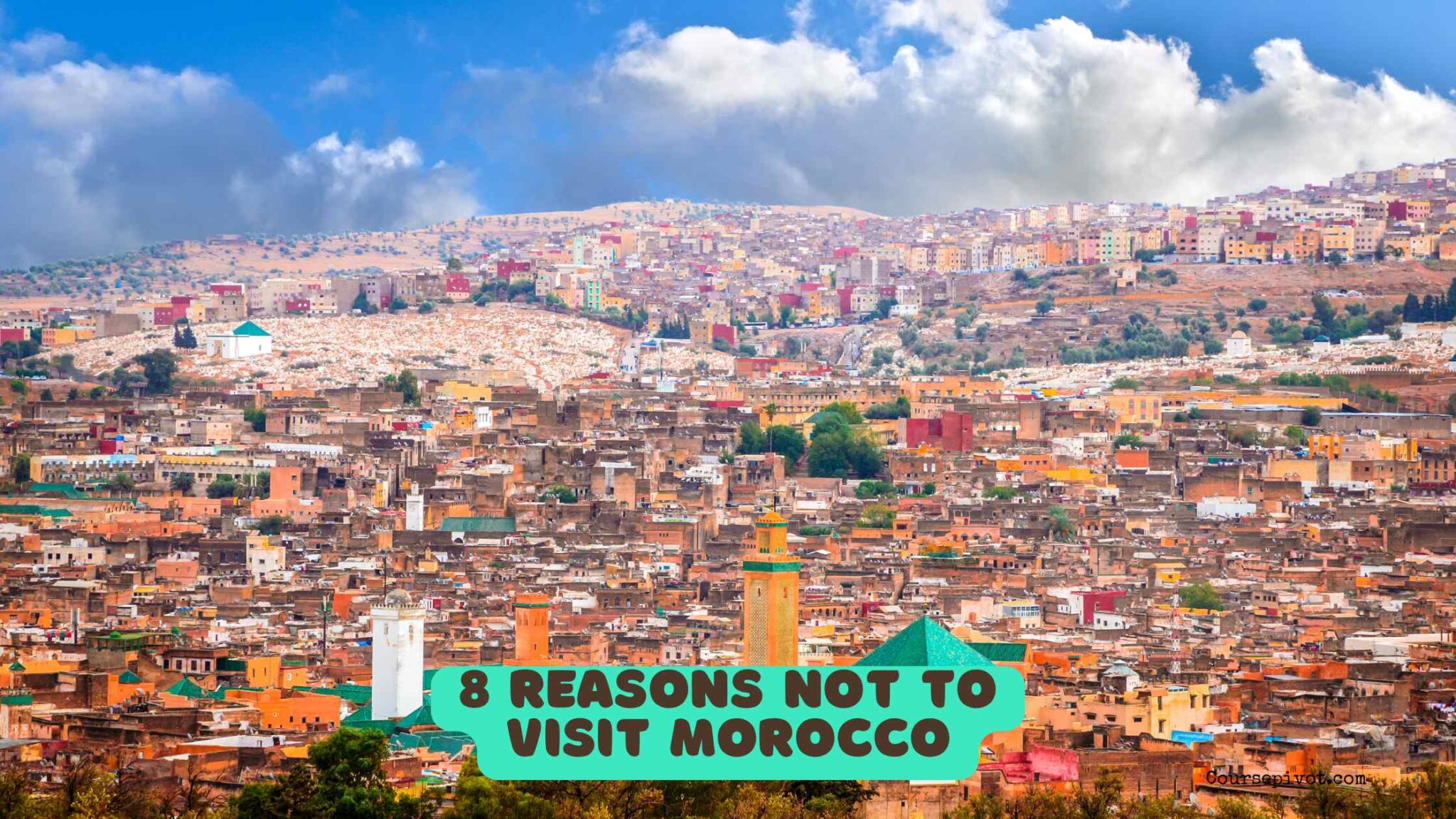
Morocco consistently appears near the top of Africa travel lists, and the reasons are obvious: the medinas of Fez and Marrakech, the Sahara dunes at Merzouga, the blue streets of Chefchaouen, the Atlantic coast at Essaouira. It is genuinely photogenic, culturally rich, and relatively accessible from Europe. Millions of tourists visit every year and come home with photographs that fill up Instagram for weeks.
But Morocco is also a destination that divides travellers sharply. For every person who calls it the most enchanting place they have visited, there is another who found it exhausting, stressful, or at odds with what they were looking for. The country has real challenges for certain types of travellers, and honest travel writing means acknowledging them — not to put people off without reason, but to help you decide with clear eyes whether Morocco matches your travel style and expectations.
Q: Should I still visit Morocco despite the challenges? A: For many travellers, yes — absolutely. Morocco is a genuinely extraordinary country with culture, landscape, food, and history that are hard to match anywhere in the world. The challenges described in this article are real, but most experienced travellers navigate them without serious difficulty. The honest answer is that Morocco rewards travellers who do their research, travel with realistic expectations, move at a measured pace, and are comfortable with a degree of sensory intensity and negotiation. If that profile fits you, go. If it does not, there are other destinations worth prioritising first.
1. The Harassment and Touting in Tourist Areas Is Persistent and Exhausting
This is the complaint that appears most consistently in honest traveller accounts of Morocco, and there is no diplomatic way to address it that does not diminish the reality. In the main tourist centres — Marrakech’s Djemaa el-Fna and medina, Fez’s Bab Bou Jeloud area, Chefchaouen’s centre — the density of unsolicited approaches from touts, false guides, and commission-driven shopkeepers is high and relentless by international comparison.
Tactics range from the relatively mild (persistent verbal offers of assistance or directions that inevitably lead to a shop) to the more aggressive (physical steering, blocking of paths, following travellers through the medina, accusations of rudeness when declined). Solo female travellers, in particular, report a level of street harassment in Moroccan cities that significantly affects their enjoyment of public spaces.
This is not a characterisation of Moroccan people — the genuine hospitality encountered in homes, riads, restaurants, and in smaller towns and rural areas is frequently cited as a highlight of Moroccan travel. It is a specific feature of heavily-touristed urban environments where an economy of commission and guiding has developed around the high volume of visitors. Understanding the distinction helps, but it does not eliminate the energy drain of navigating it day after day.
If this is likely to bother you significantly: Morocco may not be the right choice, or you may want to structure your trip to spend less time in the major medinas and more time in smaller towns, coastal cities, and the Atlas Mountains, where the dynamic is considerably different.
2. Navigating the Medinas Is Genuinely Disorienting and Often Stressful
The ancient medinas of Fez and Marrakech are UNESCO World Heritage Sites and genuinely among the most architecturally remarkable urban environments anywhere in the world. They are also extremely difficult to navigate. The Fez medina in particular — the world’s largest car-free urban area, containing more than 9,000 streets and alleyways — is not simply confusing; it is actively designed around a logic that predates modern urban planning by a thousand years.
Getting lost is inevitable and, for some travellers, part of the appeal. For others, the combination of disorientation, physical proximity of crowds, and the sensory intensity of the medina — the smell of the tanneries, the noise of workshops, the density of commerce at every turn — produces a genuine stress response that makes the experience feel more overwhelming than enjoyable.
Add to this the challenge of being redirected by false guides every time you appear to be consulting a map, and what might sound like an adventure in description can become genuinely draining in practice. Offline maps (Maps.me and Google Maps have reasonable medina coverage) help, but not completely.
The medinas of Morocco are not passive tourist attractions you walk through — they are living, working urban environments that have been operating on their own logic for centuries. Visitors who approach them with patience, no fixed agenda, and a willingness to be genuinely lost tend to find them extraordinary. Visitors who need clear signage, predictable spaces, and freedom from unsolicited interaction tend to find them among the most difficult environments they have encountered.
3. Solo Female Travellers Face a Significantly Higher Level of Harassment
Morocco’s record on gender-based street harassment has been consistently flagged by female travellers across every level of the market — budget backpackers, mid-range independent travellers, and luxury tourists alike. In the major cities, women travelling alone report persistent verbal harassment, unwanted following, physical contact, and the routine experience of public space feeling hostile or unsafe in a way that significantly affects how freely they can move and explore.
Morocco passed a law against sexual harassment in public spaces in 2018 (Law 103-13), which was a meaningful legislative step. The law is not, however, consistently or easily enforced in practice, and the cultural norms that produce street harassment change more slowly than legislation.
This does not mean solo female travel in Morocco is impossible — many women travel there successfully and joyfully. Practical strategies help: dressing modestly (long sleeves and legs covered in the medinas and more conservative areas), travelling with a companion or joining small group tours in cities, using riads and smaller hotels that can advise on local conditions, and avoiding the Djemaa el-Fna after dark alone. But the reality is that these adaptations represent a level of management of public space that many female travellers do not expect to need in destinations they choose voluntarily, and it is worth knowing in advance.
4. The Scam Ecosystem Is Sophisticated and Targets Tourists Directly
Morocco has a well-developed tourism scam ecosystem that has been refined over decades of high visitor volumes. The most common forms include:
False guide scams: A friendly local offers to show you around, guides you to shops where they receive a commission, and then demands payment for the “tour.” In Fez this is so prevalent that the city has instituted an official guide system specifically because unofficial guiding became problematic.
The closed / moved attraction: You are told that the place you are heading to is closed, celebrating a festival, being renovated, or only accessible via a different route — which happens to pass through a carpet or argan oil shop.
Mint tea / food hospitality: Invited to drink tea in a shop or home, visitors find that a “gift” or social engagement has transformed into an aggressive high-pressure sales situation when they try to leave without purchasing.
Taxi overcharging: Unofficial taxis and even some official ones in Marrakech in particular routinely overcharge tourists. Insisting on the meter and agreeing a price before departure is standard practice, but not always effective.
None of these are unique to Morocco — versions of all of them exist in tourist destinations worldwide. But their concentration and sophistication in the major Moroccan tourist centres is notably high, and travellers who are not prepared for them can find the constant vigilance they require to be fatiguing over a multi-day visit.
5. Animal Welfare Standards at Tourist Attractions Are Poor
The use of animals in Morocco’s tourist entertainment industry is a significant concern for travellers who care about animal welfare. The most visible example is the snake charmers and performing monkeys of Marrakech’s Djemaa el-Fna, where Barbary macaques — an endangered species listed on CITES Appendix I — are kept on leashes and handled by tourists for photographs. The conditions these animals are kept in are routinely inadequate, and the industry sustains demand for wild-caught animals.
Donkey and mule welfare in the Atlas Mountains — where these animals are widely used as transport on mountain trails — varies enormously, and in the more commercialised areas it is poor. Camel rides at the Sahara dunes at Merzouga can involve animals kept in conditions that do not meet basic welfare standards.
This is not unique to Morocco; it is a challenge across many tourism-dependent economies. But the visibility and ubiquity of animal-based tourism activities in Morocco’s most popular tourist areas means that travellers are regularly confronted with choices about whether to participate in or photograph activities that cause harm to animals.
6. The Infrastructure and Reliability Gaps Can Frustrate Certain Travel Styles
Morocco has invested significantly in its tourism infrastructure — the high-speed train between Casablanca and Tangier, the modernisation of Marrakech Menara Airport, and the development of several international-standard resort areas are evidence of this. But outside the main tourist corridors, infrastructure is unreliable in ways that affect trip planning.
Bus services between smaller towns run on approximate schedules at best. Road conditions in the High Atlas and more remote south can deteriorate significantly after rain and may be impassable in winter without a 4WD vehicle. Power and water supply in smaller riads and rural guesthouses can be inconsistent. Wi-Fi, where available, is frequently unreliable. For travellers who need precision, predictability, and consistent connectivity, Morocco — particularly off the main tourist circuit — will be frustrating.
For travellers with a flexible itinerary who are comfortable with imprecision, these same qualities contribute to the sense of adventure that makes Morocco so appealing to others. The infrastructure challenges are not bugs for every type of traveller — but they are features for some.
7. LGBTQ+ Travellers Face Genuine Legal and Social Risk
Same-sex relations are criminalised in Morocco under Article 489 of the Penal Code, which provides for imprisonment of between six months and three years. The law is enforced, though unevenly — there are documented cases of prosecution, and the social climate for LGBTQ+ individuals, including Moroccan citizens, is difficult.
For LGBTQ+ travellers, this is not merely an abstract legal concern. Public affection between same-sex couples is not safe, open expression of queer identity carries risk, and the legal framework removes the basic security that travellers to most other destinations take for granted. International LGBTQ+ travel advisories for Morocco consistently assign it an elevated risk rating.
This is a factual statement about the legal and social environment — not a judgement of Moroccan culture. Many LGBTQ+ travellers choose to visit Morocco and do so successfully by being discreet. But the necessity of that discretion and the genuine legal risk are real factors that LGBTQ+ travellers should research carefully before booking.
8. The Gap Between the Instagram Version and the Reality Can Be Jarring
Chefchaouen’s blue streets, the Sahara at sunrise, Jardin Majorelle’s electric colours — these are real places that are genuinely beautiful. They are also among the most photographed places on earth, and the gap between the image that draws people to Morocco and the experience of actually being there can be significant.
Chefchaouen’s medina, while picturesque, is now extremely crowded with tourists for much of the year, and the experience of getting the social-media-perfect photographs involves competing with dozens of other travellers attempting the same thing. The Sahara dunes at Merzouga are spectacular — but getting there involves a long journey through landscapes that are less cinematic, and the experience at the dunes themselves is heavily commercialised. Jardin Majorelle is strikingly beautiful and worth visiting — but it is also a small, often very crowded garden that takes about an hour to see.
None of this is Morocco’s fault. It is the inevitable consequence of a destination becoming a dominant presence in travel photography and social media. But travellers whose primary motivation is to recreate the images they have seen online may find that the reality is more complex, more crowded, and less effortlessly photogenic than they expected.
Morocco is a country of genuine depth and beauty that rewards the travellers who arrive prepared for what it actually is rather than what photographs suggest it to be. The challenges outlined above are real and affect some travellers significantly. For those who research well, travel flexibly, and engage with the country honestly, Morocco can be one of the most memorable destinations in the world. For those who find the challenges listed here likely to outweigh the rewards for their specific travel style, there is no shame in choosing somewhere else — and plenty of excellent alternatives. For those still weighing a big trip, 10 reasons to visit Rwanda offers a very different African experience that avoids many of these friction points while delivering its own extraordinary rewards. And before committing to any significant international trip, reviewing valid reasons for cancelling a holiday is useful context for understanding when it is right to change plans.