

Frequently Asked Questions About a Praying Mantis
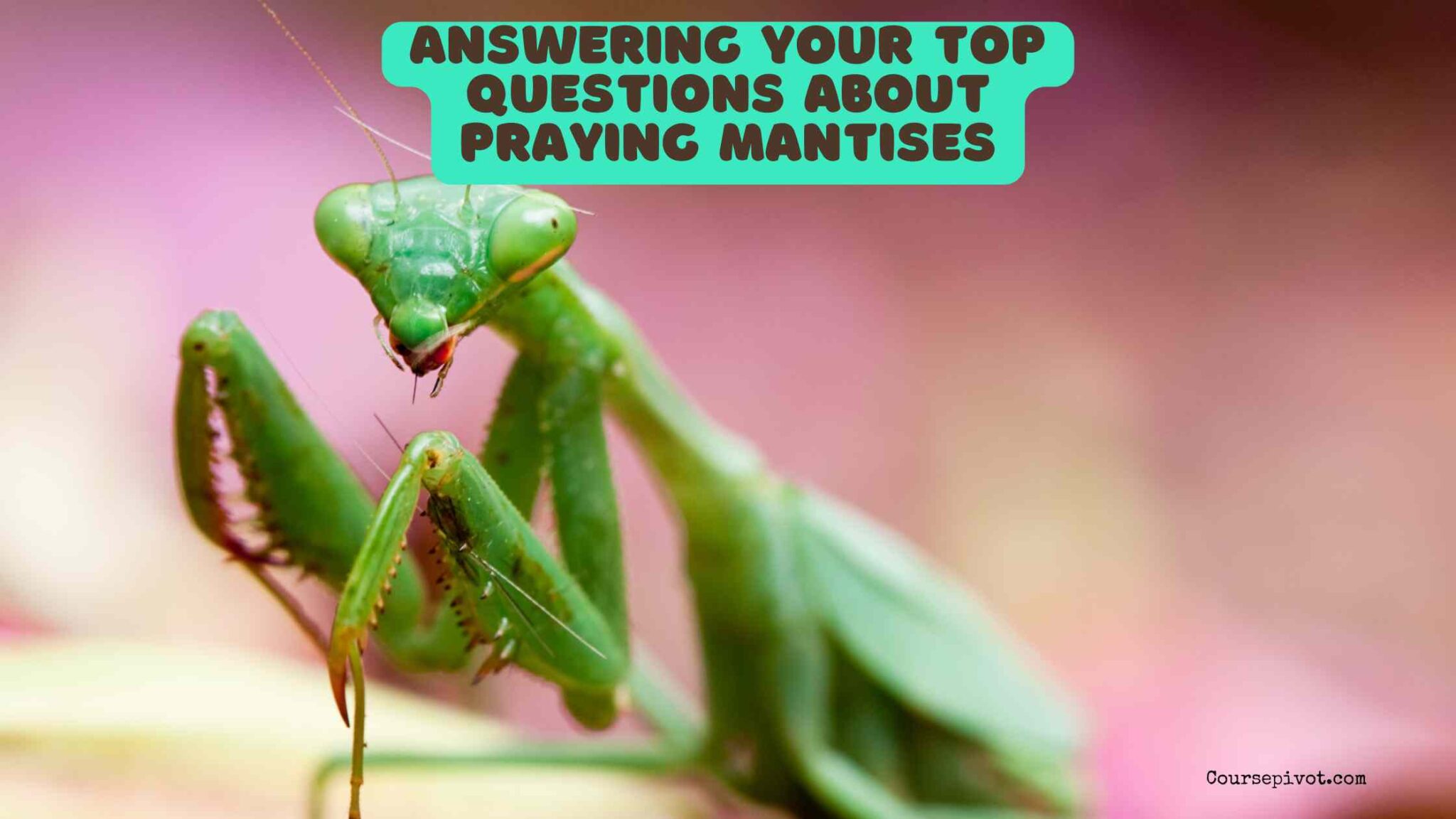
Few insects attract as much fascinated attention as the praying mantis. With its alien appearance, unsettling stillness, and reputation for violence both toward prey and toward its own mates, the mantis occupies a unique space in popular imagination — somewhere between garden guardian and nightmare creature. Most of what people believe about mantises is accurate in broad strokes but significantly more interesting when examined closely.
This article answers the most common questions people ask about praying mantises: what they are, how they live, whether they are dangerous, what they eat, how to keep one as a pet, and what seeing one might mean in various cultural traditions.
Q: Is a praying mantis dangerous to humans? A: No. A praying mantis cannot seriously injure a human being. The largest species can deliver a small pinch if handled carelessly, but mantises have no venom, no meaningful bite force, and no defensive mechanism that poses any risk to people. They are entirely harmless and frequently docile when handled gently.
1. What Exactly Is a Praying Mantis?
The praying mantis is an insect belonging to the order Mantodea, which contains approximately 2,400 known species distributed across tropical and temperate regions worldwide. The common name refers to the distinctive posture of the insect’s front legs — held folded and raised in a position that resembles a person at prayer.
The most frequently encountered species in North America is Tenodera sinensis, the Chinese mantis, which was introduced to the eastern United States in the late 19th century as a garden pest control agent and has since established itself widely. The European mantis (Mantis religiosa) is also common in North America following its introduction in the early 20th century. Native North American species include the Carolina mantis (Stagmomantis carolina).
Mantises are classified as hemimetabolous insects — they undergo incomplete metamorphosis, progressing through egg, nymph, and adult stages without a pupal phase. Nymphs resemble miniature adults and go through a series of molts, typically 6–9, before reaching adulthood.
2. What Do Praying Mantises Eat?
Praying mantises are obligate carnivores and among the most effective ambush predators in the insect world. They feed primarily on live prey, which they capture using their raptorial front legs — the same legs that give them their characteristic “praying” appearance. The inner surface of these legs is lined with sharp spines that grip prey with considerable force once the strike is initiated.
Adult mantises eat a wide variety of insects including flies, crickets, grasshoppers, moths, beetles, and butterflies. Larger species — some tropical mantises reach 6 inches in length — are capable of taking prey well beyond the insect world, including small lizards, frogs, hummingbirds, and even small rodents. A widely circulated video of a Chinese mantis capturing and consuming a ruby-throated hummingbird at a feeder is not an anomaly but a demonstration of the upper end of the species’ predatory capability.
Mantises do not drink from open water sources the way many insects do. They obtain most of their water from their prey and from moisture on plant surfaces. In captivity, misting the enclosure several times per week provides adequate hydration.
One common misconception is that mantises are beneficial to gardens because they eat pest insects. This is partially true but overstated — mantises are indiscriminate predators that eat beneficial pollinators including bees and butterflies as readily as they eat aphids and caterpillars. Their net effect on garden pest populations is mixed.
3. Do Praying Mantises Really Eat Their Mates?
Sexual cannibalism in praying mantises is real, but it is significantly less universal than popular culture suggests. Early laboratory studies documented female mantises decapitating and consuming males during or after mating at very high rates — sometimes reported as 60–90% of matings. These figures are now understood to have been inflated by the artificial conditions of captive observation, where confined, underfed females in small enclosures behaved very differently from wild populations.
Field studies of wild mantis populations find sexual cannibalism occurring in approximately 13–28% of matings depending on species and conditions, with rates rising when females are underfed and falling when females are well-nourished. In many observed wild matings, the male departs unharmed.
When cannibalism does occur, there is a functional logic: the male’s body provides significant nutrition that improves the female’s egg production. A cannibalized male may, counterintuitively, produce more genetic offspring through the improved fertility of the female he has fed than a male who survives but whose mate produces fewer eggs. This does not make cannibalism inevitable or universal — it makes it a conditional reproductive strategy rather than a fixed behaviour.
The praying mantis sexual cannibalism rate in wild populations — approximately 13–28% depending on species and female nutritional status — is considerably lower than the near-universal rate suggested by early laboratory studies conducted under conditions that strongly favoured cannibalistic behaviour.
4. How Long Does a Praying Mantis Live?
Most praying mantis species in temperate climates live approximately 10–12 months in total, with the life cycle structured around seasonal temperature changes. Eggs are laid in autumn in an egg case called an ootheca — a foam-like structure the female produces that hardens to protect the eggs through winter. Nymphs hatch in spring, develop through summer, reach adulthood in late summer or early autumn, mate, and die before the first frost.
Adult lifespan after the final molt is typically 4–6 months. Females generally live slightly longer than males, in part because they continue to metabolise resources into egg production after mating. Males, having fulfilled their reproductive function, often decline more rapidly.
In captivity under controlled temperature conditions, some species can exceed their typical wild lifespan. Chinese mantises kept indoors at stable temperatures with consistent feeding have been recorded living 14–18 months. Tropical species kept as pets, such as the orchid mantis (Hymenopus coronatus), have similar captive lifespans of 10–14 months.
5. Can You Keep a Praying Mantis as a Pet?
Yes, and praying mantises are increasingly popular as exotic pets, particularly among insect enthusiasts and people who want a low-maintenance but engaging invertebrate. They are legal to keep in most regions, require minimal space, produce no noise or odour, and exhibit complex and individually variable behaviours that make them more interesting to observe than most insects.
Basic care requirements:
- Enclosure: A mesh or ventilated enclosure approximately three times the mantis’s body length in height is standard. Ventilation is more important than space — mantises need airflow to prevent mould and respiratory issues.
- Temperature: Most temperate species do well at room temperature (65–80°F/18–27°C). Tropical species require supplemental warmth.
- Humidity: Varies significantly by species. Chinese and European mantises need moderate humidity with regular misting. Some tropical species require higher humidity.
- Feeding: Live crickets, mealworms, or dubia roaches are the most practical feeder insects. Feed adult mantises approximately every 2–3 days. Prey should be slightly smaller than the mantis’s thorax.
- Handling: Most adult mantises tolerate gentle handling reasonably well. Approach slowly from below rather than from above — a strike from above triggers the escape or defensive response. Nymphs are more fragile and faster, making them harder to handle safely.
Species commonly kept as pets include the Chinese mantis, the African praying mantis (Sphodromantis lineola), the orchid mantis, and the ghost mantis (Phyllocrania paradoxa). The orchid mantis is among the most visually spectacular insects kept in captivity — its body mimics the appearance of a tropical flower with remarkable precision, an adaptation that allows it to ambush pollinating insects.
6. How Do Praying Mantises Camouflage Themselves?
Praying mantises are among the most effective camouflage artists in the animal kingdom. Most temperate species are green or brown, matching the foliage and bark of their typical habitat with a precision that makes them nearly impossible to spot when stationary. The cryptic coloration is passive — the mantis does not actively change colour in the way a cephalopod does, though some species show limited capacity for colour variation based on humidity and light conditions during molting.
Beyond simple colour matching, mantises use behavioural camouflage — a slow, rhythmic swaying motion when disturbed or moving that mimics the movement of vegetation in a light breeze. Combined with their flattened body shape and their tendency to orient flat against a surface rather than stand proud of it, this behavioural adaptation makes them extremely difficult to detect even against a background they do not perfectly match.
Tropical species have evolved more extreme morphological camouflage. The orchid mantis (Hymenopus coronatus) mimics flower petals. The devil’s flower mantis (Idolomantis diabolica) mimics dead leaves with extraordinary fidelity. The dead leaf mantis (Deroplatys desiccata) has a flattened, asymmetric body that reproduces not just the colour of a dead leaf but the irregular shape, including what appears to be a midrib and areas of deterioration.
The orchid mantis (Hymenopus coronatus) achieves something unusual among camouflaged animals — it does not just hide from predators but actively uses its flower mimic appearance as an aggressive lure, attracting pollinators that mistake it for a real flower before striking. This type of aggressive mimicry, as opposed to defensive camouflage, makes it a predator that hunts by resembling the food source its prey seeks.
7. What Does It Mean When a Praying Mantis Lands on You?
Across numerous cultural traditions, the praying mantis carries symbolic significance, and the experience of having one land on you or appear in your path is interpreted in various ways.
In many African traditions, particularly among the Khoi-San people of southern Africa, the mantis (Hottentotsgot in Afrikaans, roughly translating to “Hottentot’s god”) is a sacred figure associated with divinity and good fortune. A mantis appearing near a person is considered a positive omen — a sign of guidance, protection, or answered prayer.
In Chinese cultural tradition, the mantis is associated with courage and patience. Its appearance is sometimes read as encouragement toward steadiness — a reminder not to be hasty in pursuit of what you want, in the same way the mantis waits motionless for prey rather than chasing it.
In contemporary Western spiritual communities influenced by animal symbolism and totemism, the praying mantis is widely associated with stillness, intuition, meditation, and the idea of waiting for the right moment rather than forcing outcomes. The name itself — which comes not from prayer but from the Greek word mantis meaning prophet or seer — contributes to its association with spiritual perception.
From a practical standpoint, a praying mantis landing on you most likely means it found a warm surface and a good vantage point, and that you happened to be nearby. They are not social insects and do not seek human contact, but they are also not particularly afraid of large warm objects that hold still.
8. Are Praying Mantises Endangered or Protected?
Most mantis species are not endangered and are not under particular conservation pressure. The European mantis (Mantis religiosa) is technically a protected species in some US states — most notably Connecticut — where legislation from earlier decades has not been updated to reflect the species’ now-established and abundant status as a naturalised resident. In practice, the protection is nominal and the species is not at any conservation risk.
Some tropical species with highly specialised habitat requirements face pressure from deforestation and habitat loss, though few are formally listed as threatened. The widespread species kept as pets — Chinese mantis, African mantis — are abundant and not conservation concerns.
Collecting mantises from the wild is generally legal and unregulated in most jurisdictions. If you find a mantis in your garden or outdoor space, you can observe it, move it gently if necessary, or leave it where it is — all are fine options. Mantises in gardens are worth leaving in place simply for the quality of the hunting they provide: a single adult mantis will consume substantial quantities of pest insects over a season, even accounting for its lack of preference between pest and beneficial species.
The praying mantis is one of the more rewarding subjects in amateur entomology — complex enough to reward extended observation, manageable enough to keep in captivity without significant investment, and visually unusual enough that most people who encounter one closely remember it. If you are looking for ways to engage more directly with the natural world, particularly for younger students, 100 activities college students actually do for fun includes a range of outdoor and nature observation activities that require no equipment and no prior expertise.