

How Reformers Helped Immigrants Assimilate by Teaching English in the Late 1800s and Early 1900s
Reformers helped immigrants assimilate by teaching English through settlement houses, schools, citizenship classes, and community programs.
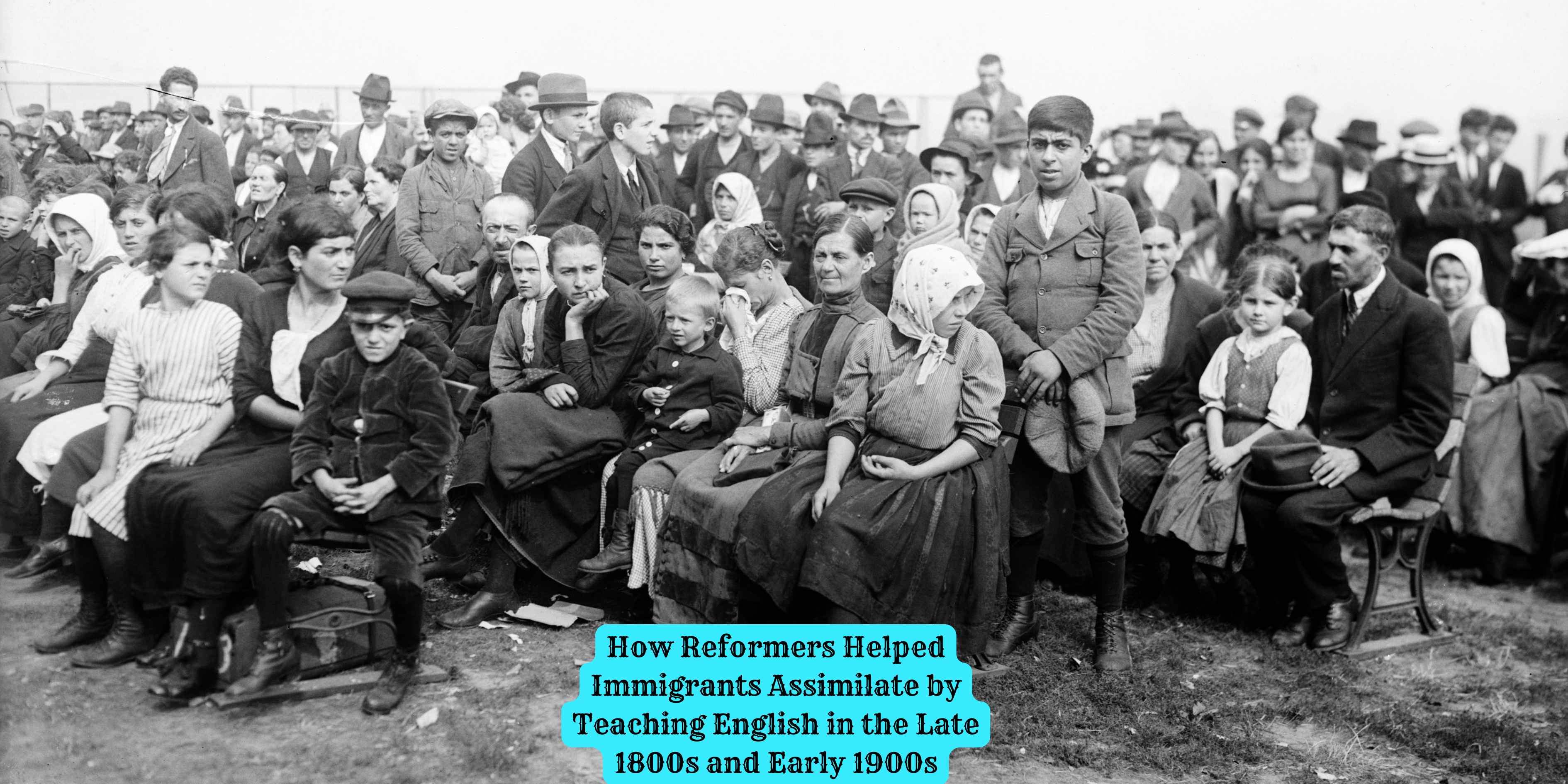
The Short Answer
In the late 1800s and early 1900s, reformers helped immigrants assimilate by teaching English through settlement houses, night schools, public schools, churches, libraries, and citizenship classes. English lessons helped newcomers communicate at work, speak with officials, help their children in school, read signs and newspapers, and prepare for American civic life.
Assimilation means becoming part of a new society. For many reformers, teaching English was seen as one of the most practical ways to help immigrants adjust to life in the United States.
English classes became a bridge between immigrant communities and the economic, civic, and social life of American cities.
Why English Mattered to Immigrants
Many immigrants arrived in the United States speaking little or no English. They came from Italy, Russia, Poland, Ireland, Germany, China, Greece, Austria-Hungary, and many other places. Their languages, religions, foods, and traditions added to American life, but language barriers made daily survival harder.
English helped immigrants:
- Find and keep jobs
- Understand workplace instructions
- Read street signs and documents
- Communicate with landlords
- Speak with teachers and doctors
- Help children with school
- Prepare for citizenship
- Participate in local politics
Learning English did not erase immigrant identity. Many families continued speaking their native languages at home. But English gave immigrants more access to public life.
Settlement Houses Played a Major Role
Settlement houses were community centers in immigrant and working-class neighborhoods. Reformers lived or worked in these neighborhoods and offered practical services. Famous examples included Hull House in Chicago and Henry Street Settlement in New York.
Settlement houses often provided:
- English classes
- Citizenship lessons
- Child care
- Health information
- Job help
- Libraries
- Clubs and lectures
- Sewing, cooking, and domestic skills classes
These programs were especially important because many immigrants worked long hours and could not attend traditional daytime school.
Night Schools Helped Working Adults
Many immigrant adults worked during the day, so night schools became an important part of assimilation efforts. Public schools, community organizations, churches, and settlement houses offered evening classes for adults who wanted to learn English after work.
Night schools were practical. Lessons often focused on words and situations immigrants needed immediately: workplace vocabulary, shopping, transportation, rent, wages, citizenship, and basic reading.
For workers in factories, mills, garment shops, and construction, English could improve safety and communication. It could also help workers understand contracts, signs, and labor organizing efforts.
Public Schools Taught Immigrant Children
Children often learned English faster than adults because they attended public school. Schools became one of the main institutions of assimilation in the late 1800s and early 1900s.
Immigrant children learned reading, writing, American history, civics, patriotic songs, and social expectations. In many families, children became translators for parents, helping with letters, shopping, legal forms, and conversations with officials.
This created both opportunity and tension. Children sometimes adapted quickly to American culture, while parents worked to preserve older traditions. Assimilation was not always smooth or equal across generations.
Citizenship Classes Connected Language and Civic Life
Reformers also used English instruction to prepare immigrants for citizenship. Classes often taught the basics of American government, voting, rights, responsibilities, and national symbols.
For many reformers, English was not only a workplace skill. It was a civic tool. They believed immigrants needed English to understand laws, participate in democracy, and become informed citizens.
| Program Type | How It Helped |
|---|---|
| Settlement houses | Offered neighborhood-based English classes |
| Night schools | Served working adults after work |
| Public schools | Taught immigrant children English and civics |
| Citizenship classes | Prepared adults for naturalization |
Reformers Had Mixed Motives
It is important to understand that reformers did not all think the same way. Some genuinely wanted to support immigrants, reduce poverty, and help families navigate a difficult new country. Others believed immigrants should give up their old languages and cultures quickly.
This means English education had both helpful and complicated sides. It gave immigrants useful tools, but it could also pressure them to conform to one version of American identity.
A balanced view recognizes both facts: English classes helped many immigrants succeed, but assimilation policies sometimes undervalued immigrant cultures.
How English Classes Helped at Work
Industrial cities were full of workplaces where communication mattered. Immigrants worked in factories, mines, railroads, garment shops, docks, and service jobs. English could help workers understand instructions, avoid danger, ask for wages, or move into better positions.
Employers sometimes wanted workers to learn enough English to follow orders. Reformers often wanted immigrants to gain broader independence. Workers themselves wanted practical language skills that could improve daily life.
English learning was not just about grammar. It was about power, safety, money, and mobility.
Why This Topic Matters
The history of English instruction shows how education shaped immigration in American cities. It also shows how assimilation was not one simple process. Immigrants adapted to America, but they also changed America.
Neighborhoods, schools, churches, unions, businesses, and reform movements all became places where old and new identities met. Teaching English was one of the main ways reformers tried to help newcomers participate in American society.
Final Takeaway
Reformers helped immigrants assimilate in the late 1800s and early 1900s by teaching English through settlement houses, night schools, public schools, and citizenship programs. These classes helped immigrants work, communicate, study, and take part in civic life.
At the same time, assimilation was complex. English opened doors, but immigrant families also preserved languages and traditions that became part of the United States itself.