

Is Bacteria Prokaryotic or Eukaryotic?
Bacteria are prokaryotic cells, which means they do not have a nucleus or membrane-bound organelles like animal and plant cells do.
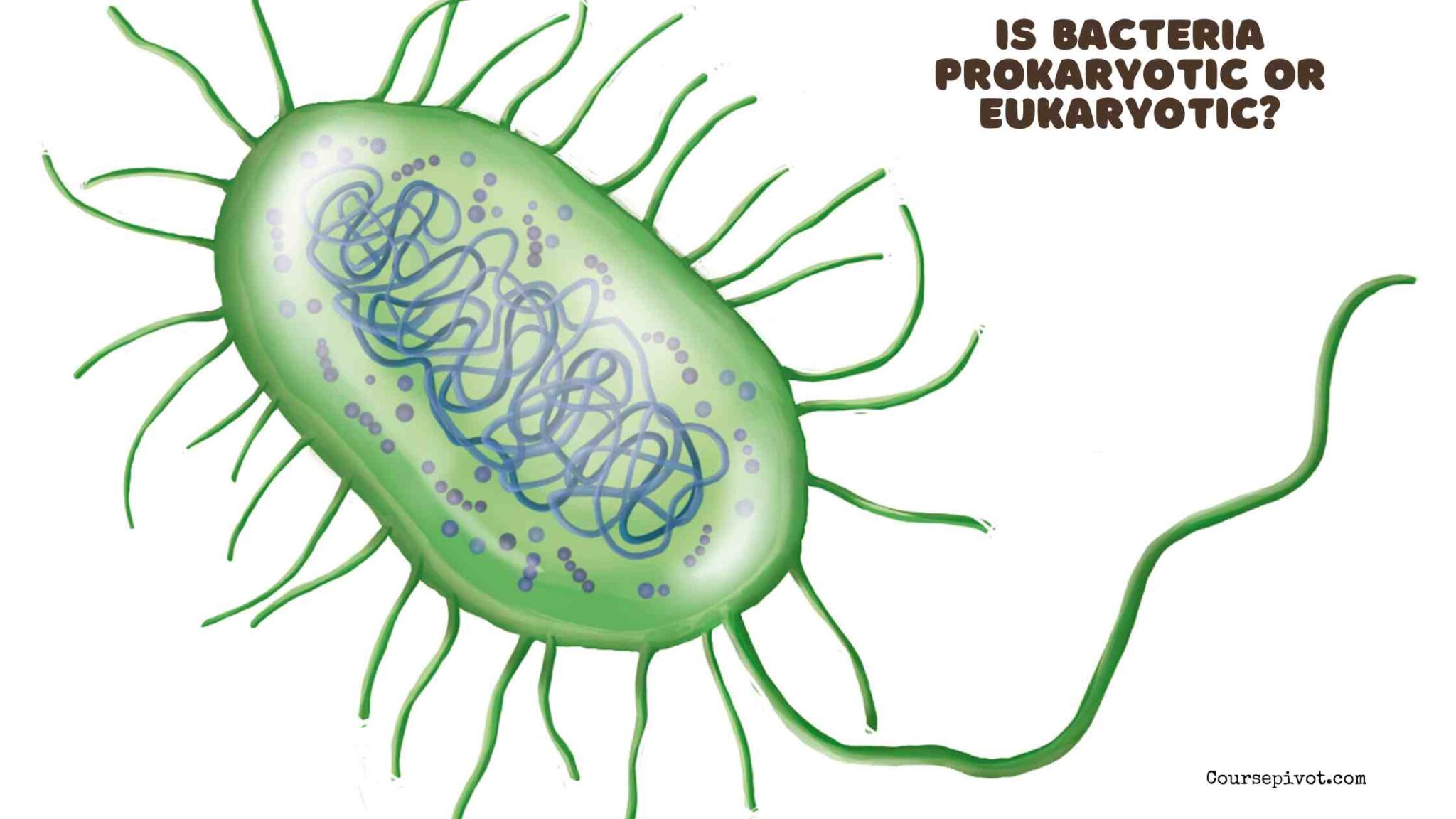
Bacteria are prokaryotic, not eukaryotic. This means bacterial cells do not have a true nucleus, and they do not contain membrane-bound organelles such as mitochondria, chloroplasts, endoplasmic reticulum, or a Golgi apparatus.
That does not mean bacteria are simple in an unimportant way. Bacteria are highly successful living organisms. They can reproduce quickly, survive in many environments, exchange genetic material, and perform essential roles in ecosystems, digestion, medicine, agriculture, and biotechnology.
The key difference is that bacterial DNA is not enclosed inside a nucleus; it sits in a region of the cytoplasm called the nucleoid.
What Does Prokaryotic Mean?
Prokaryotic means “before nucleus” or “without a true nucleus.” A prokaryotic cell has genetic material, cytoplasm, ribosomes, and a cell membrane, but it does not have a membrane-bound nucleus.
In bacteria, the main DNA is usually a single circular chromosome located in the nucleoid region. Many bacteria also contain smaller DNA circles called plasmids, which can carry useful genes such as antibiotic resistance genes.
Prokaryotic cells are usually smaller than eukaryotic cells, but they are not empty. They still carry out all the functions needed for life, including metabolism, growth, response to the environment, and reproduction.
What Does Eukaryotic Mean?
Eukaryotic means “true nucleus.” Eukaryotic cells have DNA enclosed inside a nucleus. They also contain membrane-bound organelles that divide cell functions into specialized compartments.
Examples of eukaryotic organisms include:
- Animals.
- Plants.
- Fungi.
- Protists.
Animal and plant cells are eukaryotic. Their organelles include the nucleus, mitochondria, ribosomes, endoplasmic reticulum, Golgi apparatus, vesicles, and more. Plant cells also have chloroplasts, a cell wall, and a large central vacuole. For a fuller explanation, see the guide to cell organelles in animal and plant cells.
Why Bacteria Are Prokaryotic
Bacteria are classified as prokaryotic because their cells have the defining features of prokaryotes.
| Feature | Bacteria |
|---|---|
| Nucleus | Absent |
| DNA location | Nucleoid region in cytoplasm |
| Main chromosome | Usually circular |
| Membrane-bound organelles | Absent |
| Ribosomes | Present, but smaller than eukaryotic ribosomes |
| Cell wall | Usually present, made mainly of peptidoglycan |
| Cell size | Usually smaller than eukaryotic cells |
| Reproduction | Usually binary fission |
The absence of a nucleus is the most important clue. If a cell has no true nucleus, it is not eukaryotic.
Bacterial Cell Structures and Their Functions
Bacteria do not have eukaryotic organelles, but they do have important structures that help them survive.
| Structure | Function |
|---|---|
| Cell membrane | Controls what enters and leaves the cell |
| Cytoplasm | Fluid where chemical reactions occur |
| Nucleoid | Region containing the main bacterial chromosome |
| Ribosomes | Build proteins |
| Cell wall | Gives shape and protection |
| Capsule | Extra protective outer layer in some bacteria |
| Plasmids | Small DNA circles that may carry useful genes |
| Flagella | Help some bacteria move |
| Pili | Help bacteria attach to surfaces or exchange DNA |
These structures show that bacteria are organized, even without a nucleus. They simply organize life differently from eukaryotic cells.
Prokaryotic vs Eukaryotic Cells
The easiest way to remember the difference is this: eukaryotic cells have a nucleus; prokaryotic cells do not.
| Feature | Prokaryotic cells | Eukaryotic cells |
|---|---|---|
| Examples | Bacteria and archaea | Animals, plants, fungi, protists |
| Nucleus | No true nucleus | True nucleus present |
| DNA | Usually circular and in nucleoid | Usually linear chromosomes in nucleus |
| Membrane-bound organelles | Absent | Present |
| Size | Usually smaller | Usually larger |
| Cell division | Binary fission | Mitosis or meiosis |
| Complexity | Less compartmentalized | More compartmentalized |
Both cell types have DNA, ribosomes, cytoplasm, and a cell membrane. The difference is not that eukaryotic cells are alive and prokaryotic cells are not. Both are alive. The difference is how their internal structures are arranged.
Are All Prokaryotes Bacteria?
No. Bacteria are prokaryotes, but they are not the only prokaryotes. The two major groups of prokaryotic organisms are bacteria and archaea.
Archaea can look similar to bacteria under a microscope, but they differ in important genetic, biochemical, and evolutionary ways. Many archaea live in extreme environments such as hot springs, salty lakes, deep-sea vents, or oxygen-free habitats, although many also live in ordinary environments.
So the correct relationship is:
- All bacteria are prokaryotic.
- All archaea are prokaryotic.
- Not all prokaryotes are bacteria.
- Animals, plants, fungi, and protists are eukaryotic.
Do Bacteria Have Organelles?
Bacteria do not have membrane-bound organelles like mitochondria or a nucleus. However, they do have internal structures such as ribosomes, plasmids, storage granules, and specialized protein complexes.
This is where students sometimes get confused. Ribosomes are often listed as organelles in school biology, and bacteria do have ribosomes. But ribosomes are not membrane-bound. When teachers say bacteria lack organelles, they usually mean bacteria lack the membrane-bound organelles found in eukaryotic cells.
Bacteria have ribosomes, but they do not have a nucleus, mitochondria, chloroplasts, ER, or Golgi apparatus.
Why This Difference Matters
The prokaryotic-eukaryotic difference matters because it explains major differences in cell function, medicine, evolution, and genetics.
For example, antibiotics can target bacterial ribosomes, cell walls, or DNA processes because those features differ from human cells. This is one reason antibiotics can kill bacteria without directly killing human cells, although side effects and resistance are still important concerns.
The difference also matters in DNA replication. Bacteria and eukaryotes both copy DNA before cell division, but their chromosomes, enzymes, and replication organization differ. The article on enzymes in DNA replication explains those molecular processes in more detail.
The Bottom Line
Bacteria are prokaryotic organisms. They do not have a true nucleus, and they do not contain membrane-bound organelles like mitochondria, chloroplasts, endoplasmic reticulum, or Golgi apparatus.
They still have DNA, ribosomes, cytoplasm, a cell membrane, and often a cell wall. That makes them living cells, but their structure is prokaryotic rather than eukaryotic.
If you remember one rule, remember this: bacteria are prokaryotic because their DNA is not enclosed in a nucleus.