

Why Is Osmosis Important to the Survival of a Cell?
Osmosis keeps cells alive by helping them control water balance, maintain shape, support chemical reactions, and avoid shrinking or bursting.
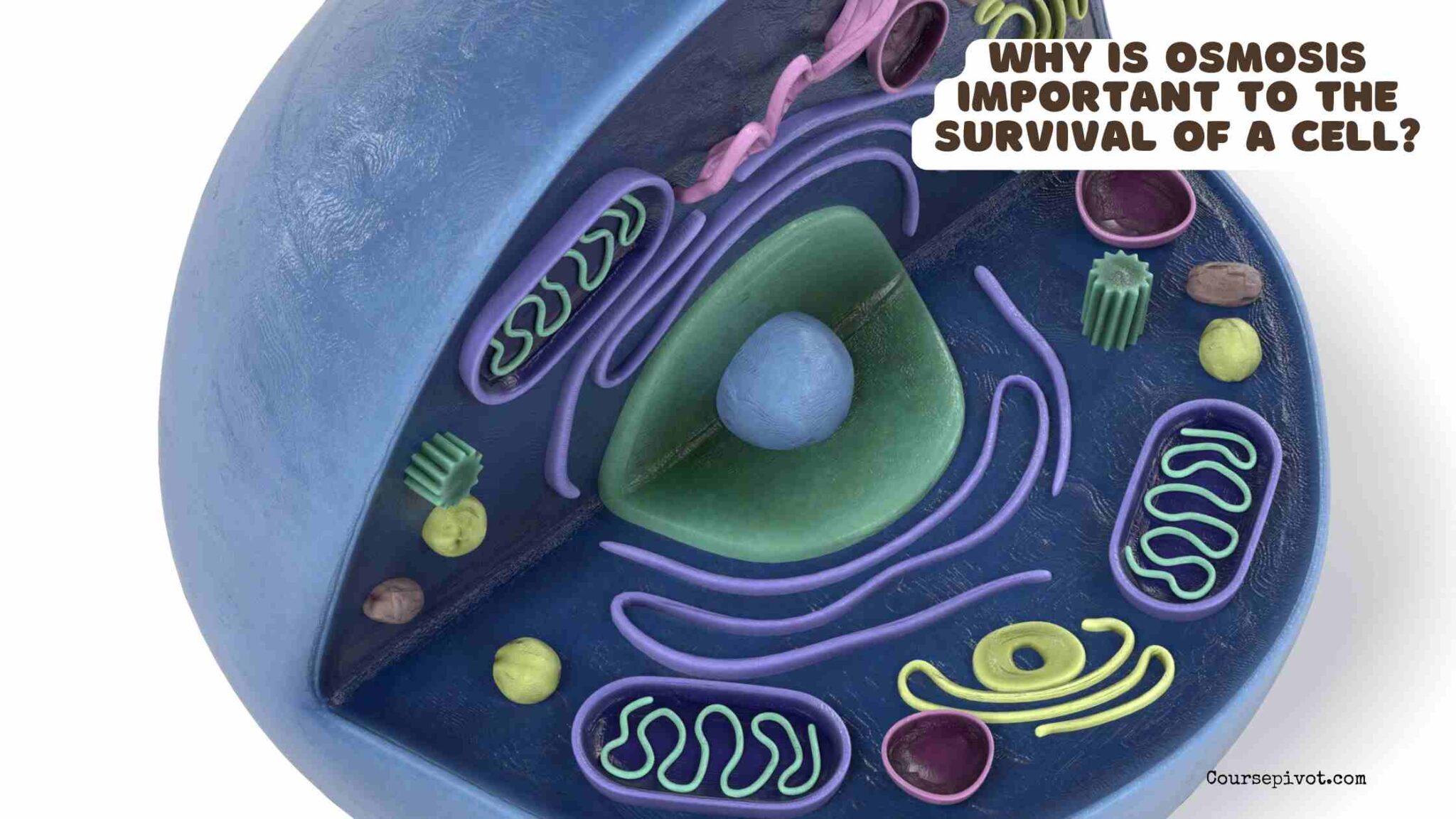
Osmosis is one of the most important processes keeping cells alive. It may sound like a small topic in biology, but it affects whether a cell keeps its shape, carries out chemical reactions, absorbs nutrients, removes waste, and avoids dangerous swelling or shrinking.
Every living cell is surrounded by a membrane. That membrane separates the inside of the cell from the outside environment, but it does not block everything completely. Water can move across it, and that movement matters constantly.
Osmosis is important to cell survival because it helps cells maintain the right water balance for normal structure, metabolism, transport, and homeostasis.
What Osmosis Means
Osmosis is the movement of water across a selectively permeable membrane from an area with more available water to an area with less available water.
In simpler terms, water moves toward the side with more dissolved substances, such as salts, sugars, or proteins. The cell membrane allows water to move, but many dissolved particles cannot cross as freely.
This matters because cells are mostly water. Their enzymes, organelles, cytoplasm, membranes, and chemical reactions all depend on having the right amount of water in the right places.
Why Cell Membranes Matter
A cell membrane is selectively permeable. That means it allows some substances to pass through more easily than others. Water can move across the membrane directly or through special channel proteins called aquaporins.
The membrane is not just a boundary. It is a control system. It helps the cell manage what enters, what leaves, and what stays balanced.
This connects to the larger structure of cells. Animal and plant cells contain specialized parts that depend on stable internal conditions. If you need a review, the guide to cell organelles explains how those structures work together.
Without a functioning membrane, osmosis could not be controlled. The cell would lose the ability to protect its internal environment.
Osmosis Helps Maintain Water Balance
The most direct reason osmosis is important is water balance. Cells need enough water to function, but too much or too little can be harmful.
If a cell loses too much water, it can shrink. If it gains too much water, it can swell and possibly burst. Osmosis is part of the system that keeps water movement within a survivable range.
| Environment | Water movement | Possible effect on cell |
|---|---|---|
| Hypotonic | Water moves into the cell | Cell may swell |
| Hypertonic | Water moves out of the cell | Cell may shrink |
| Isotonic | Water moves in and out evenly | Cell stays balanced |
Cells survive best when their internal water level stays close to what their structure and chemistry require.
Osmosis Supports Cell Shape and Structure
Cell shape is not only about appearance. Shape affects how a cell works. A red blood cell, for example, needs its flexible shape to move through blood vessels and carry oxygen effectively.
If an animal cell takes in too much water, it may swell. If the swelling is severe, the membrane can rupture. If it loses too much water, it shrivels and its normal function is disrupted.
Plant cells respond differently because they have a cell wall. The wall provides support, but water pressure inside the cell still matters. When a plant cell has enough water, the central vacuole pushes against the cell wall and helps the cell stay firm.
That firmness is called turgor pressure.
Osmosis Creates Turgor Pressure in Plants
Turgor pressure is the pressure of water inside a plant cell pressing outward against the cell wall. It is one reason healthy plants stand upright.
When plant cells have enough water, they become turgid, meaning firm and supported. When they lose water, they become flaccid, and the plant may wilt.
This is why a plant can droop when it has not been watered. Water leaves the cells or fails to enter them in enough quantity, turgor pressure falls, and the plant loses support.
Osmosis is therefore not just about individual cells. In plants, it helps support leaves, stems, and overall structure.
Osmosis Helps Chemical Reactions Happen
Cells are full of chemical reactions. These reactions build molecules, break down food, release energy, copy DNA, make proteins, and repair damage.
Water is the medium where many of these reactions happen. If the cell has too little water, molecules may not move or interact properly. If the cell has too much water, internal concentrations can become diluted and processes can be disrupted.
Enzymes are especially sensitive to conditions inside the cell. They work best within certain ranges of water concentration, salt concentration, pH, and temperature.
Osmosis helps maintain the fluid environment where enzymes and other cell molecules can function.
Osmosis Affects Nutrient and Waste Movement
Osmosis is specifically about water movement, but water balance affects many other transport processes. Nutrients, ions, and waste products move through cells in solutions. If the water level is wrong, those dissolved substances can become too concentrated or too diluted.
For example, a cell that loses water may end up with overly concentrated salts and proteins inside. That can interfere with metabolism. A cell that gains too much water may dilute important molecules and stretch the membrane.
Cells use osmosis along with diffusion, active transport, and vesicle transport to manage materials. Diffusion is especially important for small molecules moving from high concentration to low concentration. For a related concept, see why diffusion is insufficient for large multicellular organisms.
Osmosis Helps Cells Maintain Homeostasis
Homeostasis means maintaining stable internal conditions. Cells must keep their internal environment within limits even when the outside environment changes.
Osmosis helps with homeostasis by balancing water movement. But cells do not rely on osmosis alone. They also regulate ions, pump molecules across membranes, store materials in organelles, and respond to signals from the body or environment.
In single-celled organisms, water balance may determine whether the organism survives directly. In multicellular organisms, tissues and organs help regulate the fluid surrounding cells so that osmosis does not push cells too far out of balance.
The same basic principle still applies: cells need a stable water environment to live.
What Happens If Osmosis Goes Wrong
When osmosis is not balanced, cells can be damaged.
Possible problems include:
- Cells swelling from too much water
- Cells bursting if pressure becomes too high
- Cells shrinking from water loss
- Enzymes becoming less effective
- Membranes becoming stressed
- Plant cells losing turgor pressure
- Bacteria struggling in unsuitable environments
- Tissues becoming dehydrated or swollen
Different organisms have different ways to handle osmotic stress. Some bacteria have cell walls that help protect them. Some freshwater organisms use contractile vacuoles to remove excess water. Human cells depend on body systems such as the kidneys to help regulate fluid and salt balance.
If you are comparing cell types, the article on whether bacteria are prokaryotic or eukaryotic explains how bacterial cells differ structurally from plant and animal cells.
Examples of Osmosis in Real Life
Osmosis shows up in many everyday biology examples.
Common examples include:
- A wilted plant becoming firm again after watering
- Red blood cells swelling in pure water
- Red blood cells shrinking in very salty solution
- Slugs losing water when salt is placed on them
- Root hair cells absorbing water from soil
- Pickles forming when cucumbers lose water in salty brine
- Freshwater organisms constantly managing water entry
These examples all involve the same basic idea: water moves across membranes or tissues in response to differences in dissolved substances.
Final Thoughts
Osmosis is important to the survival of a cell because cells depend on water balance. Without osmosis, cells could not maintain their shape, protect their internal chemistry, support enzyme activity, regulate pressure, or respond properly to changes in their environment.
In animal cells, osmosis helps prevent dangerous shrinking or swelling. In plant cells, it helps create turgor pressure and support the plant’s structure. In all cells, it is part of the larger process of homeostasis.
A cell is alive only because its internal conditions are carefully controlled. Osmosis is one of the quiet processes that makes that control possible.