

Top 5 Reasons for Divorce
Research on why marriages end consistently points to the same underlying patterns — and most of them were present long before the divorce conversation began.
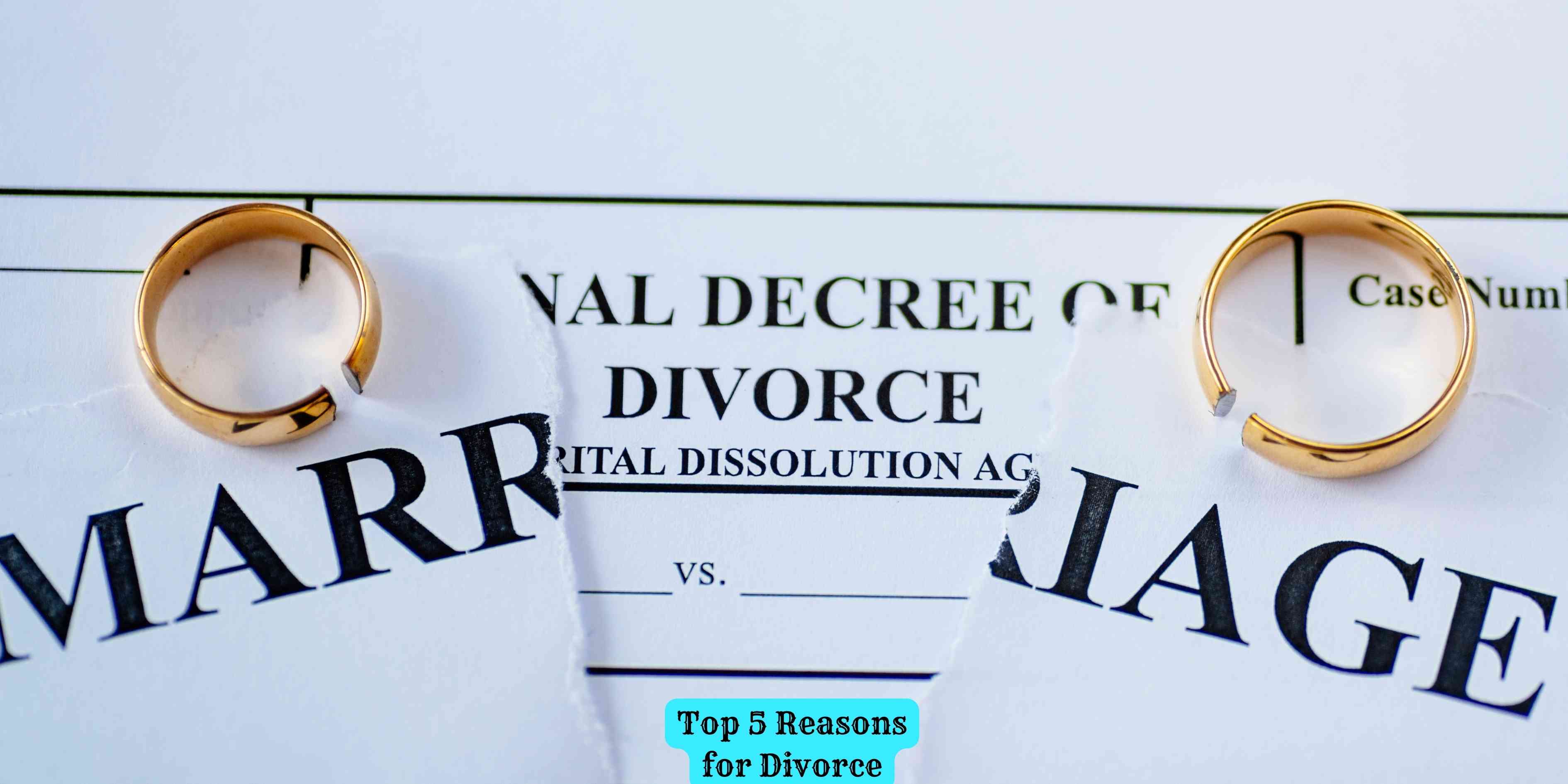
The most common reasons marriages end in divorce are communication breakdown, infidelity, financial conflict, incompatibility in values or lifestyle, and abuse. These are not always distinct — many divorces involve multiple overlapping factors — but research consistently identifies these five as the most frequently cited in surveys of divorced individuals.
Most divorces do not happen because of a single event. They happen because patterns that were present for years finally reached a point where at least one partner could no longer continue.
1. Communication Breakdown
Chronic poor communication is the most consistently cited factor in divorce across multiple research studies. This does not mean arguing — in fact, couples who avoid conflict entirely often have more serious communication problems than those who fight openly. The problem is not conflict; it is the pattern of how conflict is handled.
Common communication patterns associated with eventual divorce include:
- Contempt — expressing disgust, mockery, or a sense of superiority toward a partner
- Stonewalling — withdrawing and refusing to engage during difficult conversations
- Defensiveness — responding to criticism with counter-criticism rather than listening
- Criticism — attacking a partner’s character rather than addressing specific behaviors
These patterns, identified in extensive relationship research, are more predictive of divorce than the content of what couples argue about. Couples who argue about money, parenting, or intimacy can successfully navigate those conflicts. Couples whose arguments involve contempt and stonewalling consistently struggle regardless of the topic.
Communication breakdown also includes the gradual loss of the positive interactions that buffer negative ones — fewer expressions of appreciation, less emotional connection, decreased sense of being genuinely seen by a partner.
2. Infidelity
Infidelity — whether physical or emotional — is a primary cause of divorce in a significant percentage of marriages. It causes damage in two overlapping ways: through the direct harm of the betrayal itself, and through what the affair reveals about the state of the relationship.
In many cases, infidelity is not the original cause of the marriage’s problems but is symptomatic of deeper disconnection. Partners who feel chronically unseen, unappreciated, or emotionally disconnected may seek those needs met outside the marriage. The affair becomes visible evidence of problems that were already present.
Not all marriages end in divorce after infidelity — research suggests that many couples who go through couples therapy following an affair are able to rebuild trust and continue the marriage. But infidelity, particularly when it is repeated or when the betrayed partner cannot move past it, frequently leads to irreconcilable breakdown.
The rise of digital communication has expanded what people consider infidelity, with emotional affairs conducted primarily online now recognized as comparably damaging to physical affairs in many relationships.
3. Financial Conflict
Money is among the most reliably cited reasons couples divorce, and the conflict it generates is about more than numbers. Financial disagreements are typically about values, priorities, control, and security — all of which are deeply personal.
Common financial conflicts that contribute to divorce include:
- Significant differences in spending and saving habits between partners
- One partner accumulating secret debt
- Disagreement about financial priorities such as paying off debt vs. saving vs. spending
- Job loss or financial instability creating long-term stress and conflict
- Unequal income generating power imbalances within the relationship
- Different attitudes toward risk, investment, and financial planning
Financial stress of any kind increases conflict frequency across all areas of a relationship, not just money discussions. Couples under significant financial pressure tend to argue more about everything — parenting, intimacy, household responsibilities — because the background stress of financial insecurity affects emotional reserves available for navigating other disagreements.
4. Incompatibility in Values or Lifestyle
Incompatibility — the experience of being fundamentally mismatched in how you want to live your life — is a significant driver of divorce, particularly for marriages that began before partners fully understood each other’s core values.
Common incompatibility issues include differences in:
- Whether to have children and how to parent
- Religious practice and faith commitment
- Level of social engagement and introversion/extroversion
- Career ambition and work-life priority
- Sexual desire and intimacy expectations
- Family of origin relationships and obligations
Some of these differences can be navigated with mutual respect and compromise. Others — particularly those involving whether to have children, or fundamental religious incompatibility — represent genuine incompatibilities that do not resolve with effort.
Many couples discover these incompatibilities after marriage because the courtship period does not always surface them. High romantic connection in early relationships can mask fundamental lifestyle differences that only become apparent once daily life is shared.
5. Abuse and Domestic Violence
Physical, emotional, psychological, and financial abuse are significant causes of divorce. This category is often underrepresented in divorce surveys because people may be reluctant to identify their marriages as abusive or may not recognize certain patterns as abuse.
Emotional abuse — including controlling behavior, isolation from friends and family, chronic criticism, gaslighting, and manipulation — can be as destructive as physical abuse and is more commonly present in failing marriages than is typically acknowledged.
Financial abuse — controlling a partner’s access to money, monitoring all spending, preventing employment — is another form of domestic abuse that is increasingly recognized as a significant factor in marriages that end.
Physical abuse, when present, is typically disqualifying for continued marriage in most people’s assessment. However, leaving abusive marriages is often complicated by economic dependence, fear of retaliation, children, and social isolation that the abusive partner has created. For this reason, divorce rates from abusive marriages are sometimes lower than might be expected — not because abuse is tolerable, but because leaving is genuinely difficult.
Understanding why marriages end is useful both for those navigating their own decisions and for those who want to build more resilient marriages. The principles identified in research on successful marriages — addressed in depth in a summary of the 7 principles for making marriage work — are in many ways the inverse of these five common reasons for divorce. If you are evaluating your own situation, 20 legal reasons to get divorced and 20 bad reasons to get divorced offer perspective on both sides of that decision.