

When Did My Baby Start Crawling?
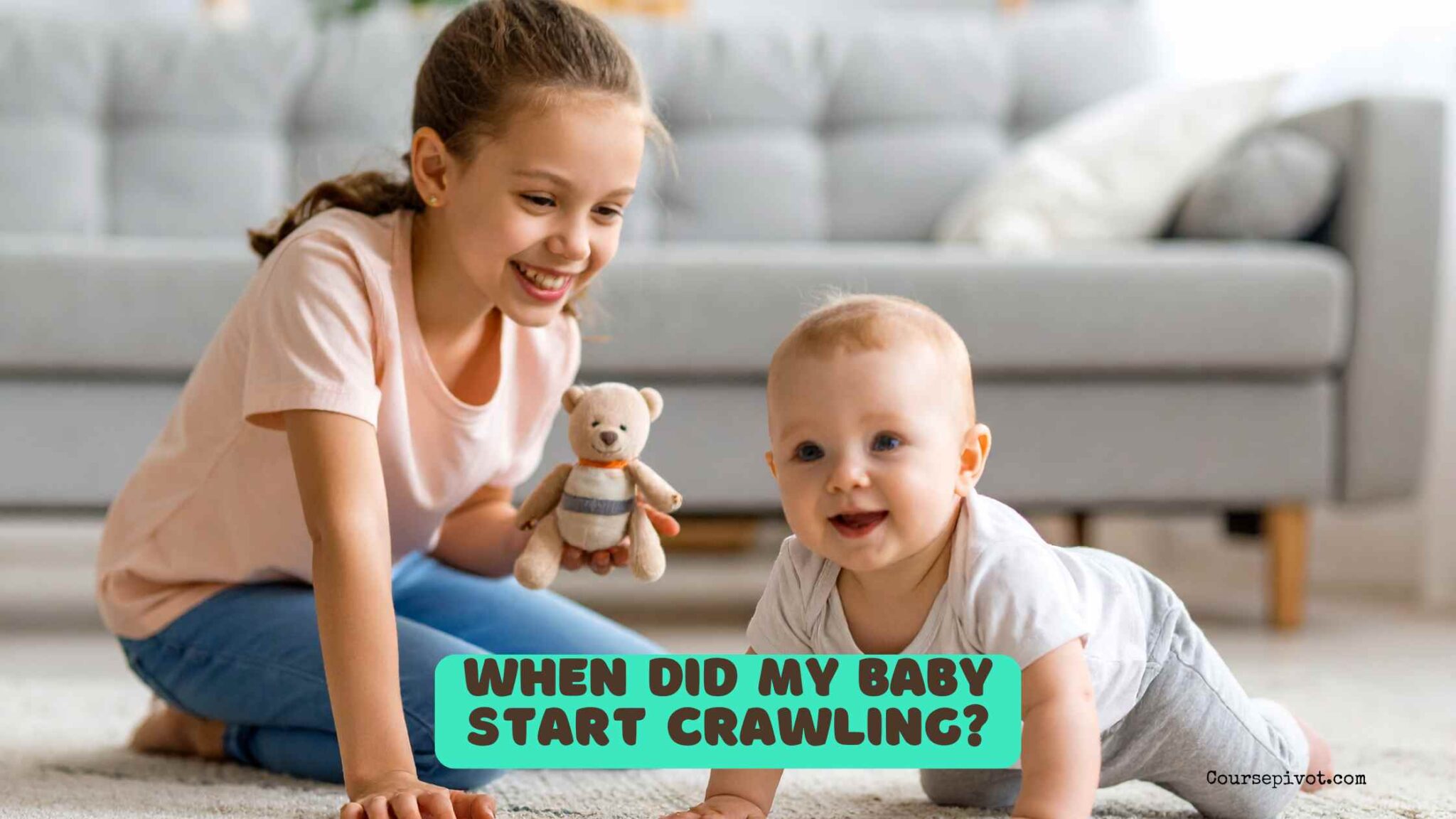
One of the most exciting (and suddenly terrifying) milestones of the first year is the moment a baby figures out how to move across the floor under their own power. One day they are sitting happily in one spot; the next, they are heading for the dog’s water bowl with alarming purpose. If you are wondering when your baby should start crawling, or looking back at when yours did and whether the timing was typical, this guide covers the full picture — from average ages to the many variations of crawling that are all perfectly normal.
The short answer: most babies begin crawling somewhere between 7 and 10 months old, with 9 months being the most commonly cited average. But the range of normal is genuinely wide, and a significant minority of babies skip crawling entirely and move straight to pulling up and walking.
Q: Should I be worried if my baby isn’t crawling at 9 months? A: Not necessarily. Nine months is the average, but “average” means many babies crawl earlier and many crawl later. If your baby is moving in some way — scooting, rolling, commando-crawling — that counts as purposeful locomotion and is developmentally meaningful. What matters most is the overall trajectory of development: whether your baby is meeting other milestones (sitting independently, reaching, making sounds, responding to their name) and whether they are showing curiosity about moving toward things. If you have concerns, raise them with your paediatrician at the 9- or 12-month well-child visit.
1. The Average Age Babies Start Crawling
Most developmental guidelines place the typical crawling window between 6 and 12 months, with the peak at around 8–10 months. The World Health Organization’s Multicentre Growth Reference Study, which tracked infant motor development across multiple countries, found that the median age for hands-and-knees crawling was around 8.5 months, but the 5th–95th percentile range spanned from roughly 6 to 11 months.
What this means practically: a baby who begins crawling at 6 months is not unusually advanced, and a baby who starts at 11 months is not late. Both fall comfortably within the typical developmental range. Crawling is listed in the CDC’s developmental milestones as something most babies achieve by 12 months — with the caveat that some babies skip crawling altogether, which is also within the range of normal.
The crawling milestone is best understood as part of a sequence rather than an isolated event. It typically follows the ability to sit independently (usually 6–8 months), and precedes pulling to stand (usually 9–12 months) and walking (usually 9–15 months).
2. The Different Types of Baby Crawling
When parents ask “when did my baby start crawling,” they often mean the classic hands-and-knees crawl — but there are multiple recognised styles of infant locomotion that all serve the same developmental purpose. Knowing these helps avoid unnecessary worry when a baby moves differently from expected.
Classic crawling (hands and knees): The most recognised style — baby moves on all fours, alternating opposite arm and leg. This cross-lateral movement is considered neurologically sophisticated and is associated with bilateral brain coordination.
Commando crawling (belly crawling): Baby stays flat on their stomach and pulls forward using their arms, with legs dragging or helping push. This often appears before hands-and-knees crawling and is equally valid.
Bottom scooting: Baby sits upright and propels themselves forward using their hands and legs to shuffle on their bottom. This is very common and entirely normal — some babies scoot for months before pulling to stand and walking.
Bear crawling: Baby crawls on hands and feet with straight legs rather than knees. This is less common but developmentally normal.
Crab crawling: Baby moves sideways or backwards. Often appears as an early stage before forward locomotion is established.
Rolling as locomotion: Some babies roll purposefully across the floor to reach objects rather than crawling at all. This is a valid form of mobility, though parents and paediatricians watch to ensure it is paired with normal overall development.
A baby who uses any of these methods to move purposefully toward something they want is demonstrating intentional locomotion — which is the developmental milestone, not the specific technique. The style of crawling matters far less than the intent and ability to self-propel.
3. Signs Your Baby Is Getting Ready to Crawl
Before crawling begins, most babies go through a visible preparation phase that typically lasts several weeks. Recognising these signs helps parents know that crawling is approaching:
Rocking on all fours: Baby gets into the hands-and-knees position and rocks forward and backward, building the strength and proprioception they need to actually move. This rocking is often a direct precursor to crawling — sometimes by days, sometimes by weeks.
Pivoting while on tummy: Baby rotates in circles during tummy time, pushing with arms and legs to change direction. This shows developing upper body and core strength.
Pushing up during tummy time: Strong, sustained push-ups on straight arms during tummy time indicate the shoulder and arm strength needed for crawling.
Reaching while sitting: Baby leans forward from a seated position to reach for objects, sometimes catching themselves on their hands. This builds the balance and arm weight-bearing that crawling requires.
Pulling forward on tummy: Baby begins to drag themselves forward (commando-style) during tummy time — the belly crawl phase often precedes the full hands-and-knees crawl.
4. What Encourages Crawling — and What Can Delay It
Tummy time is the single most important factor parents can influence. Babies who spend regular, supervised time on their stomachs from the early weeks of life develop the upper body and core strength that makes crawling possible more readily. The American Academy of Pediatrics recommends starting tummy time from the first days home from the hospital, building up gradually to 30 minutes or more per day by 3–4 months.
The reduction in prone (stomach) sleep — a necessary and evidence-based change driven by safe sleep guidelines to reduce SIDS risk — has had the unintended effect of giving babies less natural time on their stomachs. This has slightly shifted the average crawling age compared to earlier generations, which is why intentional tummy time during awake hours is emphasised so strongly by paediatricians.
Factors that can delay crawling include:
- Insufficient tummy time leading to less developed upper body strength
- Prematurity — premature babies are assessed by adjusted age, and their milestones are expected to follow the corrected timeline, not the birth date
- Heavier build — babies with a larger body mass sometimes take longer to develop the strength-to-weight ratio needed for crawling
- Temperament — some babies are content to sit and observe and have less motivation to move; others are intensely mobile from early on
- Underlying conditions — low muscle tone (hypotonia), neurological differences, or developmental delays can affect motor milestone timing
Parents often compare their baby’s crawling timeline to siblings, friends’ children, or online parenting communities — and the variation they encounter can cause unnecessary anxiety. Two babies in the same family with the same caregivers can differ by three or four months in when they crawl, walk, or teeth, and both can be entirely healthy. Development is a range, not a schedule.
5. Babies Who Skip Crawling Entirely
Research confirms that a meaningful proportion of babies — estimates range from 7% to over 10% — never crawl in the traditional sense. They may scoot, roll, or simply pull themselves to standing and begin cruising along furniture before walking. For decades, skipping crawling was thought to signal developmental problems, but the current consensus among paediatric researchers is that skipping crawling is not, by itself, a developmental red flag.
What matters is not whether a baby crawls, but whether they are developing purposeful mobility, bilateral coordination (using both sides of the body), and meeting other motor and cognitive milestones. A baby who never crawls but pulls to stand at 10 months, cruises furniture confidently, and walks at 13 months has followed a completely normal developmental path.
The main reason paediatricians continue to monitor babies who skip crawling is not because crawling itself is essential, but because skipping it in conjunction with delays in other areas may occasionally warrant closer assessment.
6. When to Speak to Your Paediatrician
Most variation in crawling timing needs no intervention. However, the following warrant a conversation with your child’s doctor:
- Baby is not crawling, scooting, or moving purposefully in any direction by 12 months
- Baby shows no interest in bearing weight on their legs when held standing
- Baby has lost a motor skill they previously had (regression is always worth reporting)
- There are delays in multiple areas simultaneously — motor, language, social, and cognitive milestones together
- Baby consistently favours one side of the body — always reaching with one hand, dragging one leg — which can indicate asymmetry worth evaluating
- Baby was premature and is not meeting milestones even on the adjusted age timeline
Early assessment is always better than waiting. If there is an underlying cause — such as low tone, a vision issue affecting the motivation to move toward objects, or a developmental difference — identifying it early gives the best window for intervention and support.
7. After Crawling: What Comes Next
Once crawling is established, the next phase of gross motor development typically unfolds over the following two to four months:
Pulling to stand (usually 9–12 months): Baby uses furniture, a parent’s leg, or any available surface to haul themselves upright. This is a major milestone and usually appears within weeks to months of consistent crawling.
Cruising (usually 9–13 months): Baby walks sideways along furniture, building leg strength, balance, and coordination in preparation for independent walking.
Standing independently (usually 10–12 months): Baby lets go of the support and stands unsupported, often briefly at first.
First steps (usually 9–15 months): The median is around 12 months, but the normal range extends to 18 months. If a child is not walking by 18 months, a paediatric evaluation is recommended.
The crawling stage is a wonderful window of development — babies become explorers for the first time, discovering what independent mobility makes possible. It is also the stage at which childproofing becomes urgent, because the gap between “not yet moving” and “in the kitchen cabinet” can be a matter of days. For insight into other early milestones that often arrive around the same time, when babies start teething covers the dental development timeline in similar depth. And for parents whose babies are walking later than expected, 7 common reasons for late walking in babies explains the factors that affect that next major milestone.