

Why Does My Dog Lick Me? Common Reasons Dogs Love Licking You
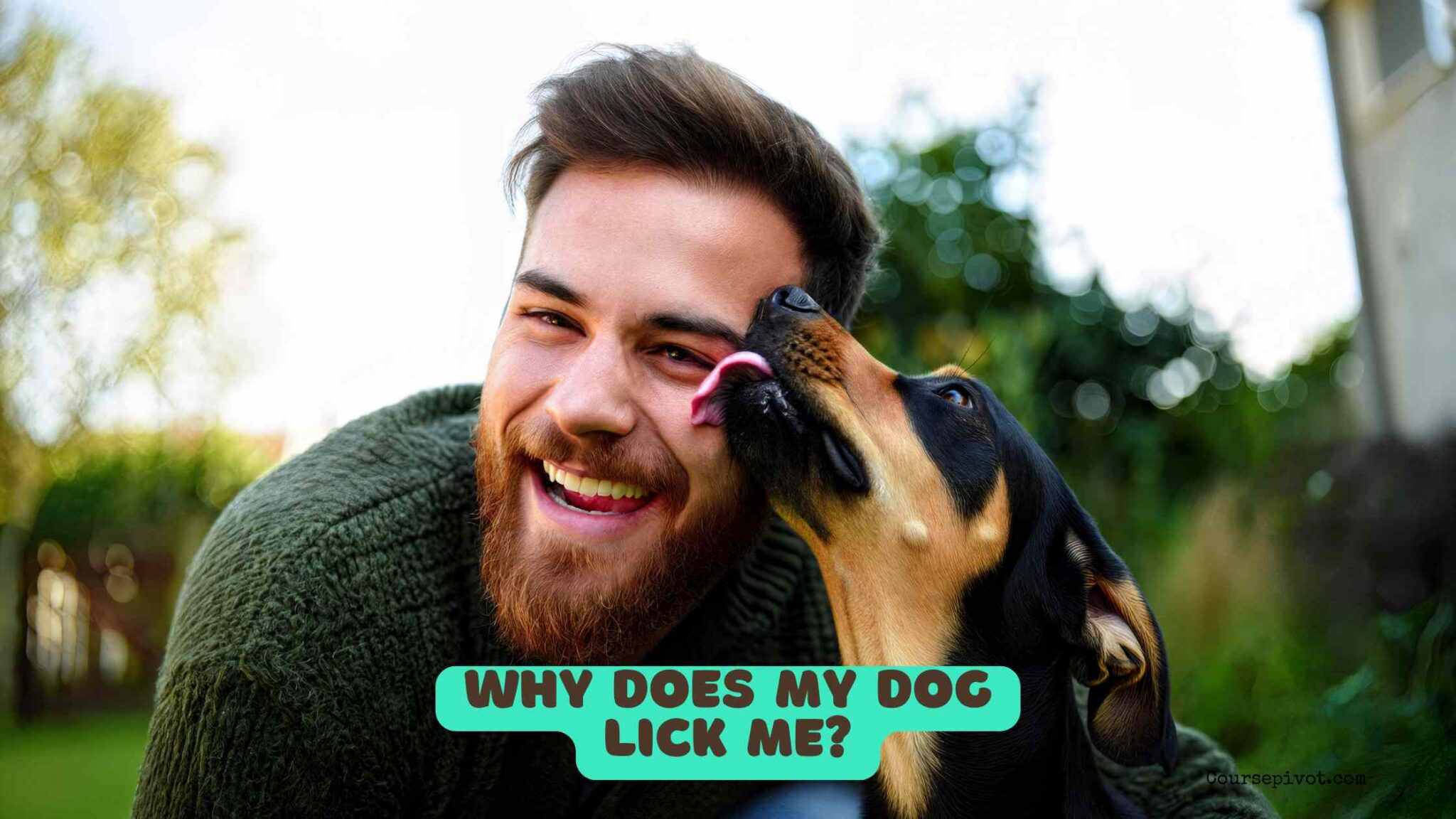
If you have a dog, you have been licked. Enthusiastically, repeatedly, and often at inconvenient moments — first thing in the morning, immediately after you apply lotion, whenever you sit still for more than thirty seconds. Most dog owners interpret licking as a simple sign of affection and leave it there. That interpretation is not wrong, but it is incomplete.
Dog licking is a rich communicative behaviour with multiple distinct functions, a deep evolutionary history, and real differences in meaning depending on context, target, frequency, and intensity. Understanding why your dog licks you not only satisfies curiosity but helps you read your dog’s emotional and physical state more accurately — and occasionally flags something worth paying attention to.
Q: Should I let my dog lick my face? A: Face licking is generally safe for healthy adults with intact immune systems, though dogs’ mouths do contain bacteria that can cause illness in immunocompromised individuals, very young children, and the elderly. The main practical concern is not infection risk but reinforcement — consistently allowing face licking teaches dogs that it is a welcome behaviour, which can become problematic when the dog is excited or interacting with visitors who do not share your tolerance. Whether you allow it is a personal choice; what matters is that you are consistent about the boundary you set.
1. Affection and Social Bonding
The most common and honest explanation for why dogs lick their owners is affection — and this one is genuine rather than anthropomorphic projection. Licking has deep roots in canine social bonding that predate domestication.
In wolf packs and feral dog groups, licking serves important social functions. Pups lick their mother’s face to stimulate regurgitation of food — a feeding mechanism that persists as a behavioural vestige in adult dogs. Adult dogs lick pack members as a form of social grooming that reinforces group cohesion and communicates trust and acceptance. When a dog licks you, it is drawing on this same behavioural vocabulary: you are a member of its social group, and licking is how it expresses that relationship.
The neurochemistry supports this. Licking triggers the release of endorphins in the licking dog — it is a self-soothing and pleasurable behaviour, not just a signal directed outward. When your dog licks you contentedly, it is likely experiencing a mild version of the same satisfaction that human social touch produces. The behaviour reinforces itself because it feels good to the dog and typically produces a positive response from the owner, creating a feedback loop that makes licking a go-to expression of positive social feeling.
2. Taste — Your Skin Is Genuinely Interesting to Your Dog
Dogs experience the world primarily through smell and taste in ways that are difficult for humans to fully appreciate. A dog’s sense of smell is estimated to be 10,000–100,000 times more sensitive than a human’s, and licking provides chemosensory information — direct molecular sampling — that smell alone cannot.
Your skin is coated in a complex mixture of sweat, sebum, dead cells, and absorbed environmental chemicals that collectively comprise a chemical signature unique to you. To your dog, this is an informational resource. Licking reads your mood (stress hormones are secreted in sweat), your recent activities (cooking smells, outdoor exposure, contact with other animals), your physical state, and changes from the last time the dog checked.
Sweat in particular is attractive to many dogs. The salt in sweat, the trace amounts of proteins and hormones, and the particular scent of your specific body chemistry create something that dogs find interesting and sometimes genuinely delicious. If your dog licks you more enthusiastically after you exercise, comes back to the same patch of skin repeatedly, or specifically targets your hands and feet, taste and chemosensory information-gathering is a primary driver.
This also explains why dogs often lick people they have just met — it is a rapid information-gathering behaviour rather than instant affection for a stranger.
3. Communication and Attention-Seeking
Dogs learn very quickly what behaviours produce responses from humans. Licking almost always produces a response — you look at the dog, you speak to it, you move your hand toward it, you push it away (which still involves physical contact). From the dog’s perspective, any of these responses counts as a successful communication: licking got your attention.
If your dog licks you and you consistently respond — even negatively, even by pushing the dog away while saying “no” — the licking is being reinforced. The dog is not being manipulative in a strategic sense; it is doing what works. Licking is a behaviour that reliably produces human engagement, and dogs are extraordinarily good at identifying and repeating behaviours that produce desired outcomes.
Attention-seeking licking often has a specific trigger: the dog wants to go outside, wants food, wants play, or wants proximity after a period of absence. Observing when the licking starts and what follows it usually reveals the pattern. If your dog licks you specifically when you are sitting on the sofa and then looks toward the door, or licks your hand near feeding time, the communicative intent is relatively transparent.
Licking that produces any response — including a negative or dismissive one — is reinforced licking. If you want to reduce attention-seeking licking, the most effective approach is complete non-response: stand up, turn away, and withdraw attention entirely until the licking stops, then reward calm behaviour. Pushing the dog away or saying “no” while maintaining eye contact is typically enough engagement to sustain the behaviour.
4. Grooming — Your Dog Is Looking After You
Social grooming is a fundamental function of licking in canine social groups, and your dog may extend this behaviour to you as a member of its social unit. Grooming licking is typically more deliberate and sustained than attention-seeking licking — the dog focuses on a specific area, applies consistent pressure and rhythm, and may return to the same spot repeatedly.
Dogs often groom areas of skin that are dry, irritated, or carry a different smell — including cuts, rashes, sunburn, and areas recently treated with topical products. Whether dogs can actually “detect” illness or skin changes through licking is a topic of ongoing research. There is reasonable evidence that dogs can detect certain volatile organic compounds associated with infection, inflammation, and metabolic changes through their olfactory system. Whether they then lick the affected area as a deliberate response to what they detect, or whether the different smell simply draws their chemosensory attention, is less clearly established.
What is established is that some dogs show sustained, targeted licking of specific areas that correlates with underlying skin conditions or wounds that the owner was not aware of. This is worth noting rather than dismissing — if your dog is persistently and specifically licking one area of your skin, it is worth examining the area.
5. Submissive Behaviour and Appeasement
In canine social communication, licking the face or mouth of a higher-status individual is a submissive or appeasement gesture — a way of signalling non-threat, deference, and social acceptance. This behaviour is displayed between dogs and is also directed at humans in the same communicative spirit.
Licking of this type often occurs in specific social contexts: when you return home after an absence, when the dog senses tension or conflict in the environment, when it has done something that received a negative response, or when it is uncertain about how to behave. The licking says, in the vocabulary of canine social signalling: I acknowledge your status, I am not a threat, I want positive engagement with you.
Appeasement licking is typically accompanied by other submissive body language signals: lowered head, soft eyes, ears back, tail wagging low, and a slightly crouched posture. It is distinct from excited or enthusiastic licking, which is accompanied by high energy, jumping, and full-body engagement. Learning to read the body language context around the licking tells you more about what the dog is communicating than the licking alone.
6. Anxiety, Stress, and Compulsive Licking
Not all licking is communicative or social. Licking can also be a self-soothing behaviour that dogs engage in during stress or anxiety — and when it becomes excessive, repetitive, or hard to interrupt, it can indicate an anxiety or compulsive disorder worth addressing.
Stress-driven licking in the context of licking humans is typically distinguished by its compulsive quality: the dog continues licking even when the owner is clearly not engaging positively, cannot easily be redirected, and returns to the behaviour immediately after interruption. This is different from the dog that licks your hand, gets no response, and wanders off — that dog was attention-seeking and accepted the non-response. The dog that cannot stop licking even when repeatedly and gently moved away may be using licking as a compulsive anxiety outlet.
Repetitive, hard-to-interrupt licking directed at a person or object — particularly if it occurs in specific high-stress contexts such as thunderstorms, fireworks, or periods of separation — may indicate anxiety or early compulsive disorder, both of which respond well to behavioural intervention and, in severe cases, veterinary-prescribed anxiolytics.
Dogs with untreated separation anxiety often lick excessively when their owner returns, a pattern that is easy to mistake for extreme affection but may actually reflect the dog’s difficulty self-regulating after a period of distress. If your dog’s licking feels frantic or difficult to interrupt rather than enthusiastic and happy, anxiety is worth considering.
7. When to Be Concerned About Your Dog’s Licking
Most dog licking requires no intervention beyond setting whatever boundaries feel right to you and your household. But certain patterns are worth noting:
Sudden change in licking intensity or target: If your dog begins obsessively licking a specific area of your skin, examine the area. Dogs notice skin changes before their owners do.
Licking accompanied by other anxiety signs: Panting, pacing, whimpering, destructive behaviour, or difficulty settling alongside increased licking suggests anxiety rather than affection.
Licking strangers or non-family members compulsively: This can indicate social anxiety or an anxiously affiliative dog that seeks human contact as a stress response rather than as social bonding.
Any licking that escalates into mouthing or nipping: Licking and mouthing exist on a continuum of dog-to-human physical communication, and a dog that progresses from licking to mouthing to nipping — particularly in contexts of excitement — needs clear boundary-setting and potentially professional guidance. 10 warning signs your dog might get aggressive and attack you covers the escalating signals that distinguish rough play from genuine aggression, which is useful context for any dog owner noticing physical boundary ambiguity in their dog’s behaviour.
Understanding your dog’s licking is really part of the broader task of reading your dog’s overall body language and emotional state accurately. Dogs communicate constantly and transparently — they simply communicate in a vocabulary that requires some translation. Licking is one of the clearest entries in that vocabulary once you know what to look for.