

Care for a Responsive Choking Person Who Becomes Unresponsive
If a responsive choking person becomes unresponsive, lower them to a firm flat surface, call emergency services, start CPR, and remove only a visible object.
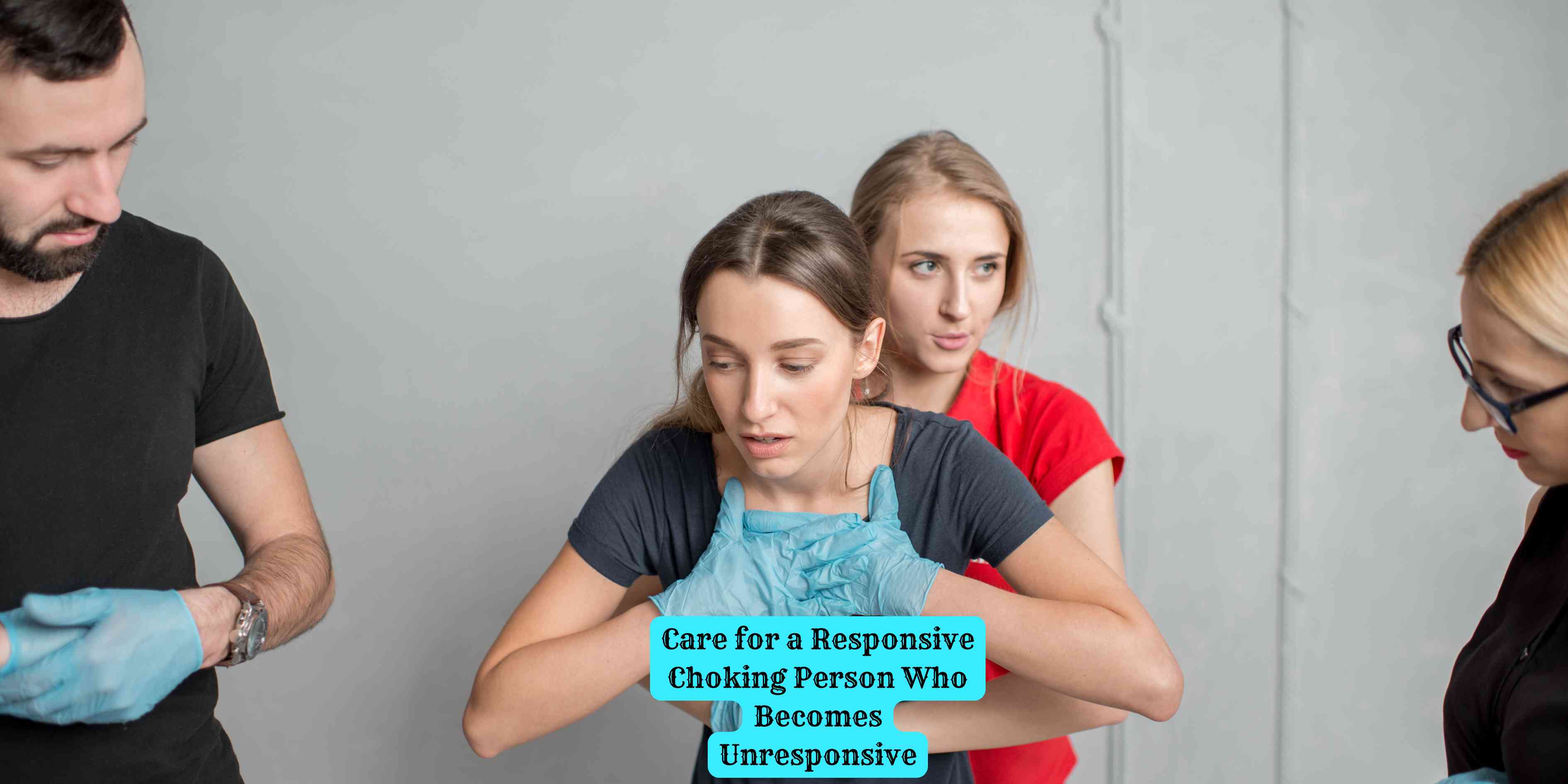
If a responsive choking person becomes unresponsive, the care changes immediately. Stop giving back blows or abdominal thrusts, lower the person carefully to a firm, flat surface, call emergency services, and begin CPR starting with chest compressions.
Choking becomes especially dangerous when a person can no longer cough, speak, breathe, or respond. At that point, oxygen may not be reaching the lungs properly, and quick action can save a life.
The key care is to start CPR, check the mouth for a visible object before breaths, remove the object only if you can see it, and never perform a blind finger sweep.
This article is educational and does not replace certified CPR or first-aid training. In a real emergency, call 911 in the United States or your local emergency number and follow dispatcher instructions.
When a responsive choking person becomes unresponsive, give care as an unresponsive choking emergency.
The basic steps are:
- Call 911 or tell someone nearby to call
- Lower the person carefully to the ground
- Place the person on their back on a firm, flat surface
- Begin CPR, starting with chest compressions
- After compressions, open the mouth and look for an object
- Remove the object only if you can clearly see it
- Do not do blind finger sweeps
- Try rescue breaths if trained
- Continue CPR until help arrives, the object comes out, or the person starts breathing normally
The sequence matters because chest compressions may help move the object upward. Checking the mouth after compressions may reveal an object that can be removed safely.
Recognize When the Situation Has Changed
A responsive choking person may clutch their throat, cough weakly, make high-pitched noises, look panicked, or be unable to speak. First-aid guidance for a conscious choking adult or child commonly includes cycles of back blows and abdominal thrusts.
But if the person becomes limp, stops responding, collapses, or cannot stay upright, they are no longer a responsive choking person. They now need care for an unresponsive choking person.
Do not keep trying abdominal thrusts after the person becomes unresponsive. Do not hold them upright and shake them. Do not give them water. Do not put food, fingers, or tools into the mouth unless you can clearly see a loose object that can be removed.
The priority becomes CPR and emergency help.
This shift can feel scary, but having a clear sequence helps you act faster.
Call Emergency Services and Get an AED
An unresponsive choking person needs emergency medical care. If someone is with you, point to them directly and say, “Call 911 and get an AED.” Being specific helps prevent bystander confusion.
If you are alone, call 911 as soon as you can. Put the phone on speaker so you can continue care while listening to the dispatcher.
An AED, or automated external defibrillator, may not fix choking itself, but it is still important if the person develops a life-threatening heart rhythm. Follow the AED voice prompts if one becomes available.
Do not drive the person to the hospital yourself if they are unresponsive and choking. Emergency responders can provide airway support and other lifesaving care on the way.
For a broader emergency-care context, this article on reasons to go to the emergency room explains why severe breathing emergencies should not wait.
Lower the Person to a Firm, Flat Surface
If the person collapses, guide them safely to the ground if possible. Try to protect the head and neck as you lower them, especially if they fell or may have hit something.
Place the person on their back on a firm, flat surface. The floor is usually better than a bed or sofa because chest compressions work best on a stable surface.
Move clothing out of the way enough to place your hands correctly for compressions and to see whether the chest rises when breaths are attempted. Keep the area around the person clear.
If you are in a crowded place, ask people to step back while one person calls emergency services and another looks for an AED.
The goal is to create enough space and stability to begin CPR quickly.
Start CPR with Chest Compressions
Begin CPR starting with chest compressions. If you are trained, follow the CPR steps you learned for the person’s age group. For adults, CPR often uses cycles of 30 compressions followed by 2 breaths.
Chest compressions are important for two reasons. First, they help circulate blood when the person is unresponsive. Second, in a choking emergency, compressions may help force air upward and move the object toward the mouth.
Push hard and fast in the center of the chest. Limit pauses. If you are not trained in rescue breaths, emergency dispatchers may guide you through hands-only CPR until help arrives.
For infants and children, CPR details are different from adult CPR. If the person is an infant, use infant CPR guidance and follow dispatcher instructions carefully.
Training matters because proper hand placement, compression depth, and rescue-breath technique vary by age.
Check the Mouth Before Breaths
After a set of compressions, open the person’s mouth and look for the object before attempting rescue breaths.
If you see a loose object, remove it carefully with your finger. If you do not see anything, do not sweep inside the mouth. A blind finger sweep can push the object deeper into the airway and make the blockage worse.
The rule is simple:
- Look before reaching
- Remove only what you can see
- Do not dig blindly
- Do not force out a deeply lodged object
After checking the mouth, open the airway if trained and try breaths. If the breath does not go in or the chest does not rise, reposition the airway and try again according to your training. Then return to compressions.
Continue this pattern: compressions, check for a visible object, remove only if seen, attempt breaths if trained, then repeat.
This related guide on what to do before giving breaths to an unresponsive choking person explains that mouth-check step in more detail.
What Not to Do
Several well-intentioned actions can make choking worse.
Do not perform blind finger sweeps. This is one of the most important rules because reaching into the mouth without seeing the object can push it farther down.
Do not continue abdominal thrusts once the person becomes unresponsive. CPR is the correct direction at that point.
Do not give water, food, pills, or anything to drink. A choking person cannot swallow safely, and adding liquid or food can worsen the airway problem.
Do not delay calling emergency services. Even if the object comes out, a person who became unresponsive needs medical evaluation.
Do not stop CPR too soon. Continue until emergency responders take over, the person starts breathing normally, an AED tells you to pause, or you are physically unable to continue.
Adults, Children, and Infants
The general principle is the same: if a choking person becomes unresponsive, call emergency services and begin CPR. But the exact technique depends on age.
For adults and children over 1 year old, conscious choking care often uses alternating back blows and abdominal thrusts. When the person becomes unresponsive, begin CPR.
For infants under 1 year old, conscious choking care uses back blows and chest thrusts, not abdominal thrusts. If an infant becomes unresponsive, begin infant CPR.
Because age-specific technique matters, caregivers, teachers, coaches, food-service workers, parents, and students should take a certified CPR and first-aid class. Reading gives knowledge, but practice builds speed and confidence.
If the person starts breathing but remains not fully awake, place them in a safe position if appropriate and monitor breathing until help arrives.
After the Object Comes Out
If the object comes out and the person starts breathing, do not assume everything is fine. Keep them still, monitor their breathing, and wait for emergency responders.
Choking can irritate or injure the airway. CPR and abdominal thrusts can also cause soreness or injury. The person may need medical evaluation, especially if they became unresponsive, had severe breathing trouble, or continues coughing, wheezing, vomiting, or feeling chest discomfort.
If breathing remains difficult, this article on possible signs of difficulty breathing explains warning signs that need urgent help.
Stay calm, keep the airway clear, and be ready to restart CPR if the person stops breathing normally.
Final Thoughts
If a responsive choking person becomes unresponsive, lower them to a firm, flat surface, call emergency services, and start CPR with chest compressions. Before giving breaths, check the mouth and remove only a visible object.
The two biggest mistakes to avoid are delaying CPR and doing blind finger sweeps. Quick, trained action gives the person the best chance of survival.
The safest preparation is hands-on CPR and choking-response training before an emergency happens.